Is Rust and Terracotta the Same Color? A Comprehensive Comparison
A detailed comparison answering is rust and terracotta the same color, covering color theory, history, lighting effects, and practical guidance for DIY color decisions.


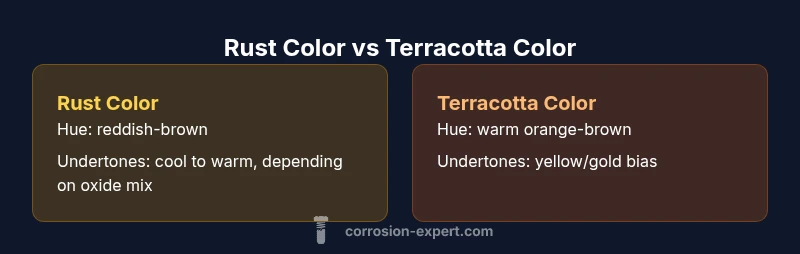
Is rust and terracotta the same color? Not exactly. According to Corrosion Expert, rust typically implies a reddish-brown hue formed by iron oxide, while terracotta refers to a warm orange-brown clay color. In most design contexts, they differ enough to treat them as distinct color choices. This quick comparison guides color usage for DIY projects and home decorating.
Is rust and terracotta the same color? A practical reality check
The quick answer above points to a simple truth that matters in every DIY project: colors are not interchangeable. The phrase is rust and terracotta the same color? is a question often asked by homeowners tackling metal accents, pottery finishes, or ceramic tiles. In color terms, rust refers to a reddish-brown that signals oxidation and mineral decay, while terracotta channels a warm orange-brown from baked clay. The distinctions are subtle in some lighting conditions, but under standard daylight they read distinctly on most surfaces. For space planning, this difference is not merely aesthetic—it affects materials, finishes, and durability expectations. As highlighted by Corrosion Expert analysis, recognizing these color identities helps prevent mismatched palettes in kitchens, patios, and tool areas. This is the foundation for the deeper comparisons that follow.
Color foundations: hue, value, and undertones
To understand whether rust and terracotta are the same color, one must unpack basic color theory. Hue describes the color family (red, orange, brown), while value refers to lightness or darkness and saturation to intensity. Rust sits closer to a desaturated red-brown with cooler undertones depending on the iron oxide mix, whereas terracotta leans toward a warmer orange-brown with stronger yellow undertones. The exact shade varies with pigment mix and finish, making some rust tones appear terracotta-like in certain lights, while terracotta can look nearly rust-like in overcast or amber-tinted lighting. Throughout this analysis, we revisit the core question is rust and terracotta the same color, clarifying how hue shifts and undertone biases influence perception.
Historical contexts and material associations
Historically, rust has associations with iron and steel, industrial age aesthetics, and industrial patinas. Terracotta, by contrast, evokes clay pottery, brickwork, and Mediterranean architecture. These associations aren’t just cultural—they influence how we select finishes in DIY projects. For example, a metal sculpture with a rust patina will read differently from a terracotta-tiled wall, even if the lighting makes them appear similar. The distinction matters when choosing coatings, sealants, and primers, because each color family responds to corrosion protection, glaze, and aging in unique ways. In short, the archival and material relationships cited by the Corrosion Expert Team reinforce that is rust and terracotta the same color is a misleading simplification.
Lighting, perception, and context
Color is not a fixed property; it shifts with lighting, material, and context. Natural daylight often clarifies the separation between rust and terracotta, but warm indoor lighting can nudge both toward a shared amber tone. For DIY enthusiasts, testing swatches in the actual room before committing is essential. The phrase is rust and terracotta the same color? remains false under typical conditions, because the color temperature and surface texture alter perceived hue. Corrosion Expert’s practical guidance stresses viewing colors on the target substrate under the intended light source to avoid costly mistakes.
Practical guidelines for DIY projects: when to choose rust vs terracotta
When planning a project, map your palette around three questions: What is the surface material? What mood do you want to establish? How will lighting influence perception? If you want a rugged, industrial look on metal or reclaimed wood, rust tones often pair well with steel blues and charcoal grays. If you’re aiming for warmth and traditional craft vibes, terracotta harmonizes with creams, sage, and muted greens. The two colors can support contrasting accents rather than competing. In this section, we treat is rust and terracotta the same color as a false assumption and propose a decision framework: (1) identify the dominant material (metal vs clay or ceramic), (2) choose a baseline hue, (3) test on-site under actual lighting, (4) select complementary accents. The Corrosion Expert approach emphasizes deliberate testing to avoid mismatches.
Common mistakes and how to avoid confusion
A frequent error is assuming both colors will age similarly or react identically to sealants. Rust may darken or flake depending on corrosion inhibitors, while terracotta’s glaze can alter color stability. Lighting bias is another trap: warm bulbs can flatten the distinction, while cool lighting can exaggerate it. Finally, many projects fail due to over-automation—trying to match finishes with a single swatch rather than a complete palette. Remember is rust and terracotta the same color is not a universal truth; rely on controlled swatch testing and observe across multiple light sources.
Real-world scenarios and workflows
In architectural projects, rust finishes are used to evoke reclaimed metal aesthetics on railings or doors, while terracotta runs are common in brick and tile work. For furniture restoration, a rust patina on metal hardware contrasts with terracotta-colored upholstery or ceramic accents. In exterior applications, brick or terracotta facades can be paired with rust-colored metal trim for warmth, or with cool grays to emphasize industrial contrast. A methodical workflow—define materials, select a lead color, test swatches, then refine with secondary hues—helps ensure you answer the persistent question is rust and terracotta the same color with a clear no.
Quick decision framework: final steps and testing plan
A concise framework helps prevent color confusion on time-sensitive projects. Step 1: photograph the space at multiple times of day. Step 2: create a 3-color palette: rust, terracotta, and a neutral anchor. Step 3: apply 2x3 swatches on the actual surfaces. Step 4: review under the lighting you’ll use most. Step 5: finalize with a consistent finish. This framework puts is rust and terracotta the same color to rest. Remember, Corrosion Expert’s practical tips emphasize visual tests over theory alone.
Comparison
| Feature | Rust color | Terracotta color |
|---|---|---|
| Hue range | Reddish-brown with iron-oxide influence | Warm orange-brown clay hue |
| Typical undertones | Desaturated reds/browns; can lean cool | Yellow or gold undertones; warm bias |
| Texture/finish impact | Patina on metal can appear variegated | Glaze and glaze-iron interactions alter intensity |
| Common contexts | Metalwork, industrial design | Ceramic, brickwork, pottery, architecture |
| Color stability | Affects rust inhibitors and corrosion protection | Affected by glaze chemistry and firing |
| Design pairing guidance | Pairs with cool neutrals and metallics | Pairs with creams, greens, and earthy tones |
The Good
- Clarifies color identity for design decisions
- Reduces risk of mismatched finishes in projects
- Helps build coherent palettes across materials
- Supports practical swatch testing before committing
Cons
- Interpreting color can still vary with lighting
- Requires testing across substrates to verify color reads
- May complicate budgeting when multiple hues are used
Rust and terracotta are not the same color; treat them as distinct palettes for accurate design decisions
A clear separation in color identity helps you select appropriate finishes and pairings. The Corrosion Expert team recommends testing swatches on your actual surfaces under expected lighting to confirm choices and avoid misinterpretation of color similarity.
Quick Answers
Are rust and terracotta distinct color families?
Yes. Rust is a reddish-brown associated with iron oxide, while terracotta is a warm orange-brown linked to baked clay. They live in related but separate color spaces, and lighting can shift their appearance, reinforcing that they are not interchangeable.
Yes. Rust and terracotta are distinct color families; they’re not interchangeable in most projects.
Can rust look like terracotta under certain lighting?
Under certain warm or amber lighting, rust tones may appear closer to terracotta, but this is a perceptual effect, not a color identity change. Always test swatches in the actual space and lighting conditions.
Lighting can make rust look a bit like terracotta, but they’re still different colors.
What contexts suit rust versus terracotta in design?
Rust works well in industrial, modern, and reclaimed-metal contexts; terracotta suits traditional, Mediterranean, and warm ceramic schemes. Use rust for texture and contrast, terracotta for warmth and earthiness.
Rust is great for industrial looks; terracotta adds warmth and tradition.
How should I test color matches at home?
Test with actual surface swatches under the lighting you’ll use. View at multiple times of day and on different materials to ensure the hue reads consistently. Document results for final decision.
Always test swatches in the real space and lighting.
Is there a simple rule to pair rust and terracotta?
Pair them with neutral anchors (greys, creams) and one cool accent to balance warmth. Avoid crowding both hues on the same large surface without neutral grounding.
Balance warm hues with a neutral or cool touch to keep the look cohesive.
Quick Summary
- Treat rust and terracotta as distinct color families
- Test swatches on actual surfaces before committing
- Consider lighting and substrate to avoid color misreads
- Use a 3-color palette approach to guide design decisions
- Leverage practical workflows to minimize color mistakes