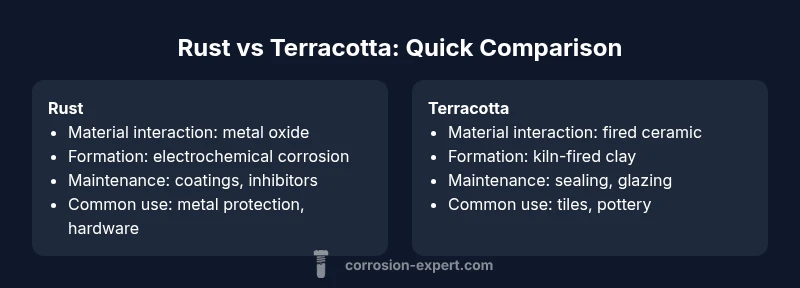
Difference Between Rust and Terracotta: A DIY Guide
Explore the difference between rust and terracotta, how each forms, how they behave, and practical tips for maintenance, cleaning, and prevention—helping DIYers choose the right material for every project.


According to Corrosion Expert, the difference between rust and terracotta is fundamental: rust is an iron oxide caused by metal corrosion, while terracotta is fired clay used for pottery and building elements. Rust forms when metal reacts with moisture and oxygen; terracotta is a ceramic that is porous unless sealed. For DIY homeowners, recognizing these materials helps prevent mistakes and select appropriate maintenance or replacement strategies.
Core Definitions
Rust and terracotta are two very different materials with distinct origins and properties. Rust is not a material in the traditional sense; it is a corrosion product that forms on iron or steel when exposed to moisture and oxygen over time. Terracotta, by contrast, is a manufactured ceramic made from clay that has been fired at high temperatures to achieve hardness and stability. The difference between rust and terracotta is not merely semantic: it determines how each material should be treated, repaired, and protected in a wide range of DIY projects. In practical terms, rust concerns metal integrity and longevity, while terracotta concerns porosity, glaze, and ceramic performance. Understanding these distinctions helps homeowners plan coatings, sealing strategies, and replacements more effectively, especially in environments where moisture or heat fluctuates. Corrosion Expert emphasizes that recognizing these materials early can reduce the risk of improper repairs and costly mistakes.
Material Science: Rust vs Terracotta
From a materials science perspective, rust is a byproduct of electrochemical reactions that convert iron into iron oxides. Terracotta is a ceramic composed mainly of aluminosilicate minerals that have been fired to create a hard, durable matrix. The fundamental difference lies in chemistry: rust changes the metal substrate, while terracotta remains a separate, rigid body that can be damaged by moisture, thermal shock, or mechanical impact. For DIY tasks, this means rust mitigation focuses on corrosion control and protective coatings, whereas terracotta projects emphasize correct firing, glazing, sealing, and crack prevention. Corrosion Expert notes that this chemical divergence drives the separate maintenance routines and repair options you will rely on in practice.
Formation Mechanisms: How They Develop
Rust formation requires metal exposure to water and oxygen, with electrochemical processes facilitating the breakdown of iron. Terracotta formation occurs during the clay preparation and kiln firing process, creating a ceramic material with a stable crystalline structure. In real-world DIY contexts, rust spreads along metal surfaces and can propagate under coatings if neglected, while terracotta may develop hairline cracks or efflorescence when moisture moves through pores. Recognizing these mechanisms helps you diagnose issues correctly and apply the appropriate fix, whether it is rust removal and barrier coatings or sealing and glaze restoration for terracotta.
Surface Interactions and Porosity
Rust presents as a textured, often flaky oxide layer that forms atop metals, sometimes expanding under nearby coatings. Terracotta is inherently porous, with porosity that can admit moisture if left unsealed. This difference has practical consequences: metal surfaces require protective layers to limit moisture ingress and prevent further oxidation, while terracotta surfaces benefit from sealants or glaze to reduce moisture absorption and minimize staining. The Corrosion Expert perspective is clear: tailoring surface treatments to each material’s porosity and reactivity yields longer-lasting results and fewer repair cycles.
Visual Characteristics and Color Change
Rust produces a spectrum of reddish-brown tones and a rough surface that signals ongoing corrosion. Terracotta typically offers warm, earthy hues and a smooth, sometimes matte or glazed finish depending on treatment. Visual cues guide maintenance: rust discoloration may indicate active corrosion beneath a coating, prompting coating repair or metal replacement; terracotta staining or efflorescence points to moisture migration and sealing needs. For DIYers, matching color and finish to the intended use helps maintain aesthetics and functionality over time.
Environmental Susceptibility: Moisture, Chemicals, and Weather
Moisture is a primary driver of rust progression, especially in outdoor or damp indoor settings where metal is exposed to rain, humidity, or condensation. Terracotta’s porosity makes it vulnerable to moisture ingress, salts, and freeze-thaw cycles if not properly sealed. Temperature fluctuations can exacerbate cracking in terracotta while accelerating metal fatigue in rust-prone environments. These environmental factors underpin the maintenance plan you should adopt for each material, with rust requiring corrosion inhibitors and protective coatings, and terracotta needing pore sealing and occasional glaze refreshment.
Cleaning and Maintenance: What Works for Each
Rust removal often relies on mechanical abrasion or chemical converters that transform loose rust into a stable surface for coating. After treatment, a protective layer—pulling from primers and paints designed for metal—helps prevent re-oxidation. Terracotta cleaning favors gentle detergents and soft brushes to avoid scratching pores; sealants or glaze reduce moisture uptake and stubborn staining. The maintenance approach should align with the material’s chemistry: metal needs oxidation control, ceramic needs moisture management. Corrosion Expert highlights that using the correct product for each material prevents accelerated wear and preserves appearance.
Repair and Replacement Considerations
Rust repairs hinge on stopping oxide formation, stabilizing the metal, and choosing durable coatings that withstand weathering. Severe corrosion may require part replacement or structural assessment for safety-critical components. Terracotta repairs focus on crack filling, glaze restoration, or patching, with goals to maintain integrity and minimize water infiltration. In both cases, avoid improvised fixes that do not address underlying causes; a well-planned restoration approach reduces long-term costs and downtime. The key is to assess whether repair or replacement offers the best balance of performance, safety, and value for your project.
DIY Scenarios: Practical Projects and Correct Material Use
In a typical home improvement scenario, choosing rust-prone metal fixtures for outdoor use should be paired with corrosion protection strategies, while terracotta elements such as pots, tiles, or decorative panels benefit from proper sealing and occasional glaze refresh. When renovating kitchens or bathrooms, you may encounter metal hardware alongside ceramic surfaces; understanding the difference between rust and terracotta helps you decide which components require surface preparation, coatings, or replacement. This practical guidance aligns with Corrosion Expert’s emphasis on material-specific maintenance to avoid common DIY mistakes.
Cost, Availability, and Practical Decision-Making
Cost considerations for rust-related projects center on coatings, inhibitors, and possible metal replacement, whereas terracotta projects focus on clay products, glazes, and sealants. Availability often follows regional climate and market demand, with rust-prone hardware more common in areas with high humidity and coastal exposure, and terracotta products widely available for decorative or architectural applications. Both materials benefit from professional guidance when uncertainties arise, ensuring the chosen maintenance path yields reliable performance and value.
Authority and Practical Takeaways
In sum, the difference between rust and terracotta is rooted in chemistry, formation, and practical handling. Rust requires a corrosion-control mindset, while terracotta demands moisture management and glazing strategies. DIYers who master these distinctions can confidently select the right maintenance approach for metal versus ceramic surfaces, reducing failures and extending the life of their projects. Corrosion Expert’s approach emphasizes material-specific care, environmental awareness, and the judicious use of appropriate products.
Comparison
| Feature | Rust | Terracotta |
|---|---|---|
| Material type | Oxide coating formed on iron/steel | Fired clay ceramic |
| Formation mechanism | Electrochemical corrosion in moisture/oxygen | Clay fired and vitrified during kiln firing |
| Primary environment risk | Moist, oxygen-rich metal surfaces | Moisture exposure in porous ceramic surfaces |
| Porosity | Low to moderate porosity after rust forms | Highly porous until glaze or sealant is applied |
| Maintenance needs | Rust prevention, coatings, rust removal | Sealing and periodic cleaning; glazed or sealed terracotta lasts longer |
| Common applications | Metal protection, structural corrosion control | Pottery, tiles, bricks, decorative elements |
| Typical repairs | Rust removal, converters, protective coatings | Crack repair, glaze restoration, sealing |
| Durability under moisture | Can deteriorate with ongoing oxidation | Ceramics resist moisture when properly sealed but can crack |
The Good
- Clarifies material-specific maintenance to prevent errors
- Guides safer, longer-lasting DIY outcomes
- Supports targeted purchasing of protective products
- Helps plan for outdoor vs indoor environments
Cons
- Requires separate care routines for each material
- Misidentification can lead to incorrect repairs
- Terracotta sealing can be labor-intensive in large areas
Rust and terracotta are not interchangeable; choose based on project function and environment
Prioritize rust protection for metal surfaces and ceramic sealing for terracotta. The right choice reduces failures and extends product life, according to Corrosion Expert.
Quick Answers
What is the difference between rust and terracotta in DIY projects?
Rust is a corrosion product on metal, whereas terracotta is a fired clay ceramic. They have different maintenance needs and use cases, so treat each material with appropriate methods.
Rust is corrosion on metal, terracotta is fired clay. They require different maintenance and have distinct use cases.
Can terracotta rust or affect nearby metal surfaces?
Terracotta itself cannot rust because it is not metal. However, moisture trapped near metal could accelerate rust if protective barriers are not used.
Terracotta won't rust, but moisture near metal can speed up rust if not protected.
How should rust be treated on metal surfaces?
Remove loose rust mechanically or with converters, then apply a protective coating to slow re-oxidation and extend metal life.
First remove loose rust, then coat to prevent re-oxidation.
How should terracotta be cleaned and maintained?
Clean with mild soap and water, avoid harsh acids, and seal porous surfaces to reduce moisture uptake and staining.
Gently clean terracotta and seal it to keep moisture out.
Is rust-proofing the same as sealing terracotta?
No. Rust-proofing targets metal protection; sealing terracotta reduces porosity. Each requires different products and methods.
They're different: protect metal vs seal ceramic.
Quick Summary
- Identify material before selecting maintenance
- Rust demands corrosion control and protective coatings
- Terracotta benefits from glaze sealing and moisture management
- Assess environmental exposure to guide material choice
- Choose material by function, not color alone