Difference Between Rust and Tarnish: A Practical Guide for DIYers
Explore the difference between rust and tarnish, their chemistry, and how to prevent or treat them. A detailed guide for DIYers dealing with metal corrosion and surface discoloration.


The difference between rust and tarnish lies in chemistry, metal type, and impact on your project. Rust is iron oxide that forms on iron and steel in moist air, while tarnish is a surface film that forms on many metals, often silver, copper, or brass. According to Corrosion Expert analysis, understanding these distinctions helps DIYers choose the right prevention and cleaning approach.
What is rust and tarnish? Defining the difference between rust and tarnish for DIYers
The terms rust and tarnish describe two forms of corrosion, but they occur on different metals and under different environmental conditions. The difference between rust and tarnish becomes a practical concern when planning maintenance on tools, appliances, or decorative pieces. In this guide, we will distinguish the two by chemistry, affected metals, and typical remedies, so you can select appropriate prevention strategies and cleaning methods. Corrosion Expert emphasizes that recognizing whether you’re dealing with rust or tarnish is the first step toward extending metal life and preserving aesthetics.
The chemistry behind rust: iron oxide and its growth
Rust forms when iron or steel is exposed to oxygen and moisture over time. The primary product is iron oxide, often represented loosely as Fe2O3·nH2O, which creates a flaky, porous layer. This layer can continue to grow if moisture and electrolytes are present, allowing deeper penetration into the metal. The rate of rusting is influenced by temperature, humidity, salt exposure, and the presence of protective coatings. DIYers should understand that rust is not just surface discoloration—it can compromise structural integrity if left unchecked in ferrous metals.
The chemistry behind tarnish: surface films on non-ferrous metals
Tarnish is a superficial corrosion film that forms on non-ferrous metals such as copper, brass, bronze, silver, and some alloys. It arises from reactions with sulfur compounds, oxygen, and other air pollutants, producing films like copper sulfide, silver sulfide, or copper oxide. Tarnish can alter color and sheen without necessarily weakening the metal, though prolonged exposure can accelerate wear on delicate finishes. Corrosion Expert notes that tarnish is typically cosmetic and more manageable with proper cleaning and protective measures.
Metals affected and how rust vs tarnish form on different substrates
Rust primarily affects ferrous metals (iron and steel) because iron readily oxidizes in the presence of moisture. Tarnish, by contrast, targets non-ferrous metals that lack iron in their lattice structures, such as copper-containing alloys and silver. This distinction matters in practical DIY projects: a rusted steel blade will behave differently than a tarnished copper fixture. Understanding the substrate helps predict how quickly corrosion will advance and which remedies are most effective.
Environmental triggers: moisture, pollutants, and time
Rust forms in damp environments where iron encounters oxygen and electrolytes. Tarnish forms when non-ferrous metals are exposed to sulfur compounds in the air, humidity, and pollutants. Seawater exposure accelerates corrosion for many metals due to salt and moisture. DIYers should focus on moisture control for iron-based items and on barrier or anti-tarnish measures for non-ferrous items exposed to indoor pollutants. The Corrosion Expert guidance highlights environment as a practical lever for prevention.
Visual clues: distinguishing rust from tarnish at a glance
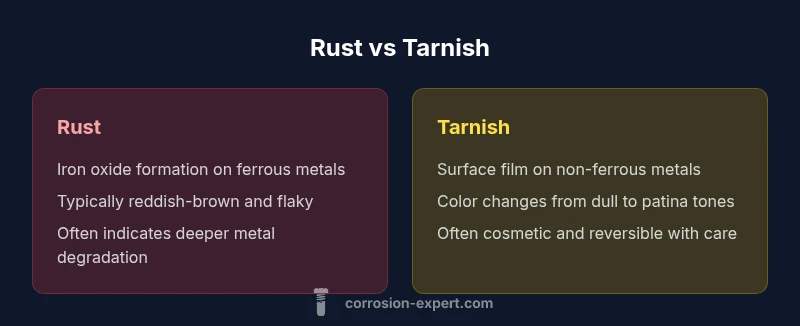
Visual cues help identify rust versus tarnish quickly. Rust typically appears as reddish-brown, flaky, and powdery deposits that may flake away from the surface. Tarnish often presents as a dull film or colored patina (yellow, green, or dark tones) that slowly covers the metal’s shine. The location also gives clues: rust tends to form on exposed, ferrous metal edges or near joints where water can pool; tarnish commonly appears on decorative hardware, coins, or jewelry made of copper, silver, or brass.
Reversibility and long-term implications: when cleaning is enough vs when repair is needed
Rust can be persistent and may indicate deep corrosion in ferrous parts, potentially requiring replacement or substantial restoration if the core metal has been compromised. Tarnish is usually more superficial and often reversible with polishing, chemical dips, or protective coatings, especially on non-porous finishes. However, aggressive cleaning on antique or delicate items can remove patina that adds value. The key is to balance cosmetic restoration with preserving metal integrity.
Practical care and prevention for DIYers: coatings, storage, and routine maintenance
Prevention strategies differ by metal type. For ferrous metals, moisture control, proper sealing, and protective coatings (e.g., rust inhibitors, primers, paints) slow rust progression. For non-ferrous metals, opting for anti-tarnish wraps, silica gel, barrier coatings, and regular cleaning can keep tarnish at bay. Regular checks for moisture intrusion, proper ventilation, and gentle cleaning routines reduce the need for aggressive remediation. The Corrosion Expert approach emphasizes proactive habits and compatible products to extend life.
Cleaning approaches and safety: removing rust vs removing tarnish responsibly
When dealing with rust, mechanical removal (wire brushing, sanding) is common, sometimes followed by rust converters or protective coatings. For tarnish, polishing compounds or specialized anti-tarnish cleaners can restore shine without aggressive abrasion. Always wear protective gloves and eye protection, especially when using chemical products. After cleaning, re-seal or re-coat to prevent rapid re-formation of rust or tarnish, and store items in dry, ventilated environments.
Decision framework for DIYers: restore, protect, or replace
A practical rule is to assess metal type, corrosion depth, and intended use. For structural ferrous components, replacement or professional restoration may be wiser if integrity is compromised. For non-structural surfaces and decor, restoration with careful cleaning and protective coatings may suffice. Corrosion Expert’s framework suggests documenting the metal, environment, and maintenance steps to guide ongoing care.
Comparison
| Feature | Rust | Tarnish |
|---|---|---|
| Chemistry | Iron oxide forms on iron/steel | Surface films like sulfides/carbonates on copper, silver, brass |
| Affected Metals | Ferrous metals (iron, steel) | Non-ferrous metals (copper, silver, brass, bronze) |
| Appearance | Reddish-brown, flaky coating | Dull film or patina altering color or sheen |
| Formation Conditions | Moisture, oxygen, iron presence | Air pollutants, humidity, sulfur compounds |
| Reversibility | Often porous; remediation may be lengthy; coatings needed | Generally removable by polishing; can be slowed with sealants |
| Care/Remediation | Moisture control, rust converters, protective coatings | Polishing, anti-tarnish products, protective storage |
| Typical Time to Form | Weeks to years depending on environment | Hours to days under polluted indoor conditions |
The Good
- Helps diagnose corrosion type quickly for DIYers
- Supports targeted prevention by metal type
- DIY cleaning can restore appearance in many cases
- Early action slows long-term damage
Cons
- Rust may indicate structural damage that requires replacement
- Tarnish can be cosmetic but may be stubborn on some finishes
- Removal methods risk scratching delicate surfaces
Rust and tarnish are distinct corrosion processes with different remedies.
Identifying the metal type and corrosion type informs your approach. For ferrous metals, prioritize moisture control and coatings; for non-ferrous metals, gentle cleaning and anti-tarnish protection are often enough.
Quick Answers
What is rust?
Rust is iron oxide that forms when iron or steel corrode in the presence of moisture and oxygen. It can progressively compromise iron-based structures if left untreated. Understanding rust helps you choose effective prevention and remediation strategies.
Rust is the orange-brown oxide that forms on iron when it gets wet. It can weaken metal over time, so prevention matters.
What is tarnish?
Tarnish is a superficial film that forms on non-ferrous metals like copper, brass, bronze, and silver due to reactions with sulfur compounds and oxygen. It is usually cosmetic, though persistent tarnish can require cleaning.
Tarnish is a thin film that makes metals like silver or copper look dull; it’s usually cosmetic but can require cleaning.
How can I tell rust from tarnish visually?
Rust typically appears as reddish-brown, flaky patches on ferrous metals, while tarnish shows a dull film or colored patina on non-ferrous metals. Location and metal type are good clues.
If it’s flaky and reddish on iron, it’s rust. If you see a dull film on copper or silver, that’s tarnish.
Can tarnish be dangerous or harmful?
Tarnish itself is usually not hazardous, but it can indicate exposure to pollutants or chemicals. Some cleaning agents used to remove tarnish require careful handling and proper ventilation.
Tarnish isn’t typically dangerous, but take care with cleaners and ventilation when removing it.
Is rust always worse than tarnish?
Not always. Rust on structural ferrous metals can compromise integrity much more quickly than tarnish affects non-ferrous surfaces, which is often cosmetic unless it progresses.
Rust can be more serious because it can weaken metal, while tarnish is usually cosmetic unless it worsens.
How can I prevent rust and tarnish at home?
For rust, control moisture, use protective coatings, and store ferrous items in dry places. For tarnish, use anti-tarnish wraps, sealants, and regular gentle cleaning to slow reformation.
Keep moisture down and coat iron items; for tarnish, keep things dry and polished with anti-tarnish products.
Quick Summary
- Identify the metal type before treating corrosion
- Rust is iron oxide; tarnish is a surface film
- Prioritize prevention for rust; use polishing for tarnish
- Choose cleaners based on metal and corrosion type