Difference Between Rust and Oxidation: A Practical Guide for DIYers
Explore the difference between rust and oxidation, their formation, and how to prevent or treat each in home projects. An analytical guide by Corrosion Expert for DIY enthusiasts and homeowners.


Difference between rust and oxidation: Rust is a specific form of oxidation that happens to iron and steel, producing iron oxide when iron reacts with water and oxygen. Oxidation is the broader chemical process of metal atoms losing electrons and forming oxides across many metals. Understanding this distinction helps DIYers select proper prevention and repair steps for home projects.
What is rust and what is oxidation?
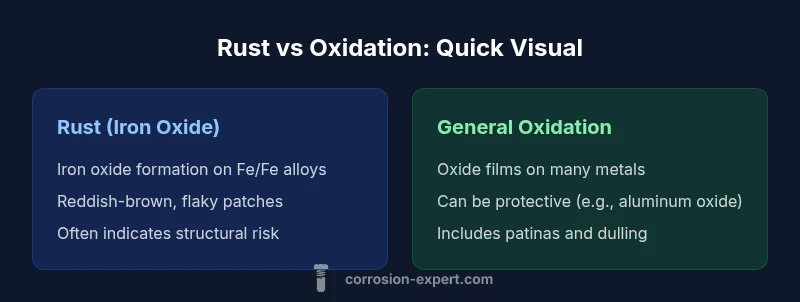
The terms rust and oxidation are often used interchangeably in casual language, but they describe different things. Oxidation is a broad chemical process in which metals lose electrons when exposed to oxygen or other oxidants. Rust is a specific manifestation of oxidation that occurs on iron and its alloys, producing a reddish-brown, flaky coating known as iron oxide hydrous. In the context of DIY projects, recognizing the difference between rust and oxidation matters because it guides the choice of repair methods, coatings, and prevention. While oxidation can affect many metals, rust refers to the particular oxide formation that compromises iron-based components. In practical terms, you encounter oxidation as tarnish, patina, or protective films on copper, aluminum, and zinc, whereas rust on steel is usually destructive and spreads with moisture. This foundational distinction sets the stage for deeper chemistry, detection methods, and preventive strategies that follow. By the end, you’ll be able to identify which process is at work and tailor your approach accordingly. The distinction is essential for planning restoration, choosing coatings, and implementing moisture control in a DIY project.
The chemistry behind rust: iron oxide formation
Rust forms when iron meets oxygen in the presence of water or moisture. This environment—often found in damp basements, outdoors, or in tools left wet—facilitates electrochemical reactions where iron atoms lose electrons (oxidation) and oxygen gains electrons (reduction). The result is hydrated iron oxides that appear as a reddish-brown flaky layer on metal surfaces. Over time, this oxide layer can spall and create pits, allowing deeper penetration of moisture and salts that accelerate corrosion. The term rust is thus a descriptive label for a particular oxidation product, not a generic description of all metal degradation. Understanding this chemistry helps homeowners and DIYers select appropriate interventions, from moisture control and barrier coatings to corrosion inhibitors and galvanization. It also clarifies why certain environments—salt spray zones, acidic soils, or humid climates—pose greater risk to iron components than others. In practical terms, rust is the visible symptom of a sustained oxidation process specific to iron. Early recognition and targeted prevention matter for long-term durability in household projects.
Oxidation in metals beyond iron: galvanization, aluminum, copper
Oxidation is not limited to iron. Aluminum rapidly forms a thin, protective oxide layer when exposed to air, which helps resist further corrosion. This passivation is a key difference from rust, because the oxide layer slows further reaction with the environment. Copper develops a patina that can slow degradation while signaling environmental exposure, and zinc oxide layers on galvanized steel serve as a sacrificial barrier that protects the underlying steel. The broader concept of oxidation also explains why some metals become dull, change color, or lose strength without showing the classic rust. For DIYers, this means that when you work with nonferrous metals or alloys, your preventive and repair toolkit changes. In many cases, keeping moisture away matters, but you may also leverage oxide layers that form naturally or with deliberate treatment to protect the metal. Distinguishing iron-specific rust from general oxidation helps prioritize cleaning methods, coatings, and storage practices that suit each metal family.
Visual cues: spotting rust vs oxidation
Rust on iron and steel typically starts as orange-brown staining that progresses to flaky, crusty patches or pits. You may notice a rough texture and delamination where the metal loses structural integrity. General oxidation on other metals often presents as dulling, tarnish, or a uniform film rather than dramatic flaking. Aluminum oxide is usually transparent and protective, while copper develops a greenish patina that can be aesthetically pleasing but may indicate ongoing corrosion beneath a surface layer. Recognizing these cues helps you decide whether to scrub, seal, or replace components. In a DIY context, visual inspection is the first step; pairing it with simple moisture checks and surface testing will help you determine whether you’re dealing with iron oxide or a broader oxidation issue. The visual language of corrosion informs your subsequent choice of tools and products.
Common myths and misconceptions
Myth 1: Oxidation is always bad. Not all oxidation harms the metal—some oxides form protective layers, like aluminum oxide, which can extend service life. Myth 2: Rust always means the metal is beyond repair. In early stages, rust can be stopped and reversed with proper treatment and protective coatings. Myth 3: If a metal is dry, it won’t rust. Moisture in microclimates, condensation, or high humidity can still trigger corrosion. Myth 4: Rust prevention is only about coatings. Cleaning, drying, proper storage, and environmental control are equally important. Myth 5: You only need expensive products to stop rust. For many DIY tasks, accessible rust removers and barrier paints work when applied correctly.
How to prevent rust and manage oxidation in DIY projects
Prevention starts with moisture control: keep metals dry, use desiccants in enclosed spaces, and wipe after exposure to rain or humidity. Use protective coatings such as primers, paints, powder coatings, or clear sealants suited to the metal type. For iron and steel, consider galvanization or sacrificial coatings (zinc). For nonferrous metals, passivation, anodizing, and compatible sealants help maintain appearance and performance. Storage matters: use dehumidified spaces, avoid contact with salt, which accelerates corrosion. Regular inspection and quick repair—scraping away early rust, applying rust converters, and resealing—extend the life of tools and hardware. In harsh environments like coastal areas or garages with temperature fluctuations, consider rust-proofing products designed for specific metals and environments, and reapply coatings on a schedule. A proactive maintenance routine saves time and money in DIY projects.
Treatment and removal options
If rust is already present, mechanical removal (wire brushes, sanding, or abrasive pads) can restore a clean surface for repair. Rust converters chemically convert iron oxide into a more stable compound that can be painted over. For nonferrous metals, treat oxidation with appropriate cleaners and protectants designed for copper, aluminum, or zinc. After any treatment, thoroughly dry the surface and apply a protective coating. When possible, replace severely corroded parts rather than patching deep pits. The choice of method should consider the metal type, project use, and exposure conditions. In DIY settings, you will often balance cost, time, and long-term durability, favoring approaches that minimize future corrosion cycles.
Choosing protective measures for different metals
Iron and steel require barrier coatings, corrosion inhibitors, and potentially galvanization to slow further oxidation. Aluminum benefits from a thin oxide layer that is protective, but scratches can expose fresh metal; sealing with compatible coatings is important. Copper reacts with environmental acids to form patinas that may be attractive but can indicate ongoing oxidation beneath a surface layer. Galvanized steel relies on zinc’s sacrificial protection to guard the steel substrate. For every metal type, select cleaners and coatings tested for that material and environment. Track performance and reapply coatings as recommended by manufacturers. Understanding the difference between rust and oxidation helps you tailor maintenance plans to each metal family and to design storage and usage practices that minimize exposure to moisture, salts, and heat.
Real-world scenarios: case studies and best practices
Case study A: A coastal homeowner finds rust on an iron gate after winter storms. The remedy blends moisture control, rust removal, and a zinc-rich primer to recoat the gate for long-term protection. Case study B: A workshop uses aluminum frames in a humid space; after cleaning, a passivation-friendly sealant is applied to preserve the oxide layer that protects the aluminum. Case study C: Copper plumbing in a basement develops green patina; it is managed with gentle cleaning and a clear sealant suitable for copper. These scenarios illustrate the practical implications of distinguishing rust from oxidation and applying targeted prevention strategies. A systematic approach to assessment, treatment, and prevention yields durable results for DIY enthusiasts.
Comparison
| Feature | Rust on iron/steel | General metal oxidation |
|---|---|---|
| Definition | Iron oxide coating that often flakes and pits (visible on Fe/Fe alloys) | Universal oxide films or compounds forming on many metals (not specific to iron) |
| Primary cause | Moisture + oxygen exposure to iron; electrolytes accelerate the reaction | Oxygen reacting with metal atoms under varying environmental conditions |
| Visual indicators | Reddish-brown, flaky patches; potential pits and structural loss on iron | Discoloration, dull films, or patina that may be protective or decorative |
| Metals affected | Iron and steel alloys | Most metals (steel, aluminum, copper, zinc, brass, etc.) |
| Prevention strategies | Keep dry, barrier coatings, galvanization, rust inhibitors | Moisture control, passivation, protective coatings, environmental management |
| Best for (DIY context) | Structural iron/steel parts, tools, garden hardware | Nonferrous metals or mixed metal components; patinas may be desirable in some cases |
The Good
- Clarifies when a problem is metal-specific (rust) versus general oxidation
- Guides metal-appropriate prevention and repair strategies
- Helps prioritize coatings and storage practices for longevity
- Supports cost-effective maintenance planning for DIY projects
Cons
- Requires some metal-specific knowledge to apply correctly
- Prevention can involve upfront effort and occasional maintenance
- Some protective oxide layers are desirable (e.g., aluminum patina) and not always a problem
Understanding the difference between rust and oxidation improves prevention and repair choices.
Rust is a form of oxidation specific to iron and steel. Oxidation is the broader process affecting many metals. Tailoring your approach to the metal type yields better long-term protection and cost efficiency, especially for DIY projects.
Quick Answers
What exactly is the difference between rust and oxidation?
Rust is a specific oxide formed on iron and steel due to oxidation in the presence of water. Oxidation is the broad chemical process where metals lose electrons and form oxides, which can affect many metals beyond iron.
Rust is iron-specific oxidation, while oxidation covers many metals. The practical takeaway is to identify which process is at work to choose the right prevention.
Can oxidation occur without rust?
Yes. Aluminum, copper, and zinc all oxidize, forming protective films or patinas instead of the flaky rust typical of iron. Oxidation is the umbrella process; rust is a corrosion product limited to iron and its alloys.
Oxidation can happen without rust on metals other than iron, often forming protective layers.
Is rust prevention the same as oxidation prevention?
Preventing rust focuses on controlling moisture and applying protective coatings suitable for iron-containing parts. Oxidation prevention for non-iron metals may emphasize passivation, compatible sealants, and controlling environmental exposure.
Prevention overlaps, but the specifics depend on the metal type involved.
What are common methods to remove rust from tools?
Begin with mechanical removal (brushes or sanding), then apply rust converters or primers and a protective coating. For severe rust, replacement may be safer. Always dry surfaces thoroughly after treatment.
Scrape or brush off rust, treat with converters, then seal with coating.
Does sealing prevent oxidation long-term?
Sealing can significantly slow oxidation by reducing moisture and oxygen exposure. However, it’s most effective when applied to properly cleaned and dried surfaces and when reapplication occurs as recommended.
Yes, sealing helps, but maintenance is still needed over time.
Quick Summary
- Identify whether you’re facing iron oxide or a general oxide film before acting.
- Tailor prevention steps to the metal involved and its environment.
- Combine moisture control with appropriate coatings for lasting protection.
- Remember: rust is a subset of oxidation, not the whole story.