Difference Between Rust and Rusting: A Practical Guide
Understand the difference between rust and rusting with clear definitions, chemistry basics, and practical prevention and repair tips for DIYers facing iron corrosion in everyday projects.


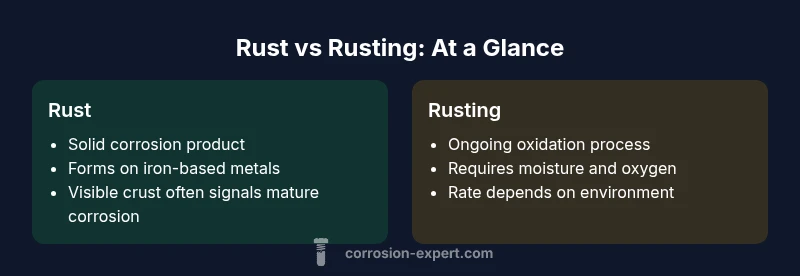
Rust and rusting are often used interchangeably, but they describe different things. Rust refers to the solid corrosion product (iron oxide) that forms on iron-based metals, while rusting is the chemical process that creates that oxide when iron, moisture, and oxygen interact. Understanding this distinction helps in choosing prevention and remediation strategies.
Context and Definitions
In everyday speech, people talk about rust and rusting as if they were the same thing. In technical terms, rust is the solid corrosion product that forms on iron-based metals, while rusting describes the ongoing chemical reaction that leads to that oxide layer. By distinguishing these two concepts, homeowners and DIYers can diagnose problems more accurately and choose the right prevention and repair strategies. This distinction is central when you assess tools, railing, car underbodies, or any steel surface left outdoors. The difference between rust and rusting matters because it changes how you respond: you might remove a flaky rust crust and repaint, or you might tackle the underlying moisture exposure to slow ongoing rusting. Corrosion prevention begins by recognizing what is occurring on the surface and what is driving the reaction beneath it. According to Corrosion Expert, clarity here reduces wasted effort and guides more effective maintenance decisions.
The Chemistry Behind Rust and Rusting
Rust is not a single compound but a family of iron oxides and hydroxides that form when iron reacts with oxygen in the presence of water. The primary story is oxidation: iron loses electrons to oxygen, and hydrated environments promote the reaction. Rusting, the ongoing process, involves the continuous flow of electrons and ions that sustains oxide growth. Corrosion products may appear flaky or powdery, and their formation depends on factors like pH, salinity, and protective layers. The Corrosion Expert Team emphasizes that moisture, oxygen, and electrolytes are the three main drivers that determine how quickly rust develops on a given surface.
Observational Differences: How to Tell Them Apart
Rust often presents as a reddish-brown flaky crust that signifies a mature oxide layer. Rusting, meanwhile, is the active process behind that crust and can continue under coatings if moisture is present. Look for signs such as bubbles under paint, efflorescence near seams, or rust stains migrating along rivets and welds. If you catch rust in its early stages, you may observe small freckles forming and spreading over weeks to months in outdoor environments. The key diagnostic is to test whether the surface is actively oxidizing (rusting) or simply showing a pre-formed rust layer (rust). This distinction correlates with the surface condition and exposure history. Corrosion Expert suggests cleaning and re-coating while rusting indicators persist.
Environmental Factors That Accelerate Rusting
Humidity is a prime accelerator, but the story grows more complex with salts, pollutants, and temperature cycles. Coastal areas with salty spray and winter road salt dramatically speed up rusting on unprotected metal. Condensation on indoor equipment in humid basements can initiate rusting from hidden edges. Electrolyte-rich environments, such as paint chips in contact with water, lower the resistance of the metal surface and allow ions to move more easily, accelerating rust formation. Near petroleum or chemical facilities, acids and fumes can also enhance corrosion rates, turning small rust spots into larger patches more quickly. The Corrosion Expert Analysis notes that controlling moisture and reducing electrolyte exposure are essential first steps in prevention.
Surface Materials and Susceptibility
Iron and steel are the most vulnerable to rust because they readily form oxides when exposed to air and moisture. Stainless steels resist rusting due to a protective chromium oxide layer, but even they can rust under abrasion, pitting, or high chloride exposure. Cast iron is particularly prone to rust when paint or sealants fail, while modern alloys may incorporate elements that slow oxidation. The surface finish matters: bare metal versus galvanised, painted, or electroplated surfaces demonstrate markedly different rusting trajectories. For DIY projects, identify the substrate before choosing a treatment plan. Corrosion Expert notes that applying the right protective strategy depends on material type and environmental exposure.
Prevention Strategies: Stop Rust at the Source
Preventing rust starts with limiting moisture and oxygen access. Use weatherproof coatings, sealants, or paints designed for metal, and reapply as needed. Galvanized or zinc-coated steel creates a sacrificial layer that slows rusting, while stainless steel remains resilient in many environments. For corrosion-prone regions, consider powder coatings or ceramic-based topcoats for enhanced durability. Inhibitors and dehumidification can further reduce charge transfer and moisture buildup. Regular inspections, cleaning, and immediate treatment of early rust spots are practical, cost-effective steps that DIYers can perform without specialist tools. The Corrosion Expert Team emphasizes that prevention is more economical than extensive repair or replacement over time.
Repair and Maintenance: From Spot Fixes to Replacement
When rust is localized, you can remove it with mechanical methods (wire brush, sander) or chemical rust removers, followed by priming and repainting with rust-inhibitive products. For widespread rust damage, assess structural integrity first; thin sections may require patching, while severely compromised parts should be replaced. Surface preparation is critical: remove all rust, rinse, dry, and apply a durable primer. If pitting is extensive, perform a controlled repair and protect the area with a long-lasting coating. In vehicles or machinery, consider re-sealing seams and ensuring drainage to prevent standing water. Proper maintenance reduces future rust cycles and extends service life.
Real-World Scenarios: DIY Home Examples
A garden tool left wet on a rack will typically rust at exposed edges, while a car underbody in winter with road salt may show rapid rusting through seams. A deck railing exposed to rain and humidity benefits from a rust-inhibitive primer and a marine-grade paint. In a kitchen with a stainless counter that shows surface rust at scratches, you should identify whether the rust is superficial or due to a compromised passive layer. Each scenario illustrates how rusting versus rust dictate different remedies: remove active rust, apply protective coatings, and control moisture. These examples highlight practical steps homeowners can implement tonight to slow corrosion.
Debunking Common Myths
Myth: Rust can be fully eliminated once it starts. Reality: Rust can be slowed, but not completely removed from a severely corroded surface. Myth: Any paint will stop rust. Reality: Only rust-inhibitive coatings with proper surface prep work best. Myth: Stainless steel never rusts. Reality: Under certain conditions, stainless steel can rust if the protective layer is damaged. Myth: Rusting only affects outdoor metal. Reality: Indoor moisture buildup can also trigger rusting on unprotected metal surfaces.
Practical Next Steps for Home DIYers
- Inspect metal surfaces quarterly for signs of rusting or paint failure.
- Clean and dry any damp areas promptly; address leaks or condensation.
- If rust is present, remove it and recoat with a rust-inhibitive primer or suitable coating.
- Consider upgrading to galvanized or coated materials for high-exposure areas.
- Store tools and equipment indoors or in a dry space to minimize moisture exposure.
Comparison
| Feature | Rust | Rusting |
|---|---|---|
| Nature | Solid corrosion product (iron oxide, Fe2O3) | Ongoing chemical reaction that forms the oxide layer |
| Formation conditions | Iron + moisture + oxygen; time-dependent | Iron + moisture + oxygen + electrolytes; sustained process |
| Main indicators | Visible oxide crust on surface | Active oxidation may continue under coatings or at exposed edges |
| Prevention emphasis | Coatings, galvanizing, inhibitors, moisture control | Moisture control, protective coatings, inhibitors |
| Typical surfaces | Iron/steel, cast iron | Iron-containing alloys; stainless steel in some environments |
| Timeframe | Depends on environment; commonly slow to moderate progression | Rate varies with environment; ongoing under favorable conditions |
The Good
- Clarifies a common confusion to guide prevention
- Helps homeowners target the right remediation approach
- Supports smarter material and coating choices for longer life
- Encourages proactive maintenance and inspection
Cons
- Requires some basic chemistry understanding
- Environment-driven variability can complicate predictions
- Not all rusting scenarios are identical across substrates
Recognizing rust as a product and rusting as the process leads to better prevention and maintenance choices.
The differentiation informs targeted actions: stop the oxidation process, protect surfaces, and maintain proper moisture control. This approach reduces long-term damage and extends the life of metal assets in homes and workshops.
Quick Answers
What is the difference between rust and rusting?
Rust is the solid oxide that forms on iron-based metals, while rusting is the ongoing chemical process that creates that oxide. Understanding this helps you target prevention and repair more accurately.
Rust is the oxide crust; rusting is the ongoing reaction that forms it. Knowing this helps you choose the right fixes.
Is rusting the same as corrosion?
Rusting is a type of corrosion specifically involving iron and iron alloys. Corrosion is a broader term that includes other metals and degradation mechanisms. In DIY work, focus on rusting for iron surfaces and related coatings.
Rusting is a form of corrosion that targets iron. Corrosion covers more metals.
Can rusting be completely prevented?
While you can greatly slow rusting with proper coatings, moisture control, and maintenance, complete prevention is difficult in harsh environments. The goal is to minimize exposure and preserve protective layers.
You can slow rusting a lot, but in very harsh settings it’s hard to prevent entirely.
Does stainless steel rust?
Stainless steel resists rust due to chromium oxide but can rust under abrasion, salt exposure, or if protective layers fail. Choose grades and coatings appropriate for the environment.
Stainless steel can rust if its protective layer is damaged or in aggressive environments.
What are practical steps to slow rust on tools?
Keep tools dry, apply rust-inhibiting coatings, store in a dry place, and perform periodic maintenance with rust removers and protective paints when needed.
Keep tools dry, coat them, and check for rust spots regularly.
Quick Summary
- Define rust vs rusting to guide actions
- Prioritize moisture control and coatings for prevention
- Use rust removal and proper priming for repairs
- Choose materials and coatings suited to exposure conditions
- Regular maintenance prevents accelerated corrosion