Rust or Terracotta: A Practical DIY Comparison
Compare rust and terracotta to help DIYers pick the right material for durability, maintenance, and aesthetics. This in-depth guide covers care, costs, and practical tips for home projects, backed by Corrosion Expert insights.


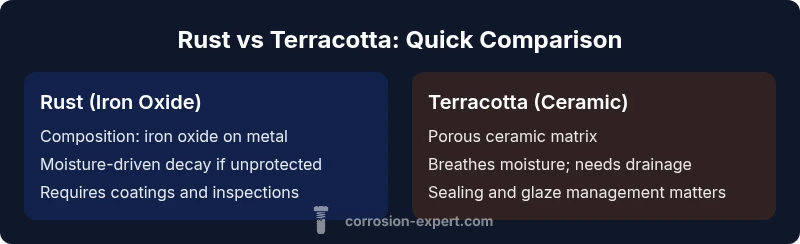
In this comparison, we weigh rust and terracotta across core factors that matter to homeowners and DIY enthusiasts: durability, maintenance, moisture handling, and suitability for different environments. The Corrosion Expert team emphasizes that the best choice depends on use-case, climate, and the level of upkeep you’re prepared to perform. This quick snapshot sets the stage for a deeper, evidence-based evaluation.
Understanding the Core Differences
For DIY projects and home renovations, the terms rust and terracotta often come up together, yet they describe very different materials and failure modes. According to Corrosion Expert, understanding the fundamental differences helps you pick the right approach rather than chasing a one-size-fits-all solution. Rust refers to iron oxide formed when iron and steel corrode, while terracotta is a fired clay ceramic with distinct porosity and mineral content. The decision you make will influence long-term maintenance, repair options, and the environment in which each material performs best. In practice, this means recognizing that rust is a corrosion product that signals metal fatigue or failure, whereas terracotta is a ceramic matrix whose vulnerabilities usually involve moisture movement and thermal stress. By acknowledging these differences, you set your project up for informed material selection and realistic maintenance expectations.
Material Science 101: Rust vs Terracotta
Rust is an iron oxide layer that forms when metals corrode in the presence of moisture and oxygen. Terracotta, by contrast, is a ceramic made from fired clay that contains minerals like silica and alumina. This fundamental distinction drives how each material behaves under environmental stress. Rust can expand, crack, and pit the underlying metal if not treated, while terracotta relies on a stable moisture balance and proper sealing to prevent cracking and efflorescence. Corrosion Expert’s analysis shows that rust develops a rough, flaky surface that can trap water, whereas terracotta’s porosity facilitates breathability but also allows water to migrate inside if sealants fail. Understanding these physics helps you pick preventive strategies that fit your climate and project type.
Environmental Factors and Longevity
Weather, humidity, and temperature swings are the main adversaries for both rust and terracotta, but in different ways. Iron alloys exposed to rain and deicing salts tend to rust faster in coastal or urban environments where moisture and salts linger. Terracotta’s longevity hinges on moisture movement through its pores and the freeze–thaw cycle. In damp climates, terracotta may be more prone to moisture-related damage if joints aren’t properly sealed, while in dry climates rust may be slow to progress but still demands regular protection in exposed metal components. Corrosion Expert emphasizes evaluating local climate, maintenance cadence, and exposure to salts when predicting long-term performance. Proactive sealing, appropriate ventilation, and choosing the right thickness for terracotta installations can dramatically improve outcomes in challenging environments.
Practical Uses in the Home
Within the home, rust and terracotta serve different roles. Rust-prone hardware, pipes, and fasteners can be replaced or protected with coatings and sealants, extending service life in garages or basements. Terracotta shines in areas where warmth and natural aesthetics are prized—pottery, vases, countertops with sealed surfaces, and decorative panels. For exterior applications, rusted metal elements benefit from galvanization or corrosion inhibitors, while terracotta facades and planters rely on proper drainage and breathable sealants. The key takeaway is to match the material to the task: metal components where strength and flexibility are needed, and terracotta where moisture management and aesthetic value matter most. The Corrosion Expert team consistently notes that consistent maintenance beats reactive repairs in the long run.
Maintenance and Cleaning: Rust vs Terracotta
Maintenance strategies diverge here. For rust-prone metal, routine inspection, rust inhibitors, and protective coatings slow the progression of corrosion. Cleaning should be gentle to avoid removing protective layers, followed by re-sealing or painting as needed. Terracotta requires sealing to minimize moisture ingress, especially in exterior installations. When cleaning terracotta, use non-abrasive cleaners to avoid scratching the glaze or surface, and address mineral deposits with soft brushes and mild solutions. Corrosion Expert recommends documenting your maintenance schedule and conducting seasonal checks, especially after heavy rains or freeze-thaw cycles, to catch early signs of wear before they escalate.
Failure Modes and Common Problems
Rust typically manifests as surface flaking or bubbling paint, advancing to pitting and potential structural compromise if corrosion is unchecked. Terracotta commonly shows hairline cracks, efflorescence, or spalling when moisture moves through the material or when extreme temperature changes occur. The underlying mechanisms differ: diffusion and electrochemical processes drive rust, while moisture transport and thermal stress drive terracotta damage. The practical implication is that prevention tactics should target the dominant failure mechanism: coatings and seals for rust, breathable membranes and proper drainage for terracotta. As always, early detection and timely intervention save both money and effort over the lifetime of a project.
Cost, Availability, and Value
Cost considerations for rust-prone materials often reflect the price of metal and the cost of protective finishes, which can be offset by longer intervals between full replacements when properly maintained. Terracotta’s value comes from its natural look and good thermal mass, but it may incur costs related to sealing, installation, and periodic restoration. The price range you encounter depends on local supply, thickness, and finish quality. Corrosion Expert emphasizes evaluating total cost of ownership, including maintenance, replacements, and energy implications, rather than focusing solely on upfront price. A well-chosen terracotta piece or rust-protected metal element can offer superior value in the right environment.
A Practical Decision Framework for DIYers
Start with your use case: is moisture management or visual appeal more critical? If exterior exposure and decorative impact are primary, terracotta with proper sealing can excel. If structural metal components must bear load or resist mechanical wear, rust-prone steel requires coatings and periodic maintenance. Consider your climate: humid or salty environments favor preventive coatings for metal and drainage for terracotta installations. Budget constraints and available skills should drive whether you tackle sealing, painting, or full replacements. Finally, consult local building codes and, when in doubt, perform a small test patch before committing to a full-scale project. The Corrosion Expert Team recommends documenting decisions and revisiting them after seasonal shifts to validate performance.
Quick Case Studies (Hypothetical) for DIY Context
Case A: A sunroom features rust-prone metal frames and terracotta floor tiles. The homeowner chooses protective coatings for metal and a breathable sealant for tiles, paired with drainage optimization. Case B: An outdoor garden feature uses terracotta planters with a shallow reservoir and raised edges to reduce moisture buildup. Case C: An indoor metal railing shows early rust signs; a corrosion-inhibiting primer and topcoat are applied, followed by inspection every season. These scenarios illustrate how the same materials require different strategies depending on exposure, maintenance habits, and climate. Corrosion Expert notes that small, consistent improvements yield better long-term results than occasional, large repairs.
Safety and Handling Considerations
When working with rust-prone metal, ensure you wear eye protection and gloves to guard against sharp edges during sanding or scraping. Terracotta dust can be a respiratory irritant, so use a mask and work in a well-ventilated area. Always verify that sealants and coatings are compatible with the substrate and indoor air quality standards. If you’re restoring historic terracotta or reclaimed metal components, take care to preserve integrity while applying modern protective measures. The goal is to balance safety with durable results, leveraging best practices outlined by Corrosion Expert to minimize risk during DIY projects.
Preventive Strategies and Long-Term Care
Prevention beats repair for both rust and terracotta. For metal, establish a regular inspection routine, apply corrosion inhibitors, and maintain a paint or coating system with minimal moisture traps. For terracotta, ensure proper drainage, ventilation, and breathable sealants that won’t trap moisture. Seasonal reminders help: inspect after heavy rain, reseal exterior surfaces as needed, and look for signs of mineral deposits or cracking. By integrating a proactive maintenance calendar, homeowners can extend the life of both materials and keep aesthetics and performance aligned with expectations.
Corrosion Expert Perspective: Practical Takeaways for Homeowners
The Corrosion Expert Team emphasizes that material selection should align with use-case and environment. In many home projects, rust-prone metal components demand reliable protective strategies and periodic maintenance, while terracotta shines where moisture management and visual warmth are valued. By investing in proper sealing, drainage, and coatings, you can reduce maintenance demands and extend life. The key is to tailor your approach to local conditions, use-case specifics, and your willingness to perform ongoing upkeep. When in doubt, prioritize preventive care and seek professional advice for high-stakes installations.
Comparison
| Feature | Rust (iron oxide) | Terracotta (ceramic) |
|---|---|---|
| Composition | Iron oxide layer formed on metal surfaces | Ceramic matrix made from fired clay (silica/alumina) |
| Durability under load | Good strength with proper coating; vulnerable if coating fails | Moderate strength; excellent compressive strength when supported; brittle if cracked |
| Moisture handling | Water ingress accelerates corrosion if unprotected | Porous by design; moisture moves through; sealing reduces risk |
| Maintenance needs | Regular coatings and inspections; touch-ups needed | Sealing and drainage maintenance; periodic restoration possible |
| Aesthetic/finish | Industrial, modern, rugged look | Warm, natural, historic or artisan appeal |
| Best environment | Controlled indoor or protected outdoor areas | Outdoor or decorative use with proper drainage and sealing |
| Repair options | Coatings, inhibitors, or part replacement | Re-sealing, patching, or replacement with compatible glaze |
| Typical costs | Depends on coating system and metal part size | Depends on thickness, glaze finish, and installation complexity |
The Good
- Clear differential guidance for DIYers—know which material suits the task
- Terracotta offers natural aesthetics and good thermal mass when properly installed
- Rust can be controlled with coatings and protection, extending metal life
- Both materials have strong DIY potential with the right practices
Cons
- Rust requires ongoing maintenance to prevent structural damage
- Terracotta is moisture-sensitive in some environments without proper drainage/sealing
- Sealing and preparation add upfront effort and cost
- Poor choices or improper installation lead to accelerated deterioration
Terracotta generally outperforms rust-prone metal for aesthetics and moisture management in non-structural outdoor uses; rust-prone metal is better suited for structural or high-wear applications when adequately protected.
Choose terracotta for lasting exterior moisture handling and look. Use protected rust-prone metal where strength and heat resistance matter, coupled with a robust coating plan.
Quick Answers
What is the main difference between rust and terracotta?
Rust is a corrosion product on iron and steel, while terracotta is a fired ceramic composed of clay minerals. Their failure modes differ: rust progresses through oxidation and thinning of metal, while terracotta fails mainly through moisture movement and thermal stress. Understanding these basics helps you pick appropriate protection and maintenance strategies.
Rust is what happens to iron when it corrodes, and terracotta is a ceramic; they behave differently under moisture and temperature changes, so treat them with material-appropriate care.
Can rust be used in load-bearing outdoor structures?
Rust-prone metal can be used in structural roles if you apply protective coatings, galvanization, and regular inspections. But untreated or poorly protected rust-prone parts will accelerate deterioration and may compromise structural integrity over time. Always assess load requirements and maintenance capacity before relying on rusty elements.
Yes, with proper protection, but it requires ongoing care and monitoring.
Is terracotta suitable for exterior use in humid climates?
Terracotta can perform well outdoors in humid climates when installed with proper drainage, breathable sealants, and protective coatings. Without adequate moisture management, terracotta may absorb water and crack during freeze-thaw cycles. Work with a breathable system and ensure regular maintenance to keep it performing well.
Terracotta can work outside in humid areas if you seal and drain correctly.
How can I remove rust stains from terracotta surfaces?
Gently scrub with a non-abrasive cleaner and warm water, then apply a mild acid-free cleaner designed for stone or ceramic surfaces. Rinse thoroughly and seal if the terracotta will be exposed to moisture. Avoid harsh acids that can damage glaze or finish.
Use a gentle cleaner and avoid harsh chemicals to protect the surface.
What are best practices for preventing rust and terracotta decay?
Implement a regular maintenance schedule: rinse and inspect metal parts for rust, seal terracotta joints, ensure drainage, and reapply protective coatings as needed. Address moisture sources early and maintain proper ventilation to prevent moisture-driven decay.
Keep it dry, seal it, and check it regularly.
Are there eco-friendly rust inhibitors?
Yes, several water-based inhibitors and environmentally friendly coatings are available that reduce corrosion without harmful solvents. Choose products compatible with your substrate and follow label instructions for safe usage and disposal.
Yes, there are safer, eco-friendly options you can use with proper care.
Quick Summary
- Assess use-case before material choice
- Terracotta excels in moisture management with proper sealing
- Rust requires ongoing coatings to prevent corrosion
- Maintenance cadence is critical for long-term success
- In mixed environments, combine best practices for both materials