Surface Rust vs Rot: A Practical DIY Comparison
A thorough, evidence-based comparison of surface rust and rot, with practical DIY fixes, when to replace, and proven prevention tips for homeowners and DIYers.


Surface rust is a superficial oxide layer on metal, while rot means deeper decay that compromises structural integrity. For DIYers, treat surface rust with cleaning, rust converters, and protective coatings; rot typically requires replacement or professional repair. This quick comparison helps you decide the safest and most cost-effective next steps.
What is surface rust vs rot?
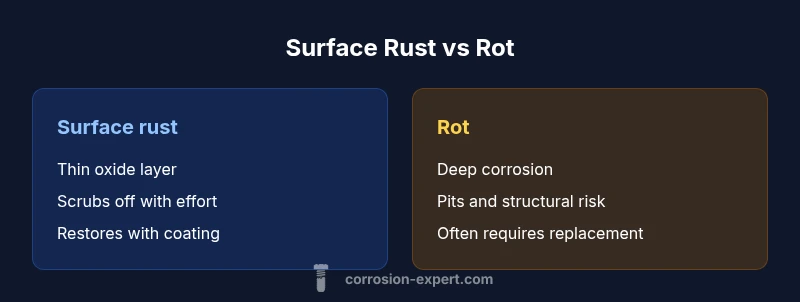
Surface rust refers to the thin, uniform oxide layer that forms on exposed iron or steel when moisture and oxygen are present. It often appears as reddish-brown film that can be scrubbed away with a wire brush or chemically treated to slow reformation. Rot, in contrast, describes deeper corrosion or damage that has penetrated beyond the surface, sometimes resulting in pits, flaking, or visible cracks. In metal contexts, professionals distinguish between surface rust and more serious corrosion; laypeople may use “rot” to describe any decay. The distinction matters because it guides both the repair strategy and the expected lifespan of the item. Understanding the difference in real-world terms helps homeowners avoid wasted effort and expensive mistakes when repairing fences, tools, or structural metal components.
How surface rust forms and why it often stays on the surface
Surface rust begins with microscopic pits where moisture and oxygen meet the iron surface. If the environment dries out regularly and a protective coating is quickly reapplied, the rust layer can be stopped and removed without affecting base metal. When moisture remains or the coating is compromised, rust can deepen, but still stay largely on the outermost layer for a time. The key to keeping surface rust from progressing is to remove the oxide before it pins itself into the microtexture of the metal and to restore a barrier that blocks air and water from re-entering. In this stage, buyers and homeowners can manage the problem through routine maintenance and reactive cleaning.
How rot progresses: deeper damage and its warning signs
Rot implies that corrosion has penetrated past the surface, creating pits that compromise strength. In metal, this can appear as deep discoloration, bubbling, flaky patches, and loss of material around fasteners or joints. In wood, decay is similar in effect but arises from fungi breaking down cellulose or lignin. In metal items, rot-like deterioration can lead to structural concerns, especially for load-bearing parts like rails, frames, or hinges. Signs include sudden stiffness, creaking, or wobble, and repeated cleaning may fail to restore the original integrity. The moment you detect these patterns, it is prudent to assess whether repair is feasible or replacement is necessary.
Case studies: common materials and outcomes
For a steel fence, surface rust that is brushed and sealed can extend its life with modest maintenance. A car’s body panel with light surface rust can respond to rust treatment and repainting if the substrate is intact. A metal shelf with deep pits near joints may require reinforcement or replacement if the pits threaten structural performance. Wood components susceptible to rot, such as deck posts in damp environments, require different interventions: sometimes treatment, sometimes replacement, and always moisture control. The overarching lesson is that the material, structural role, and moisture exposure determine whether surface rust can be contained or rot has progressed to a failure risk.
The DIY assessment: tell-tale signs and quick tests
Start with a visual scan for uniform coloration versus dark pits or craters. Use a magnet to gauge whether the core is still magnetically attracted; if the magnet sticks firmly to a suspected area after scraping, you may be dealing with surface rust. Perform a light tap test—listen for a dull thud indicating voids and deeper corrosion. Pull on nearby fasteners to see if the metal remains rigid; looseness or movement may signal rot-like weakness. If removal reveals powdery or crumbling material beneath the surface, the issue is more serious. Finally, rely on moisture checks to verify whether damp conditions persist. These checks help determine when to proceed with cleaning, protection, or replacement.
Cleaning and treating surface rust: step-by-step guide
Put on protective gloves and safety goggles. Begin with mechanical cleaning using a wire brush or sandpaper to remove loose oxide. Wipe clean, then apply a rust converter to neutralize remaining rust and provide a paint-friendly surface. After the converter dries, apply a rust-inhibiting primer, followed by your chosen topcoat. For areas with tight corners, small brushes or dental picks can reach confined spaces. If the metal is heavily corroded, consider replacement rather than over-coating, as coating over deep pits may fail prematurely. Finally, store or position the item away from moisture sources to prevent reoccurrence.
When rot is present: assessment, repair, and replacement decisions
If signs point to rot, evaluate the item’s role and criticality. For non-structural parts, modest repairs or reinforcement may suffice, but hidden damage can undermine strength. For safety-critical components like load-bearing rails or structural frames, replacement is usually the wiser option. In wood rot, removing decayed sections and treating residual wood with antifungal agents can help, but often replacement is necessary for lasting safety. In all cases, address moisture sources and consider upgrading protective coatings to withstand future exposure. If in doubt, consult a professional to assess load, integrity, and long-term viability.
Prevention: how to keep surface rust from returning and rot from forming
Reduce moisture exposure through proper drainage and ventilation. Apply a protective coating system: primer, rust converter, and topcoat designed for outdoor or high-humidity environments. Use corrosion-resistant alloys or galvanized finishes when possible. Regular maintenance includes visual checks, cleaning, and prompt repairs at the first signs of oxidation. Store tools and metal items in dry spaces, and consider sealants or barrier coatings for joints and crevices. With consistent care, small rust spots can be contained before rot progresses.
Long-term maintenance plan for rust-prone assets
Create a seasonal maintenance calendar with a reminder to inspect exterior metalwork, check for moisture intrusion, and recoat surfaces as needed. Maintain a tidy environment free of standing water near metal components and ensure proper drainage around foundations or rails. Invest in high-quality primers and coatings rated for your climate, and plan proactive replacements for parts with repeated corrosion. Keep a log of repairs and outcomes to guide future decisions and learn from past experience.
Comparison
| Feature | Surface rust | Rot (deep corrosion) |
|---|---|---|
| Nature | Thin oxide layer, uniform color | Deeper decay with pits and potential material loss |
| Typical indicators | Flat, reddish-brown film; scrubs off | Pits, flaking, dullness; structural weakness |
| Repair approach | Cleaning, rust converter, protective coating | Replacement or major structural repair |
| Required tools | Wire brush, sandpaper, primer | Welding, reinforcement, possibly replacement |
| Cost context | Low to moderate (DIY-friendly) | Variable to high (depends on replacement) |
| Best for | Non-structural items, quick fix | Load-bearing parts or safety-critical components |
The Good
- Clear differentiation helps target fixes quickly
- Low-cost DIY restoration is possible for minor rust
- Prevention-focused approaches reduce future damage
- Can extend service life with proper maintenance
Cons
- Rot indicates serious damage requiring replacement or professional assessment
- Mistaking rot for surface rust can lead to unsafe use
- DIY fixes may fail on structural components without proper inspection
Treat surface rust early and replace or professionally repair rot damage when present
A proactive approach prioritizes preserving safe, functional metalwork. Surface rust is usually manageable with cleaning and coating, while rot requires assessment for structural integrity and often replacement. The right move depends on severity and safety implications.
Quick Answers
What is the difference between surface rust and rot?
Surface rust is a thin oxide layer on metal that can often be cleaned and treated with protective coatings. Rot is deeper corrosion that has penetrated the surface, potentially causing structural weakness and requiring replacement or professional repair.
Surface rust is shallow; rot goes deeper and can threaten strength. If you see pits or cracks, treat it as rot and plan for replacement if it affects safety.
Can I fix surface rust without replacing the item?
Yes, many surface rust issues can be addressed with mechanical cleaning, rust converters, and a fresh protective coating. The key is to remove all active rust and restore a barrier to exposure.
You can often fix surface rust without replacing the item by cleaning it and applying protective coatings, as long as the base metal is sound.
What tools are best for removing surface rust?
Common tools include a stiff wire brush, a grinding wheel with careful control, sandpaper, and rust-removing chemicals designed for metal. Always wear safety gear and work in a ventilated area.
Use a wire brush and sandpaper first, then rust converter and primer for a durable finish.
When should rot require replacement rather than repair?
If deep pits, significant material loss, or compromised structural integrity are present, replacement is usually safer and more cost-effective than repair.
If the metal is structurally compromised, it’s safer to replace rather than try to fix it.
Is it okay to use household products like vinegar to treat rust?
Some household solutions can help remove minor rust, but they may not be effective on heavy rust or rot. Use purpose-built products for reliability and safety, especially on load-bearing components.
Household remedies can help a little, but for serious rust, stick to proven metal cleaners and protectants.
Quick Summary
- Inspect regularly for surface rust before it deepens
- Characterize depth to decide restoration vs replacement
- Use rust converters and protective coatings on minor rust
- If structural integrity is compromised, replace
- Prevent future rust with proper sealing and storage