Rust or corrosion: A practical comparison for homeowners
This article compares rust and general corrosion, offering practical DIY guidance for homeowners on prevention, detection, and remediation of metal degradation.


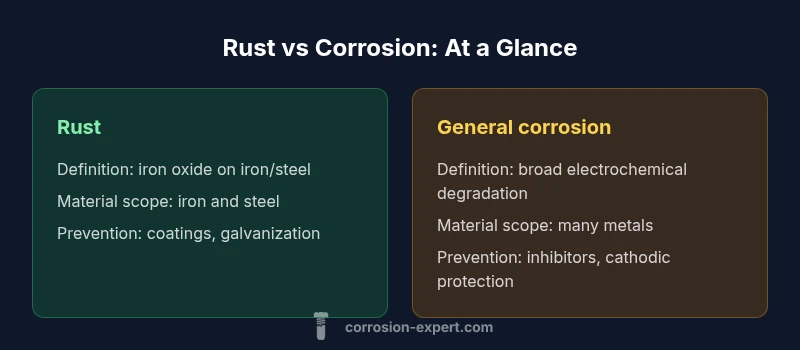
Rust and corrosion are related but distinct processes. Rust refers specifically to iron oxide forming on iron or steel, while corrosion is the broader electrochemical breakdown of metals under environmental exposure. For DIY projects, focus on metal type, moisture management, and protective coatings to prevent both rust and other forms of corrosion; use targeted strategies based on material.
What rust or corrosion mean in practice
Metal degradation is a common, often slow, process that homeowners encounter in outdoor rails, tools, gutters, and appliances. When people say rust or corrosion, they are usually talking about two related but distinct phenomena. Rust is the orange-brown oxide that forms specifically on iron or steel when iron reacts with oxygen in the presence of moisture. Corrosion, by contrast, is a broader electrochemical process that can affect many metals, including aluminum, copper, zinc, and stainless steel, under various environmental conditions. For the DIYer learning to manage rust or corrosion, the practical takeaway is simple: identify the metal involved, assess exposure to moisture and pollutants, and apply a protective strategy that fits the material. In Corrosion Expert analyses, homeowners who start with a material-aware plan tend to see longer service life and lower maintenance costs over time.
Priorities for DIY homeowners
Material identification matters
Metal type dictates the corrosion pathway and the most effective prevention. Iron and steel are most prone to rust, while aluminum forms aluminum oxide protective layers that are often misunderstood as rust. Non-ferrous metals—copper, brass, bronze—often form patinas or other corrosion products that require different care. Begin with a quick material check: is the part steel or iron, aluminum, or copper? This determines you approach and the expected outcomes.
Environment drives the risk
Outdoor exposure, humidity, salinity (think coastal air), and pollutants accelerate corrosion. Areas near the ocean or with road salts see faster degradation. Indoors, humidity, cooking vapors, or chemicals can also drive corrosion. The practical implication for DIY projects is to design for moisture control: dry storage, seal joints, and regular cleaning; these basic steps reduce both rust and other corrosion forms.
The maintenance mindset
Small, regular inspections beat big repairs. Look for surface dulling, powdery residues, flaking, or discoloration. When caught early, rust and corrosion respond to cleaning and protective measures that are inexpensive and straightforward for a DIYer. In Corrosion Expert practice, an ongoing maintenance schedule that includes moisture management and protective coatings yields the best long-term results.
Comparison
| Feature | rust | general corrosion |
|---|---|---|
| Definition | Iron oxide formed on iron/steel due to moisture and oxygen | Electrochemical degradation affecting many metals (not limited to iron) |
| Material scope | Primarily iron and steel | Most metals including steel, aluminum, copper, alloys |
| Environmental triggers | Moisture + oxygen + iron presence | Moisture, electrolytes, pollutants, and electrical potentials |
| Visible indicators | Reddish-brown flaky oxide on surfaces | Discoloration, pitting, loss of protective coatings, surface roughness |
| Prevention & treatment | Coatings, galvanization, rust converters; keep dry | Anti-corrosion coatings, inhibitors, cathodic protection; regular maintenance |
| Maintenance cost/effort | Often minimal for early rust with basic maintenance | Can be higher and variable depending on metal and environment |
| Best for | Iron/steel items, outdoor metalwork | Non-ferrous metals and mixed environments |
The Good
- Clarifies scope by distinguishing rust from general corrosion
- Highlights prevention strategies applicable across metals
- Encourages proactive maintenance and early detection
- Supports budgeting with preventive planning
Cons
- Rust is just one form of corrosion; broader view needed for some projects
- Overemphasis on rust can mislead when working with non-ferrous metals
- DIY fixes may not suffice for severe corrosion and hidden damage
Targeted prevention wins for iron/steel; general corrosion strategies suit mixed metals
If you primarily work with iron or steel, focus on moisture control and protective coatings. For mixed metals or indoor/outdoor exposure, implement a broader corrosion prevention program and inspect regularly to catch early signs.
Quick Answers
What is the difference between rust and corrosion?
Rust is a specific form of corrosion that happens on iron and steel when moisture and oxygen interact with the metal. Corrosion is the broader process that can affect many metals under environmental conditions. Understanding the distinction helps you pick the right prevention and repair approach.
Rust is a form of corrosion that affects iron and steel; corrosion is the broader degradation that can hit many metals. Knowing this helps you choose the right prevention.
Do aluminum or copper rust?
Rust occurs specifically on iron-based metals. Aluminum forms aluminum oxide, a passive film that can protect the surface but still corrode under certain conditions. Copper develops a patina and can corrode in polluted environments. Treat each metal with its appropriate prevention strategy.
Rust only happens on iron; aluminum and copper corrode differently and need their own care.
Are there safe DIY rust removal methods?
Yes, for light surface rust, mechanical cleaning with a wire brush or sandpaper, followed by a protective coating, can be effective. Avoid harsh solvents on delicate finishes, and always wear protective gear. For deep rust, consider rust converters or professional assessment.
Light rust can be removed with brushing and coating; for deep rust, seek more guidance.
What is the best way to prevent rust and corrosion on outdoor fixtures?
Keep fixtures dry when possible, apply weather-resistant coatings, and perform regular inspections. Galvanization or stainless alternatives can dramatically reduce rust. Routine cleaning to remove salts and pollutants also helps reduce corrosion.
Keep outdoor metal dry, coat it, and inspect regularly.
When should I replace corroded parts rather than repair?
If corrosion has penetrated structural sections, compromised safety-critical components, or worsened beyond practical repair, replacement is usually safer and more cost-effective in the long run. For cosmetic or minor degradation, repair and protection are often reasonable.
If the metal is structurally compromised, replace it; otherwise, repair and protect.
Quick Summary
- Identify whether you’re dealing with rust or broader corrosion before acting
- Prioritize moisture management, protective coatings, and maintenance
- Choose prevention methods based on metal type
- Address early signs promptly to avoid costly repairs