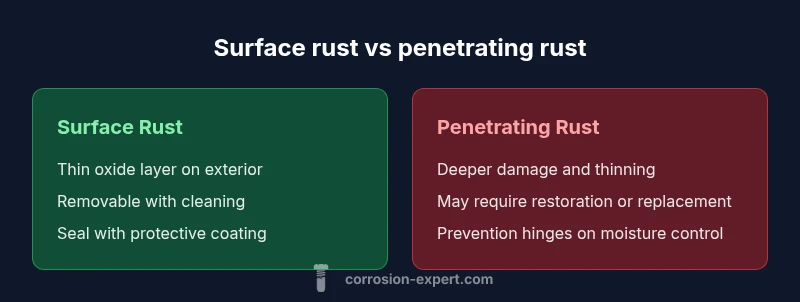
Surface rust vs penetrating rust: a practical comparison for DIYers
A practical, in-depth comparison of surface rust vs penetrating rust, covering causes, treatment options, prevention strategies, and DIY guidance for homeowners dealing with corrosion.


Surface rust vs penetrating rust describes rust that sits on the surface compared to rust that has penetrated deeper into the metal. In practice, surface rust is usually removable with cleaning and protective coatings, while penetrating rust requires deeper restoration or replacement. For DIYers, the depth of corrosion and the integrity of the material determine whether fast fixes suffice or more extensive repairs are needed.
Defining the two rust types
In everyday DIY work, you will encounter two broad categories: surface rust and penetrating rust. The phrase surface rust vs penetrating rust is a concise way to describe how far decay has progressed, and distinguishing them is crucial for choosing the right repair path. Surface rust is a thin oxide layer that forms when iron or steel metal comes into contact with moisture and oxygen. It affects the topmost grains and does not typically disrupt structural integrity. Penetrating rust, in contrast, extends below the surface, creating pits, weakening the metal, and sometimes causing pinholes or flaking. Identifying which form you are dealing with depends on visual cues, touch, and, if necessary, simple tests. According to Corrosion Expert, early recognition is the most reliable predictor of how easily you can stop the corrosion without replacing the item. This early step saves time and money while reducing the risk of failure in the future.
How rust forms: chemistry and progression
Rust forms when iron or steel reacts with oxygen in the presence of moisture. The rate and pattern of corrosion depend on humidity, temperature, protective coatings, and alloy composition. Surface rust results from the initial oxidation that sits on the exterior; if left unaddressed, moisture can penetrate through defects and initiate deeper degradation. Penetrating rust occurs when the corrosion process breaches the protective layer and begins to corrode the metal beneath. Over time, this can lead to pitting, loss of thickness, and weakened structural performance. For DIY projects, understanding this progression helps you decide whether a quick repair suffices or a more robust fix is required. Corrosion Expert emphasizes that catching rust early makes remediation easier and longer lasting.
Visual cues and diagnostic techniques
Distinguishing surface rust from penetrating rust involves simple checks. Surface rust appears as a reddish-brown, powdery coating that can be scraped away with a putty knife or wire brush. If there is only a cosmetic color and flaky deposits, the corrosion is usually superficial. Penetrating rust shows through-pitting, dark stains that extend below the surface, discoloration around joints, and visible dull or thinning areas where the metal has lost thickness. A fingernail test or light probing can reveal if the metal surface is still sound or if it has hollowed out. When in doubt, treat suspect areas with care and plan deeper assessment. The Corrosion Expert notes that early, careful inspection is key to preventing surprises later in the project.
Material-specific considerations: steel, iron, stainless, and alloys
Different metals respond to rust in distinct ways. Cast iron and carbon steel are more prone to surface rust that can quickly deepen if moisture remains present. Stainless steel develops a passive chromium oxide layer that provides corrosion resistance, but it is not immune to rust in the presence of chlorides or heat. Aluminum, while naturally resistant, can form a surface oxide that hides deeper corrosion under coatings or in crevices. Aluminum alloys may experience galling or accelerated wear when rust is introduced. For DIY work, select rust removal methods that respect the metal type; harsh grinding for stainless steel, for example, can damage the protective layer and worsen corrosion resistance.
Cleaning surface rust: methods and tools
When rust is confined to the surface, the goal is to remove oxide without damaging the base metal. A wire brush, nylon brush, or abrasive pad can lift loose rust. Chemical rust removers or phosphoric acid-based products can neutralize oxides and prepare the surface for sealing. After mechanical removal, it is essential to neutralize the area, rinse, and dry thoroughly. A primer or rust-inhibiting coating should be applied to seal out moisture and prevent future rust formation. For DIY enthusiasts, this approach typically restores appearance and slows progression if moisture is controlled and the area is protected from weather exposure.
Treating penetrating rust: deeper repair strategies
Penetrating rust requires a more careful assessment of the metal's structural integrity. If thinning or pitting is evident, you may need to perform a more extensive repair such as steel plate patching, welding, or even part replacement. In some cases, rust converters can stabilize the remaining metal, followed by a protective coating system. It is crucial to remove as much of the damaged material as possible and ensure the base is clean, dry, and sound before applying protective layers. For critical projects, consider professional evaluation to determine whether the structure remains safe and functional.
Choosing coatings and finishes to stop future rust
After cleaning or repairing, a high-quality coating system helps prevent future rust. Options include rust-inhibiting primers, epoxy coatings, polyurethane finishes, and galvanizing or plating for long-term protection. The choice depends on exposure, moisture, temperature cycling, and the required durability. For outdoor metalwork, a multi-layer approach with a corrosion-inhibiting primer, a robust topcoat, and a weather seal is typically best. Always follow manufacturer recommendations for surface preparation and recoat windows. Corrosion Expert highlights the importance of reapplication schedules and maintenance checks to keep rust at bay.
Prevention strategies for homeowners and DIYers
Prevention starts with moisture control and regular inspection. Keep tools and metals dry, store items off damp surfaces, and apply protective barriers such as paints or sealants to exposed metal. Regular cleaning to remove salt, fertilizer residues, and other corrosive agents helps reduce the risk. In outdoor environments, design choices like proper drainage, ventilation, and sun exposure can indirectly affect rust formation. For interior metal that may be exposed to humidity, a moisture barrier or dehumidification can be a simple yet effective solution. The goal is to slow the accumulation of moisture while maintaining accessible surfaces for inspection.
When to replace vs repair: a practical decision framework
A practical approach considers rust depth, location, function, and safety. If the metal retains most of its original thickness and a repair can restore strength, you can proceed with cleaning and sealing. If there are significant pits or if the integrity of critical components is compromised, replacing the part or reinforcing with a patch may be the safer option. Always test repaired areas for strength and monitor for reoccurrence. Corrosion Expert recommends building in routine maintenance and inspections to catch problems early and prevent expensive failures.
Real-world scenarios and actionable examples
Consider a garden fence with light surface rust. A quick wire brushing, rust converter, and enamel finish can restore appearance and guard against moisture. Now imagine a load-bearing steel bracket with visible deep pits. In this case, the repair may require patching or replacement and possibly a new protective coating. For automotive chassis, surface rust can be treated with degreasing, rust converter, and a durable topcoat; penetrating rust may necessitate more involved restoration or component replacement. Each scenario illustrates the importance of assessing depth and function before choosing a course of action.
Common mistakes and how to avoid them
A frequent error is assuming all rust is the same and applying a one-size-fits-all fix. Another is skipping surface preparation and moisture control, which leads to rapid recurrence. Using the wrong coating for environmental exposure can cause premature failure. Do not rush repairs; take the time to clean, dry, and properly coat. Finally, neglecting regular maintenance after repair invites a new cycle of rust. By following best practices and enlisting the right products, you improve long-term outcomes.
Comparison
| Feature | Surface rust | Penetrating rust |
|---|---|---|
| Depth of corrosion | Shallow surface layer | Deeper, sub-surface penetration |
| Repair approach | Cleaning, rust converters, coatings | Deeper restoration or replacement |
| Time to repair | Hours to days | Days to weeks |
| Best for | Non-structural surfaces or thin sections | Structural parts or heavily corroded areas |
| Long-term risk | Low if addressed early | Higher if left untreated |
The Good
- Clear paths for DIY with distinct rust types
- Avoids over-treating minor rust by focusing on depth
- Supports informed material selection and coatings
- Encourages timely maintenance to extend life
- Accessible tools and products for common rust scenarios
Cons
- Penetrating rust may require replacement or professional repair
- Surface rust can recur if moisture is not controlled
- Coating failures can happen if prep is rushed or incorrect
Address surface rust early with cleaning and sealing; penetrating rust calls for deeper assessment and possible replacement.
If corrosion is skin-deep, DIY cleaning and protective coatings work. If rust has penetrated, evaluate structural integrity and plan deeper repair or professional help to prevent failure.
Quick Answers
What is the difference between surface rust and penetrating rust?
Surface rust sits on the exterior and is usually removable with cleaning and sealing. Penetrating rust goes deeper and can compromise structural material. The depth of corrosion guides the repair approach and the likelihood of needing replacement.
Surface rust is on the surface and easy to fix, while penetrating rust goes deeper and may require more involved repair. Depth dictates the repair path.
Can I fix surface rust myself?
Yes. You can typically fix surface rust with mechanical removal, rust converters, and protective coatings. Ensure thorough drying and proper coating to prevent recurrence.
Yes, you can fix surface rust yourself with cleaning and a protective coating.
Is penetrating rust always a structural problem?
Penetrating rust often indicates some loss of metal integrity. Inspect thickness, look for pits, and assess load-bearing sections before deciding on repair or replacement.
Penetrating rust often means there may be structural concerns; check thickness and pits.
What tools work best for removing surface rust?
A wire brush, abrasive pad, or mechanical sander is effective for surface rust. For stubborn areas, rust removers or converters can help prepare the surface for coating.
Use a wire brush or abrasive pad, then consider rust converters for tough spots.
When should I replace metal instead of repairing rust?
If corrosion has significantly thinned the metal or created deep pits, replacement is typically safer and more durable than attempting a repair.
If the metal is too damaged, replacement is the safer option.
Can rust be prevented after treatment?
Yes. Use protective coatings, maintain dryness, and address moisture sources. Regular inspections and reapplication of coatings help prevent recurrence.
Yes. Keep it dry and seal it with coatings; inspect regularly.
Quick Summary
- Assess rust depth before acting
- Prioritize thorough cleaning and sealing for surface rust
- Reserve deep repairs for penetrating rust
- Use environment-appropriate coatings to prevent recurrence
- Schedule regular checks to catch rust early