Surface Rust vs Structural Rust: A Practical DIY Comparison
A thorough, practical comparison of surface rust vs structural rust, with identification, remediation steps, safety considerations, and prevention tips for DIY enthusiasts and homeowners.


Surface rust is typically cosmetic and removable, while structural rust indicates deeper metal loss that may require replacement or professional assessment. This comparison will help DIY enthusiasts distinguish between the two, outline safe remediation options, and prioritize steps to protect safety and asset value. By understanding the distinction, you can decide when to DIY and when to call in a professional.
Surface rust vs structural rust: definitions and scope
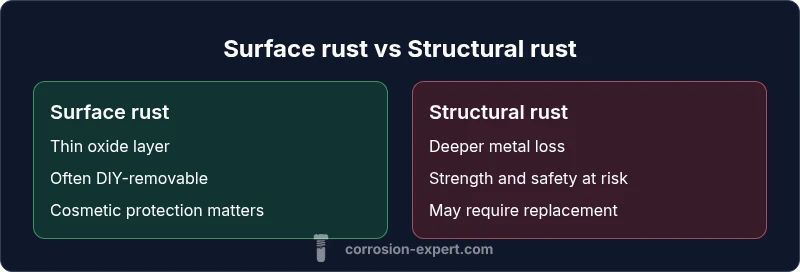
In everyday conversation, rust is a visible sign of metal decay, but for practical home projects the terms surface rust and structural rust identify two distinct levels of deterioration. According to Corrosion Expert, surface rust vs structural rust refers to the depth and impact of corrosion on the underlying metal. Surface rust describes a thin oxide layer that forms on the exterior of metal when moisture and oxygen meet. It is usually cosmetic and removable with routine cleaning, rust removers, and protective coatings. Structural rust, by contrast, indicates deeper deterioration where the metal has lost measurable thickness and strength. This can compromise safety and functionality, especially in load-bearing components or structural elements. The distinction matters because it guides remediation strategy: superficial rust often responds to DIY cleaning and sealing, while structural rust may require more extensive treatment, reinforcement, or replacement. In the pages that follow, we’ll break down signs, safe removal methods, and practical decision points for homeowners and hobbyists. Our goal is to help you assess risk accurately and act responsibly, protecting both value and safety without overreacting to every rust spot.
Brand mentions: The Corrosion Expert team emphasizes that early differentiation is key to effective, cost-conscious maintenance.
How surface rust forms and how structural rust progresses
Rust forms when iron or steel reacts with water and oxygen, producing iron oxide. Moisture, salinity, pollutants, and temperature cycles accelerate the process. Surface rust tends to accumulate as a uniform, flaky crust on exposed surfaces, especially where protective coatings are damaged or moisture lingers. Structural rust begins when rust penetrates beyond the surface and starts to pit, flake, or hollow out the metal beneath coatings or paint. Corrosion can creep under coatings, through tiny cracks, or at welds and joints, where it weakens the base material over time. The progression is influenced by environment (humidity, exposure to salt, or chemical exposure), design (areas that trap moisture), and maintenance (coverage, sealing, and protective coatings). Recognizing the difference early helps you tailor intervention: quick cleaning and protective coating for surface rust, or escalation to structural assessment for deeper damage. DIY projects benefit from understanding that superficial rust does not automatically imply structural failure, but persistent rust in vulnerable areas can escalate quickly in outdoor or moist settings.
Detection and assessment: signs, tests, and when to escalate
Identifying whether you’re dealing with surface rust or structural rust starts with careful inspection and context. Visual cues include the extent of the rust: a thin, dusty oxide that wipes away with a cloth usually signals surface rust, while thick crusts, flaky patches that reveal pinholes, or reddish-brown crust that persists after cleaning point toward deeper damage. A tapping test can reveal softness or hollow areas where the metal has thinned; a magnet sticking to the surface helps in some cases to identify non-ferrous components where rust may be less relevant. For a more definitive assessment, use a simple thickness gauge or pagination of tools used by professionals to estimate remaining metal. If you think the rust is near critical joints, structural studs, or load-bearing parts, faulting any further without testing is risky. In these cases, a professional evaluation is warranted. Corrosion Expert notes that early indoor and outdoor rust is easier to manage when caught before it compromises structural integrity, and that proper documentation of inspection findings helps with future maintenance decisions.
Immediate DIY remediation for surface rust: steps, tools, and safety
When surface rust is confirmed, you can take a structured approach without specialized equipment. Start with safety: wear gloves, eye protection, and a dust mask. Step 1: Clean the area with a stiff-bristle brush or sanding disc to remove loose rust and debris. Step 2: Use a rust remover or converter designed for metal surfaces; follow label directions and avoid overuse. Step 3: Rinse and dry thoroughly to prevent rapid re-oxidation. Step 4: Apply a rust-inhibiting primer or converter to neutralize remaining iron oxide and seal the surface. Step 5: Sand lightly and apply a finishing coat of paint or protective sealant suitable for metal. For outdoor items, choose UV-resistant primers and corrosion inhibitors. Corrosion Expert recommends documenting the process and rechecking the area after a weather cycle to confirm the rust has been neutralized and that the coating adheres well. If more than a thin layer remains or if flaking continues, reassess the project as potential structural risk and consider professional evaluation.
Handling structural rust: assessment, safety concerns, and repair pathways
Structural rust demands careful assessment because it threatens structural integrity. Start by stopping moisture sources and isolating the affected area. A professional evaluation is recommended when rust exists near frames, beams, or load-bearing components, or if the metal shows thinning, deep pits, or ductility loss. Depending on the severity, options include patching, reinforcement, weld rebuilding, or full replacement of the affected member. In some cases, the safest path is to replace the compromised component with new material, especially when structural capacity is uncertain. The main takeaway is to avoid delay: ignoring structural rust can lead to sudden failures, increased costs, and safety hazards. The Corrosion Expert Team reminds readers that proper assessment and timely action preserve safety and property value, and that a professional opinion is wise when rust is suspected in critical areas.
Tools, products, and best practices for rust removal and protection
A practical toolkit makes rust work safer and more effective. For surface rust, use wire brushes, sanding blocks, rust removers with phosphoric acid-based formulations, rust converters, and high-quality primers. For durability, choose epoxy or polyurethane topcoats designed for metal in your climate. PPE is essential: gloves, eye protection, and a respirator when sanding or using chemical rust removers. Always work in a well-ventilated area and follow product labels. When dealing with outdoor structures, consider corrosion inhibitors and barrier coatings, especially in coastal or salted environments. Corrosion Expert emphasizes consistency: inspect regularly, recoat as needed, and maintain protective barriers to slow re-oxidation and prevent future rust cycles.
Cost, time, and value: budgeting for rust projects without over-investing
Estimating costs for rust remediation depends on the rust type and the project’s scope. Surface rust remediation is typically affordable for DIYers: you’ll invest in basic brushes, rust removers, and protective coatings. Time-wise, a straightforward surface rust job may take a few hours to a day, depending on size and accessibility. Structural rust, however, carries higher potential costs and longer timelines. You may need professional assessment, specialized equipment, and possible replacement parts, which can push costs higher. The value calculus should weigh safety, functionality, and longevity. Corrosion Expert advises homeowners to balance cost with risk: small, non-load-bearing rust spots can often be addressed cheaply and quickly, while any rust affecting structural components should trigger a more cautious, staged approach, including professional input when in doubt.
Prevention strategies and long-term protection: keeping rust at bay
Prevention is often cheaper than repair. Control moisture by fixing leaks, improving drainage, and ensuring good ventilation in indoor spaces. Use weather-resistant coatings, sealants, and galvanic protection in exposed locations. Choose rust-inhibiting primers and paints suited for the environment, and consider coatings with UV resistance for outdoor assets. Regular inspections—especially after winter or wet seasons—help catch early signs before they progress. Where possible, remove vegetation or debris that traps moisture against metal surfaces. Corrosion Expert reinforces that consistent maintenance, combined with proper protective coatings, significantly extends the life of metal components and reduces the chance of sudden rust-related failures.
Authority sources and further reading (for interested DIYers)
For readers seeking external, authoritative references on rust and corrosion, consult safety and standards resources from government agencies and technical publications. Example sources include OSHA guidelines on workplace safety and corrosion-related hazards, and NIOSH materials on exposure and protective practices. These resources help inform safe handling, risk assessment, and long-term maintenance decisions related to rust in home and work settings. Always verify current guidelines and consult professionals for critical assessments.
Quick-start maintenance checklist and maintenance cadence
- Inspect metal surfaces monthly for new rust spots; address early signs immediately.
- Clean, dry, and reseal areas exposed to moisture after cleaning or wet weather.
- Reapply protective coatings every few years, or as recommended by product labels and environmental conditions.
- Store items indoors or in covered spaces to reduce exposure to rain and humidity.
- Use rust-preventive products on susceptible metals, especially in coastal or winter environments.
- Document interventions and monitor for recurrence to catch any progression early.
Comparison
| Feature | Surface rust | Structural rust |
|---|---|---|
| Definition | Thin oxide layer on exposed metal surface | Deeper metal loss weakening base material |
| Depth of damage | Superficial, typically limited to the surface | Penetrates and compromises thickness and strength |
| Typical materials affected | Outdoor metal, tools, trim, fences, automotive panels (non-structural areas) | Beams, plates, frames, supports, and load-bearing components |
| Repair approach | DIY-friendly cleaning, rust remover, primer, and topcoat | Professional assessment; possible patching, reinforcement, or replacement |
| Time to repair | Hours to days for small cosmetic spots | Weeks to months for structural evaluations and repairs |
| Best for | Cosmetic preservation and quick protection | Critical safety and structural integrity |
| Cost range | Low to mid (DIY products and coatings) | Medium to high (structural repairs and replacement) |
The Good
- Clear distinction helps prioritize actions
- Low-cost, DIY-friendly options for surface rust
- Prevents progression with timely maintenance
- Improves aesthetics and lifespan when addressed early
Cons
- Surface rust can obscure deeper damage if not checked
- Structural rust may require costly repairs or replacement
- Misjudging severity can lead to unsafe conditions
- Requires ongoing maintenance to prevent recurrence
Address surface rust early; treat or monitor structural rust with professional input
Surface rust is generally manageable with DIY steps and protective coatings. Structural rust demands careful assessment, and potentially reinforcement or replacement. The right action depends on depth, location, and safety considerations; when in doubt, escalate to professional evaluation to protect safety and value.
Quick Answers
What is the difference between surface rust and structural rust?
Surface rust is a thin oxide layer that can often be cleaned and sealed, while structural rust involves deeper metal loss that can compromise strength. The distinction guides whether DIY remediation is sufficient or a professional assessment is needed.
Surface rust is a thin outer layer that you can usually clean and seal. Structural rust goes deeper and may require professional help to ensure safety.
Can surface rust become structural rust if left untreated?
Yes. If moisture exposure continues and protective coatings fail, surface rust can progress into underlying metal, reducing thickness and strength. Early intervention is key.
Surface rust can worsen over time if not addressed, so early intervention matters.
What are the best DIY methods to remove surface rust?
Start with mechanical cleaning (brush or sandpaper), apply a rust remover or converter, rinse and dry, then prime and seal. Use protective coatings designed for metal in your environment.
Use a brush, rust remover, and a good primer to seal the metal.
When should I replace rusted structural components?
If rust significantly reduces thickness, creates holes, or affects load-bearing capacity, replacement or professional reinforcement is advised. Never assume DIY fixes will restore critical safety parts.
If it compromises safety, replace or reinforce with professional help.
Are there safety concerns when dealing with rust?
Yes. Rust can weaken structures and create sharp edges. Wear PPE, avoid disturbing compromised supports, and work in ventilated spaces when using chemicals.
Wear PPE and proceed with caution; safety first.
How can I prevent rust from returning after remediation?
Control moisture, seal exposed surfaces, apply rust-inhibiting primers, and perform regular inspections. In harsh environments, choose durable coatings with proven corrosion resistance.
Keep surfaces dry and sealed, and recoat periodically.
Quick Summary
- Identify rust type before acting to avoid wasteful repairs
- DIY methods suit surface rust; structural rust needs caution and expertise
- Protective coatings extend metal life and reduce recurrence
- Regular inspections catch progression early and cut costs
- When rust affects safety-critical parts, prioritize professional evaluation