Difference Between Rust and Burnt Orange: A Color Comparison
An analytical guide to the difference between rust and burnt orange, covering hue, context, usability, and design implications for homes and projects.


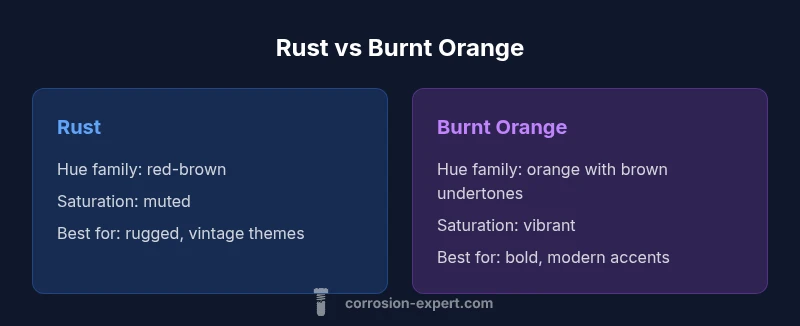
The difference between rust and burnt orange lies in hue, tone, and context: rust is a warm, earthy red-brown that leans toward reddish-orange with weathered metal associations, while burnt orange is a vibrant orange with brown undertones designed for visibility and design warmth. In practice, use rust for rugged, industrial aesthetics; burnt orange for energetic accents.
What the difference between rust and burnt orange means in color theory
Color theory helps explain why these two hues feel so different in a room, on a garment, or in branding. The phrase difference between rust and burnt orange is not just about a different name; it reflects distinct chroma, undertones, and saturation that influence perception under varied lighting. Rust sits in the red-brown family with reddish-orange tendencies, often evoking weathered metal and aging process. Burnt orange sits closer to orange but with brown undertones that temper its brightness. For designers, recognizing these distinctions is essential to predict how a surface will read from a distance and up close. In marketing or interior design, swapping these hues shifts mood, balance, and perceived warmth.
How hue, value, and chroma separate rust from burnt orange
In practical terms, hue places rust in a red-brown spectrum, while burnt orange lands squarely in orange with earthy notes. Value describes lightness to darkness; rust tends toward a mid-to-deep value, depending on the shade, whereas burnt orange can range from bright to muted. Chroma, or saturation, also differentiates them: rust often appears more muted and sophisticated, while burnt orange tends to be more vibrant and attention-grabbing. When you combine these factors with lighting, material texture, and surrounding neutrals, the same swatch can look very different.
Historical and cultural cues influence our perception of rust versus burnt orange
Rust evokes industrial heritage, rustic interiors, and vintage metal finishes. It is commonly associated with outdoor aesthetics, fall palettes, and a sense of solidity. Burnt orange carries a modern, energetic vibe, used to signal warmth, enthusiasm, and bold design choices. Cultural associations—whether in branding, sports uniforms, or home décor—shape how viewers respond emotionally to each color. Understanding these cues helps explain why the difference between rust and burnt orange matters beyond a color wheel.
Interior design: room mood, lighting, and materials
When choosing between rust and burnt orange for interiors, consider the room’s purpose and natural light. Rust pairs well with creamy whites, deep greens, and earthy textures like wood and leather, creating a grounded, aged ambiance. Burnt orange can energize kitchens or living areas when balanced with cool grays, navy, or charcoal. The same wall can read warm or cozier with rust and more vibrant with burnt orange, depending on the lighting angle and the sheen of paints or wallpapers. By testing swatches on multiple walls and under different lamps, you minimize surprises at noon and twilight.
Exterior design and branding uses: visibility and longevity
Exterior surfaces demand durability and legibility. Rust tones often blend with natural landscapes and weathered metals, delivering a timeless, rugged look for houses, fences, or signage. Burnt orange, due to its brightness, catches attention from a distance and can indicate energy, youthfulness, or a bold brand personality. For signage or storefronts, contrast with light typography to ensure readability. Consistency across photo lighting, digital screens, and printed materials reduces misinterpretation of rust versus burnt orange.
Digital color spaces and swatches: what to trust
Digital devices represent color through spaces like sRGB or AdobeRGB. Rust and burnt orange can shift slightly between screens, printers, and coatings. The best practice is to calibrate monitors, use standardized swatches, and embed color profiles when sharing designs. If color fidelity matters, rely on physical proofs under controlled lighting to verify that rust’s muted, earthy feel remains distinct from burnt orange’s vibrancy. Remember that perceived hue can drift with environments and device settings.
Lighting physics: daylight versus artificial light effects
Natural daylight tends to reveal more accurate, cooler highlights on orange hues, while tungsten or incandescent lighting can deepen warmth in both rust and burnt orange. LEDs with a neutral white temperature may bring out the subtle brown undertones in rust, reducing the orange brightness. In contrast, burnt orange can appear more punchy under high-CRI lighting and fade slightly in very warm tones. Testing color under actual lighting conditions is essential to achieving the intended effect.
Accessibility and readability: contrast considerations
Color alone cannot guarantee readability. When rust or burnt orange must support text or UI elements, ensure sufficient contrast against backgrounds. Pair rust with light neutrals for legibility, especially on printed materials and signage. For burnt orange, balance with dark text or deep blues to maintain accessibility. Tools like contrast analyzers help verify legibility for both color families across devices and print.
Materials, finishes, and textures that influence perception
Surface texture can significantly alter perceived color. Rust on matte plaster looks different from rust on glossy metal, and burnt orange on satin fabric reads warmer than the same shade on matte paint. Consider gloss, texture, and material context when applying either hue. A fabric with a slight sheen can intensify burnt orange’s warmth, while a matte surface may soften rust’s earthy tone.
Neutral palettes that harmonize with both hues
Greys, creams, and deep greens provide reliable anchors for either rust or burnt orange. A pale gray wall deflects the color’s intensity, letting either hue act as an accent without overwhelming the room. Dark charcoal or navy can elevate one hue while creating a modern, sophisticated aesthetic. When in doubt, build a triad of neutrals plus your chosen hue to keep balance.
Common missteps and practical fixes
One common mistake is treating rust and burnt orange as interchangeable. They occupy distinct emotional ranges and should be treated accordingly. If a project leans too rustic or too loud, re-balance with complementary greens, blues, or taupes. In branding, ensure that typography and iconography align with the hue’s mood: rust for heritage and solidity; burnt orange for energy and visibility. Small adjustments in lighting, furniture finishes, or textile choices often fix misreads.
Practical decision framework: when to choose each hue
A concise decision framework starts with mood and context. Use rust for durable, traditional, or vintage vibes in spaces with wood or leather textures. Choose burnt orange for bold accents, contemporary spaces, or branding that seeks warmth and optimism. For mixed environments, consider layering both hues—rust as a base and burnt orange as an accent—to achieve depth without harsh contrast.
Recap: how to apply the difference between rust and burnt orange in practice
In practice, the difference between rust and burnt orange hinges on their color psychology and environmental behavior. By evaluating hue, saturation, value, lighting, material context, and accessibility, you can make informed choices that align with your design goals. Testing swatches, using balanced neutrals, and standardizing color across digital and print outputs will help ensure your results match your intent across all media.
Comparison
| Feature | Rust | Burnt orange |
|---|---|---|
| Hue family | Red-brown with iron-oxide undertones | Orange with brown undertones |
| Typical saturation | Muted to medium | High to medium-high depending on shade |
| Best contexts | Rust: rustic, industrial, outdoor, vintage | Burnt orange: energetic, modern, high-visibility accents |
| Mood/psychology | Grounded, timeless, rugged | Warm, bold, optimistic |
| Lighting sensitivity | Deepens with warm lighting; reads earthy | Brightens under daylight; can overwhelm under warm light |
| Branding suitability | Heritage, durability, long-term appeal | Vibrant, contemporary, attention-grabbing |
The Good
- Distinct appearance supports clear design language
- Rust conveys durability and heritage vibes
- Burnt orange adds warmth and energy to palettes
- Both hues pair well with neutrals for balance
Cons
- Rust can feel dated if overused in modern spaces
- Burnt orange may dominate a room if not paired carefully
- Lighting and material finish can shift perceived hue
- Brand naming inconsistencies can cause confusion across products
Choose rust for a rugged, timeless look; choose burnt orange for bold warmth and modern energy.
Rust suits traditional, industrial contexts with a grounded feel. Burnt orange excels in contemporary spaces seeking vibrant warmth. For maximum versatility, use one as a base color and the other as an accent to create depth.
Quick Answers
Is rust color always brownish, or can it look red?
Rust color typically sits in the red-brown family with earthy undertones, but it can read more red under certain lighting or with specific finishes. The perceived hue shifts with surface texture and lighting conditions. This variability is why testing swatches in context is essential.
Rust usually reads as a red-brown but can appear redder or browner depending on lighting and texture.
How is burnt orange different from a standard orange?
Burnt orange is an orange hue with brown undertones, giving it a warmer, more muted presence than brighter, pure orange. It reads as sophisticated and earthy rather than bold and neon. In design, this makes burnt orange versatile for both interiors and branding when balanced properly.
Burnt orange is orange with brown undertones, warmer and more muted than pure orange.
What lighting conditions most affect rust versus burnt orange?
Natural daylight tends to reveal rust’s earthy depth, while artificial warm lighting enhances its brownish character. Burnt orange remains vibrant under daylight but can soften in warm indoor light. Always preview color samples under your actual lighting setup.
Light changes how these colors read; test in your space with your lighting.
Can these hues be used effectively in small spaces?
Yes, but with caveats. Rust can create a cozy, compact feel when paired with light neutrals, while burnt orange can appear more expansive if used as an accent against cooler neutrals. Use lighter surroundings to prevent a crowded look.
Both can work in small spaces if balanced with neutrals and the right textures.
What is the best way to name colors consistently across devices?
Develop a standardized color system or palette, label swatches with exact hex/RGB values, and share profiles across teams. Document how lighting and finishes affect appearance to reduce miscommunication.
Create a shared color system with exact values and lighting notes.
Are there accessibility concerns with these hues in UI design?
Yes. Ensure sufficient contrast against text and backgrounds. Rust tones can provide depth but may require lighter text or outlines for readability, while burnt orange benefits from high-contrast pairing for legibility.
Check contrast ratios to keep UI accessible for all users.
Quick Summary
- Define mood first: rugged vs energetic
- Test under actual lighting and surfaces
- Pair with neutrals to avoid overwhelming spaces
- Ensure accessibility with contrast testing
- Use branding cues consistently across media