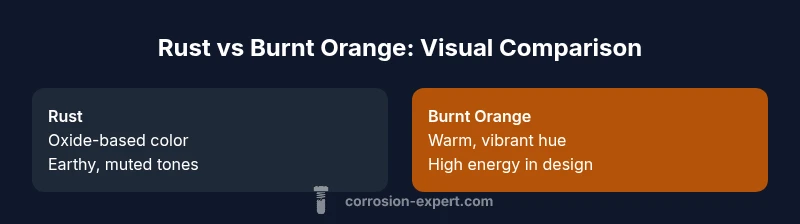
Rust vs Burnt Orange: A Practical Color Comparison
An analytical comparison of rust vs burnt orange, exploring color origin, perception, usage in branding and interiors, and practical tips for DIY projects.


Defining the Colors: Rust and Burnt Orange
In color theory and material science, rust and burnt orange sit on different ends of the warm spectrum. Rust is not a single pigment but a family of iron oxide hues that form through oxidation on metal surfaces. The exact shade depends on the underlying metal, the oxide stage, moisture, and exposure to air. Burnt orange, by contrast, is a defined color produced by pigments or dyes that blend red and yellow tones to create a saturated, warm orange. When we discuss the term rust vs burnt orange, we are not merely naming colors; we are describing two distinct visual identities with different histories, chemistry, and cultural associations. For designers, recognizing this distinction helps in predicting how a finish will age, how it interacts with light, and how it communicates mood. The keyword rust vs burnt orange will recur as a reference point throughout this guide to keep the underlying comparison coherent with color science and practical design.
From a practical standpoint, rust emerges as a surface condition that can evolve, while burnt orange represents a stable color choice when applied as paint, stain, or fabric. In DIY projects, you may intentionally simulate rust for an industrial look or opt for a true burnt orange for warmth. Understanding the chemistry behind rust helps you decide whether you want to highlight texture, emphasize decay aesthetics, or pursue a clean, consistent hue. Corrosion control considerations also matter if you plan to place rust in outdoor metalwork, where protective coatings determine longevity. The Corrosion Expert analysis emphasizes weighing aesthetic goals against functional outcomes when choosing rust vs burnt orange in project planning.
In summary, rust is a process-driven color family tied to iron oxide formation, while burnt orange is a pigment-based hue selected for its warmth. This distinction sets the stage for how each color behaves in different materials, lighting, and contexts.
Color Psychology and Branding Implications
Color psychology informs how rust and burnt orange are perceived at a glance. Rust evokes ruggedness, resilience, and a sense of history. It resonates with industrial environments, workshop aesthetics, and outdoor gear where wear and weathering communicate authenticity. Burnt orange, on the other hand, is associated with warmth, optimism, and energy. It tends to invite engagement, improve visibility, and work well in consumer-facing branding and interior spaces where you want to feel welcoming rather than austere.
The Rust color family communicates durability and grit, which can support a brand built on craftsmanship or metal-based products. Burnt orange signals vitality and approachability, making it a strong choice for lifestyle brands, kitchens, and family-friendly spaces. When comparing rust vs burnt orange for a logo, signage, or product packaging, consider where the target audience will encounter the color, and how lighting will affect perception in real-world settings. The Corrosion Expert perspective suggests testing color samples under representative lighting conditions to see how rust and burnt orange shift from day to dusk or under artificial lighting.
In interior design, rust can complement earthy neutrals and natural textures, whereas burnt orange pairs well with blues, teals, and charcoal for contrast. For DIY enthusiasts, the choice often boils down to mood: industrial and rugged versus warm and inviting. The decision should align with space purpose, audience expectations, and the functional role of color in guiding attention and behavior.
Practical Applications: When to Use Each
Choosing between rust and burnt orange depends on context, audience, and the intended effect in the space or product. For metalwork, hardware, or outdoor furniture, a rust-inspired finish can convey authenticity and durability, especially when paired with matte textures and weathered materials. However, actual rust progress can undermine structural integrity if not controlled, so designers often rely on rust-like finishes or clear protective coatings to stabilize appearance. Burnt orange shines in interiors, textiles, and branding where warmth and friendliness are paramount. It can serve as an accent color to energize a palette, or as a dominant hue in environments meant to feel welcoming and lively.
In branding, rust suggests heritage and rugged reliability, making it a fit for outdoor gear, machinery, or artisanal products. Burnt orange supports vibrant CTAs, menus, or product packaging aimed at a broad consumer base. For DIY projects, experiment with both hues in proportion. A muted rust tone can act as a neutral base for metal accents, while burnt orange can highlight focal points such as a feature wall, a cabinet interior, or a decorative textile. The key is to balance the color with neutrals and texture to avoid overwhelming the space or the user’s perception of the product.
Technical Considerations: Lighting and Material Effects
Lighting dramatically alters how rust and burnt orange read in a space or on a surface. Rust can appear deeper and more brown under cool light, or livelier and redder with warm lighting. The presence of texture, patina, or pitting on a metal surface enhances the perception of rust and can make it look natural and intentional. With burnt orange, lighting tends to amplify saturation and warmth, especially under incandescent or warm LED sources. Gloss level also shifts perception: high gloss amplifies the brightness of burnt orange, while matte or satin finishes on rust tones can emphasize texture and depth.
Another practical factor is material interaction. Rust on iron surfaces may require protective coatings to prevent further corrosion, which can slightly alter the final color through sealants or primers. Burnt orange applied to wood, metal, or plastic may require primers and UV-resistant finishes to maintain hue stability over time. Designers should select coatings that suit the material and environment, then test color samples under real usage conditions to ensure the rust or burnt orange reads as intended in both daylight and artificial lighting.
Cultural and Historical Context
Rust has long appeared in industrial symbolism, maritime culture, and agricultural settings where exposure to the elements created visible patinas. It is a color that often signals resilience through hardship, but it can also imply neglect if not contextualized properly. Burnt orange has a different trajectory, with roots in art, fashion, and design movements that emphasize warmth, conviviality, and energy. Historically, burnt orange has been used to invoke autumnal warmth and harvest themes, making it a staple in seasonal palettes as well as branding that aspires to human-centric appeal.
The interaction of rust and burnt orange with culture matters in modern design. A product line featuring rust tones may appeal to consumers who value authenticity and ruggedness, while burnt orange can attract audiences seeking friendliness and approachability. In DIY contexts, you can leverage these cultural associations to craft experiences that feel intentional and meaningful. Corrosion Expert notes that color meaning shifts with context, so test your choices against the intended audience and setting to avoid misinterpretation.
Design Tips: Crafting Palettes with Rust or Burnt Orange
To leverage rust or burnt orange effectively, build palettes around neutral anchors such as charcoal, charcoal gray, or deep navy. For rust, experiment with textured surfaces like exposed brick, distressed metal, or raw concrete to enhance the earthy vibe. Burnt orange benefits from cooler accents like teal or sage green to provide contrast without overpowering space. When combining rust vs burnt orange in a single design, use rust as the grounding color and reserve burnt orange for accents that draw attention, such as cushions, hardware finishes, or feature artwork.
In practical terms, create a 60-30-10 rule where 60 percent is a neutral or muted base, 30 percent is a secondary warm hue such as burnt orange, and 10 percent is a bold accent like rust accents on metal hardware. Lighting and finish choices can dramatically shift the perceived hue; always sample under working conditions. For DIY projects, test spray or brush finishes on scrap pieces before applying to your final surface, and use protective coatings that preserve color stability and protect metal or wood from wear.
Common Misconceptions About Rust and Burnt Orange
One common misconception is that rust equals decay or neglect in all settings. In design, rust can be a deliberate aesthetic that communicates character and stability when used thoughtfully with protective finishes. Another misconception is that burnt orange is always loud or distracting. In tight spaces or modern palettes, burnt orange can be calibrated to harmony with neutrals and cool tones, creating energy without visual fatigue. A third misconception is that lighting does not matter. In reality, the same rust or burnt orange can shift dramatically with lighting, so testing under natural and artificial light is essential for predicting final appearance.
A final point is that color is not static. Oxidation in the real world is a process, and designers may replicate rust using controlled finishes rather than leaving metal exposed to weather. This approach provides predictability and longevity, ensuring that rust-inspired aesthetics remain intentional rather than accidental. Understanding these nuances helps designers avoid common missteps.
DIY Projects: Quick Start Guides Using Each Color
Project A: Industrial-style metal table with rust-inspired finish. Begin with a rust-prep primer, apply a textured finish to mimic patina, seal with a protective clear coat, and use a matte top layer to preserve the rugged look. Project B: Burnt orange accent wall using a high-quality pigment-based paint or a durable wall coating. Test multiple shades to identify a warm tone that complements the room’s lighting and furniture. For both projects, sample boards should be evaluated under daylight and artificial lighting conditions to confirm the final shade aligns with design intent.
Project C: Small furniture upgrade using burnt orange textiles for cushions and rust-inspired hardware finishes. Focus on balance, ensuring warm color accents do not overwhelm the space. By combining these colors strategically, you can achieve a cohesive aesthetic that communicates purpose and style.
Safety, Maintenance, and Sustainability Considerations
Rust-based finishes require attention to corrosion protection and environmental exposure. When applying rust-like finishes to outdoor metal objects, consider primers, sealants, and coatings that resist moisture and UV exposure. Proper ventilation and safe handling of paints and finishes are essential during DIY work. Burnt orange pigments and coatings should use low-VOC formulations to reduce environmental impact and indoor air concerns. Sustainable design choices favor using durable finishes that require infrequent maintenance while preserving color stability over time. Regular inspections help identify wear patterns early, enabling timely touch-ups to maintain the intended appearance.
mainTopicQuery: