How to Keep Rust from Spreading: A Practical Prevention Guide
Learn proven, step-by-step methods to stop rust from spreading on metal surfaces. This guide covers inspection, cleaning, protection, and ongoing maintenance for DIYers and homeowners.


You will learn a step-by-step method to stop rust from spreading across metal surfaces. The approach covers inspection, cleaning, protective coatings, and ongoing maintenance. Essential prerequisites include a dry workspace, proper PPE, and high-quality rust inhibitors. Follow these steps to slow or halt rust progression and extend the life of metal gear and fixtures.
What is rust and how it spreads
Rust forms when iron or steel is exposed to moisture and oxygen, creating iron oxide. In homes, rust typically starts at damaged paint, scratches, joints, or exposed fasteners. Once established, rust can spread by capillary action through microcracks and pores, drawing in more moisture and accelerating corrosion. The spread is intensified by electrolytes like salt and minerals that act as catalysts for electron transfer. Heat and humidity further speed the chemical reactions, so damp, warm environments are especially prone to rapid rust growth. According to Corrosion Expert, rust spreads fastest where moisture remains on the surface and protective barriers are compromised. A small rust spot can quickly become a larger problem if not halted, so early detection (orange staining, flaking, or powdery texture) is critical for successful prevention.
This article focuses on practical, actionable steps homeowners and DIYers can take to halt rust spread, protect structural integrity, and extend the life of metal fixtures and tools. The guidance reflects Corrosion Expert’s proven approach and emphasizes prevention as the most cost-effective strategy.
Prep work: assess and dry
Before any treatment, you must accurately assess the affected area and create a dry, controlled work zone. Start by removing surface moisture with a clean, lint-free cloth and a mild detergent wipe to remove dust and salts. If humidity is high, use a desiccant or dehumidifier to lower ambient moisture, and keep the space well ventilated. Mask off adjacent surfaces you want to protect and place a drop cloth to catch debris. The goal is to create a clean, dry surface so subsequent steps adhere properly and corrosion cannot continue beneath coatings. The Corrosion Expert team recommends documenting the extent of rust with photos to guide your restoration plan. A quick surface scan with a flashlight can reveal hairline cracks that need sealing later.
If rust has penetrated hollow sections, consider temporarily removing components to improve airflow and drying. For exterior items, consider relocating them to a dry, shaded area to prevent rapid re-moistening.
Cleaning and rust removal options
Mechanical removal (wire brushes, nylon brushes, or sanding) is typically the first line of defense for loose rust and flaking paint. Pair mechanical removal with a clean detergent wash to eliminate oils and salts that can impede coating adhesion. For stubborn rust, chemical rust removers or rust converters can be helpful; choose products that are appropriate for the substrate (steel, iron, or treated metal) and follow the manufacturer’s directions. Always wear PPE and work in a ventilated space. After treatment, wipe the surface dry and inspect for remaining rust or pitting. If pitting remains, it may require additional remediation or surface filling before sealing.
Be mindful of galvanized or aluminum surfaces; some rust removers can react with protective coatings on these substrates. Corrosion Expert advises testing any product on a small area first to avoid adverse reactions. For outdoor fixtures exposed to salt spray, extra attention to joints and fasteners is essential because moisture tends to accumulate there.
Rust converters and primers
Rust converters chemically transform active rust into a stable, inert layer that accepts paint. They are particularly useful when removing rust completely is impractical. After applying a converter, allow it to cure as directed, then lightly sand the surface to create a smooth, uniform base for primer. Primers designed for metal provide a stronger bond for topcoats and improve corrosion resistance. When selecting primers, look for products labeled as rust-inhibiting or epoxy-based for maximum adhesion and durability. The Corrosion Expert team emphasizes following curing times strictly; rushing coatings will compromise protection and encourage new rust formation.
If you are dealing with intricate areas (threads, joints, or porous surfaces), apply the converter to all accessible rusty zones and use a brush to reach recessed areas. Depending on the product, you may need more than one coat to achieve full conversion and a solid base for primer.
Sealing and coating to block moisture
Top coatings act as barriers to moisture and oxygen, effectively slowing or stopping rust spread. Apply a rust-inhibiting primer first, ensuring full coverage and a consistent film thickness. After the primer dries, apply at least two coats of a rust-resistant enamel or epoxy topcoat, following the manufacturer’s recommended cure times between coats. For areas exposed to weather or frequent handling, consider a UV-resistant or weatherproof topcoat for lasting protection.
Pay attention to seams, joints, and crevices where water can collect. Use a compatible sealant along these edges to seal out moisture ingress. When possible, remove moisture-prone components (or improve drainage) to minimize ongoing exposure. Corrosion Expert analysis shows that properly sealed coatings dramatically slow rust spread compared with bare metal or poorly protected surfaces.
Environmental controls and maintenance schedules
Ongoing moisture management is a key element of rust prevention. Keep indoor spaces dry, use dehumidifiers in basements and garages, and ensure good airflow around stored metal items. Establish a routine inspection schedule—monthly for critical areas and quarterly for general storage spaces—to catch early signs of rust. When you detect rust, repeat the cleaning and sealing steps promptly. Maintain a log of maintenance activities and coatings used so you know when to recoat or refresh protective layers.
Consider seasonal switches for outdoor metal items: store them indoors during salt spray seasons or apply extra protective coatings before winter. Consistent maintenance reduces the likelihood of widespread rust and extends the life of hardware, tools, and structural components. As part of this plan, Corrosion Expert recommends testing coatings in inconspicuous areas before large-scale application to ensure compatibility with the substrate.
Material considerations: steel alloys, stainless vs carbon
Different metals have distinct corrosion behaviors. Carbon steel is prone to rust if unprotected, whereas stainless steel contains chromium to form a protective layer; however, even stainless steel can rust if heavily attacked or if the passive layer is damaged. For heavily used items, upgrading to a corrosion-resistant alloy or applying protective coatings is often more cost-effective in the long term than frequent replacements. When choosing coatings, verify compatibility with the metal and expected exposure (indoor vs outdoor, humidity, salt exposure).
If you must work on cast iron or steel alloys, consider coatings that are specifically formulated for the substrate. On galvanized or zinc-coated surfaces, some primers and paints may not adhere well; you may need a bonding agent or a primer designed for galvanized metal. The goal is to create a durable, continuous barrier that resists moisture and mechanical wear.
Common mistakes to avoid
- Skipping drying and relying on surface cleanliness alone; moisture drives rust.
- Using incompatible primers or unsupported coatings that peel under temperature changes or moisture exposure.
- Forgetting seams and joints; water often collects in corners and accelerates corrosion.
- Overlooking hidden rust behind panels or in hollow sections; treat or seal these areas too.
- Rushing curing times; premature exposure can undermine adhesion and protection.
- Ignoring maintenance; coatings degrade over time and require refreshment to remain effective.
By avoiding these missteps, you increase the likelihood of a lasting rust prevention outcome. The Corrosion Expert Team emphasizes that consistency and proper material selection are central to long-term success.
Quick-start checklist and troubleshooting
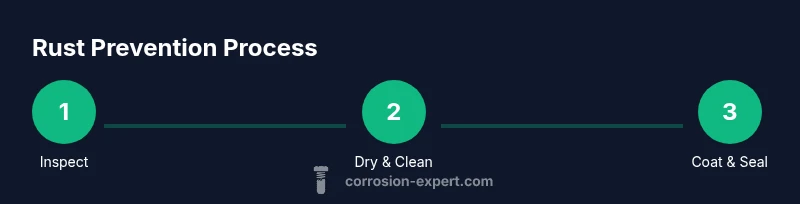
- Inspect all suspected areas and dry thoroughly.
- Remove loose rust with a brush or scraper.
- Clean the surface with a detergent solution and rinse.
- Apply rust converter if not removing all rust by mechanical means.
- Prime with a Rust-Inhibiting primer.
- Apply two coats of topcoat; allow full cure between coats.
- Seal seams and joints; re-inspect after rain exposure or humidity spikes.
- Maintain a moisture-controlled environment.
If coatings peel or rust reappears within a season, re-apply following the same sequence and verify surface compatibility. For persistent rust in critical areas, consider replacing affected components to restore structural integrity. Corrosion Expert recommends documenting all treatments for future reference.
Long-term plan for rust prevention
A durable rust prevention plan combines moisture control, regular inspection, and timely maintenance. Establish a yearly evaluation for exposed metal surfaces, especially in coastal or winter climates where salt and moisture cycles are common. Use a proactive approach: treat early rust spots promptly, refresh protective coatings before they fail, and replace badly corroded components when necessary. A sustained commitment to prevention reduces repair costs and extends the life of tools, fixtures, and structural elements. The Corrosion Expert Team notes that consistent maintenance and the right protective system are the foundations of long-term rust control.
Tools & Materials
- Bevelled or wire brush(For removing loose rust and scale from edges and crevices)
- Nylon scrub brush(Gentle on surfaces, good for cleaning without scratching)
- Detergent or degreasing cleaner(Use a mild, non-residual cleaner to remove oils and salts)
- Rust converter(Choose a converter compatible with the substrate; follow curing times)
- Metal primer (rust-inhibiting)(Epoxy or oil-based primers give best adhesion)
- Metal topcoat (rust-inhibiting paint)(Two coats recommended; UV-resistant for outdoor use)
- Sealant or caulk suitable for metal joints(Latex or silicone-based sealants with metal compatibility)
- Sandpaper (grits 120-400)(For smoothing surfaces and between coats)
- Personal protective equipment (gloves, goggles, mask)(Protect skin and lungs from dust and chemicals)
- Dehumidifier or desiccants(Controls indoor humidity for better drying conditions)
- Drop cloths & painter’s tape(Protects surrounding areas during coating)
- Drying rack or clean workspace(Space to allow coatings to cure without contact)
Steps
Estimated time: 3-5 hours
- 1
Inspect and dry area
Assess the rust region and pat it dry with a clean cloth. Remove standing water and reduce ambient humidity to slow corrosion. Take photos to document condition for future reference.
Tip: Drying thoroughly now saves you from rework later. - 2
Remove loose rust
Use a wire brush or scraper to remove loose rust and paint around the affected area. Aim for a stable, sound base before treatment. Avoid overly aggressive grinding that could widen pits.
Tip: Work in small sections to avoid missing spots. - 3
Clean surface
Wash with a detergent solution to remove oils and salts. Rinse with clean water and let the surface dry completely before applying treatment.
Tip: Drying time is critical for coating adhesion. - 4
Apply rust converter (optional)
If rust is stubborn or you want a stable base, apply a rust converter per manufacturer directions. Allow to cure before proceeding to priming.
Tip: Do not force cure with heat; follow the product's cure window. - 5
Sand and prep for primer
Lightly sand the converted surface to create a uniform profile. Wipe away dust and allow to dry.
Tip: A smooth surface improves coating adhesion. - 6
Apply primer
Apply a rust-inhibiting primer evenly. Let it cure according to the label before top coating.
Tip: Primer thickness should be uniform; avoid drips. - 7
Apply topcoat
Apply two coats of rust-resistant topcoat, allowing proper cure times between coats. For outdoor use, select UV-resistant paint.
Tip: Edge coverage is critical—don’t miss corners. - 8
Seal seams and joints
Apply sealant to joints and crevices to prevent moisture infiltration. Ensure sealant is compatible with the coating system.
Tip: Moisture traps are common rust hotspots. - 9
Reassemble and test
Reattach hardware if removed and test for moisture exposure. Inspect for missed spots after reassembly.
Tip: Water exposure will reveal weak spots quickly. - 10
Plan ongoing maintenance
Create a maintenance schedule for inspections, cleaning, and re-coating as needed. Track coatings and their cure times.
Tip: Set reminders to refresh coatings before they fail.
Quick Answers
What are the early signs that rust is spreading?
Early signs include orange staining, flaking paint, powdery rust, and small pits. These usually appear at seams, edges, or joints where moisture collects. Catching these signs early allows prompt treatment to stop further spread.
Look for orange stains or flaky surfaces near joints; catch it early to stop it from spreading.
Can rust spread be stopped once it starts?
Yes, with prompt cleaning, moisture control, and a protective coating system, you can halt or slow further spread. The key is to remove moisture, treat active rust, and seal the surface to block oxygen and water ingress.
You can stop rust from spreading with cleaning, drying, and a good protective coating.
Are rust converters safe for household surfaces?
Most rust converters are designed for metal surfaces like tools and structural hardware. Read product labels to ensure suitability for your substrate and follow curing times. For food-contact surfaces, check safety data or consider alternative coatings.
Check the product label for surface compatibility and safety data before use.
How often should I inspect for rust and maintenance?
Inspect susceptible areas monthly if exposed to moisture or salt, and quarterly for general indoor surfaces. Recoat or touch up when you see signs of wear or rust reappearing.
Inspect monthly where moisture exposure is likely; recoat as soon as you notice wear.
Should I replace heavily rusted components instead of treating them?
If rust compromises structural integrity or safety, replacement is recommended. For cosmetic or non-structural surfaces, treating and sealing may suffice, but monitor for continued deterioration.
If structural parts are corroded, replacement is the safer option.
Does rust form on stainless steel easily?
Stainless steel is more resistant to rust, but it can rust if the passive chromium oxide layer is damaged or in highly corrosive environments. Use compatible coatings or maintain cleanliness to preserve its resistance.
Stainless steel resists rust, but can rust if its protective layer is damaged.
Watch Video
Quick Summary
- Inspect surfaces regularly to catch rust early
- Dry and seal promptly after exposure
- Use rust inhibitors on vulnerable areas
- Choose compatible coatings for metal type
- Maintain moisture control for long-term prevention