How to Clean Rust: A Comprehensive DIY Guide for Homeowners
Learn safe, effective rust cleaning for metal surfaces. Explore mechanical, chemical, and eco methods with tools, steps, and aftercare to prevent recurrence.


By following this guide, you will learn how to clean rust from metal surfaces safely and effectively. Begin with proper prep: identify rust type, gather basic tools, and choose a cleaning method suited to the metal. This step-by-step approach covers mechanical and chemical options, safety tips, and aftercare to prevent recurrence.
What causes rust and why cleaning matters
Rust is the result of iron or steel reacting with oxygen and moisture. When metal stays damp, tiny amounts of iron oxidize, forming iron oxide. Over time, this oxidized layer can flake away, exposing fresh metal to air and water. Cleaning rust removes superficial discoloration, slows further corrosion, and helps you prep surfaces for protective coatings. Understanding the type of rust—surface rust, scaling, or pitting—guides your cleaning method. For DIYers, addressing rust early prevents deeper damage and keeps tools, furniture, and vehicles in better condition. In this guide, we’ll cover safe options suitable for common household projects while emphasizing safety and aftercare. According to Corrosion Expert, the right approach starts with assessment and prep.
Tools and safety gear you need
Before you start, gather essential tools and safety gear. Wear ANSI-rated safety goggles to protect eyes from rust particles and chemical splashes, and gloves (nitrile or leather) for hand protection. A dust mask or respirator is important when sanding or using strong cleaners, especially indoors. Keep a drop cloth or plastic sheeting to protect your workspace. Have a wire brush, steel wool or abrasive pads, and sandpaper (grits 80–400) ready for mechanical removal. If you choose chemical rust removers, have clean water for rinsing and a neutralizing solution if required by the product. Keep labels handy and never mix cleaners unless the manufacturer instructs otherwise.
Mechanical rust removal methods: pros and cons
Mechanical methods remove rust by physical abrasion. A wire brush or cup brush mounted on a drill can quickly shed loose rust and lighten surface staining. Sandpaper provides a smoother finish and is better for preparing surfaces for primer. Steel wool gives a fine finish but can clog easily. Pros: fast, inexpensive, and works without chemicals on light rust. Cons: may gouge soft metals and generate dust. For best results, combine brushing with a gentle sanding pass and always work with light pressure to avoid removing sound metal.
Chemical rust removal options: acids, cleaners, converters
Chemical rust removers use acids or chelating agents to dissolve oxides. Phosphoric or oxalic acid products convert rust into a stable compound; always follow label directions and test on a hidden area. Household options include white vinegar and lemon juice for light surface rust; they are safer but slower. Rust converters can stop active rust by forming a protective layer, but they may require painting for long-term protection. Always ensure ventilation and avoid mixing acids with cleaners containing bleach. When in doubt, follow product guidelines and ventilate the workspace.
Eco-friendly and home remedies
Here are lower-cost options that work for light rust on small items. Soak or apply a vinegar-and-salt solution to the rusted area, then scrub with a brush. Lemon juice with salt also helps dissolve oxidation. A paste of baking soda and water can aid in gentle abrasion and neutralize acids left on the surface. While these remedies are safer, they require more time and patience and are less effective on heavy or thick rust. Always dry thoroughly after treatment to minimize residual moisture.
Aftercare and prevention
After cleaning, thoroughly dry the surface to prevent flash rust. Apply a rust-inhibiting primer, paint, or clear sealant to create a barrier against moisture. For metal that will face regular exposure to water, consider a rust converter under paint or a durable polymer coating. Store tools and metal items in a dry, ventilated area and inspect them periodically for new rust. By combining proper cleaning with ongoing care, you reduce the likelihood of future rust and extend the life of your metal.
Tools & Materials
- Safety goggles (ANSI Z87.1)(Eye protection)
- Nitrile or leather work gloves(Hand protection)
- Dust mask or respirator(Protect from dust/fumes)
- Wire brush (handheld)(Sturdy metal bristles)
- Sandpaper or sanding block(Grit range 80-400)
- Steel wool or abrasive pads(Optional for finish)
- Drop cloth or plastic sheeting(Protect workspace)
- Vinegar or lemon juice (optional)(Eco-friendly options)
- Commercial rust remover or rust converter (optional)(Follow label)
Steps
Estimated time: 50-90 minutes
- 1
Set up safety and workspace
Clear the area and put on PPE. Secure the item to prevent slips during cleaning, and ventilate the space if using chemicals. Safety first keeps you protected and the project on track.
Tip: Always wear eye protection and gloves before touching rusty surfaces. - 2
Inspect rust and plan method
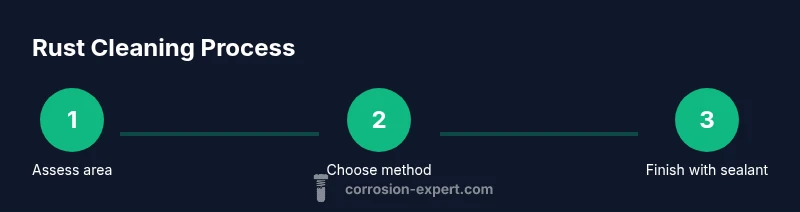
Examine the corrosion: is it surface rust, scaling, or pitting? Decide between mechanical, chemical, or a combination approach based on metal type and severity.
Tip: Test a small, inconspicuous area before full-scale treatment. - 3
Choose a rust removal method
Select a method aligned with your goals and material. For decorative fixtures, milder methods may preserve the finish; for tools, more aggressive cleaning may be acceptable.
Tip: Avoid over-cleaning delicate surfaces to prevent damage. - 4
Perform mechanical cleaning
Use a wire brush or abrasive pads to remove loose rust. Work with steady, light pressure and keep the surface wet if using water-based cleaners to minimize dust.
Tip: Work in small sections to control results and avoid gouging. - 5
Apply chemical rust remover or converter
If using chemicals, follow the label for application time and rinsing. For converters, apply evenly and let cure per directions before furniture or paint.
Tip: Ventilate well and never mix cleaners with bleach. - 6
Rinse, dry, and inspect
Thoroughly rinse off cleaners and dry the surface completely. Check for any remaining rust and re-treat if necessary before finishing.
Tip: Drying completely prevents quick re-oxidation. - 7
Protect with coating
Apply primer, rust-inhibiting paint, or clear sealant to seal the surface. Choose a coating suitable for indoor or outdoor exposure.
Tip: Follow with a topcoat to maximize longevity. - 8
Maintain and monitor
Periodically inspect treated items, especially in damp environments. Re-clean and re-coat as needed to maintain protection.
Tip: Keep items dry and stored in a ventilated area.
Quick Answers
What is the safest method to remove rust?
The safest approach varies by rust type. For light surface rust, mechanical scrubbing with a brush and mild cleaners is often safest. Deeper rust may require rust converters or commercial removers, used according to the product label.
For safety, start with a brush and mild cleaner, and always follow product directions.
Can I use household items to remove rust?
Yes, items like white vinegar, lemon juice, and baking soda can remove light rust on small items. They require more time and repeated applications compared with commercial products.
Vinegar and lemon juice can work for light rust, but it takes patience.
Will rust converters stop rust permanently?
Rust converters stop active rust and convert it to a protective layer. They usually require a topcoat for long-term protection and are not a complete substitute for ongoing maintenance.
Converters help, but you still need a topcoat for lasting protection.
Is it safe to clean rust on painted surfaces?
Cleaning rust on painted surfaces can be tricky. You may need to remove loose rust without damaging the paint, or strip paint to treat the metal beneath. Follow manufacturer guidance and test first.
Be careful with painted surfaces; test and proceed slowly.
How can I prevent rust after cleaning?
Dry the surface thoroughly and apply a rust-inhibiting primer or coating. Store items in a dry, ventilated place and inspect periodically for new rust.
Keep surfaces dry and seal them to prevent recurrence.
What should I avoid when cleaning rust?
Avoid mixing acids with bleach, and don't aggressively sand delicate metals. Always follow safety guidelines and product directions to prevent damage or fumes.
Avoid mixing cleaners and over-scrubbing delicate metals.
Quick Summary
- Identify rust type to choose the right method
- Wear PPE and prepare the workspace first
- Mechanical, chemical, and eco options suit different scenarios
- Dry thoroughly and seal to prevent recurrence