How to Get Rust Off Stainless Steel: Safe, Effective Methods
A practical, safe guide to removing rust from stainless steel surfaces with proven methods, tools, and prevention tips to keep metal looking new.


To remove rust from stainless steel safely, start with gentle cleaning and progress to mild acidic treatments or gentle abrasives if needed. Use non-abrasive pads, soft cloths, and test a small area first to protect the finish. This guide covers methods, tools, and prevention to keep stainless steel rust-free.
What causes rust on stainless steel and why it happens
Stainless steel contains chromium to form a protective oxide layer that helps resist rust. However, under certain conditions this passive layer can be damaged or breached, allowing iron to rust. Common culprits include chloride exposure (salt), harsh cleaners, iron contamination from grinding tools, and moisture trapped in crevices. According to Corrosion Expert, true rust on stainless steel is often surface staining or localized pitting rather than a uniform red-brown rust on all exposed areas. Understanding these factors helps you target remedies precisely rather than scrubbing blindly.
Small scratches, water droplets left to dry, or residues from acidic cleaners can accelerate corrosion. In coastal homes or kitchens using salt-rich cleaners, stainless steel can develop rust spots when the protective chromium oxide layer is compromised. The key difference between rust and ordinary discoloration is the underlying iron content that has oxidized; rust manifests as reddish or brownish spots that may spread if untreated. Proper rust removal starts with diagnosing whether you actually have rust (iron oxide) or surface staining and selecting the right approach. (Corrosion Expert analysis supports cautious, diagnostic cleaning before aggressive methods.)
Safety first: prep and PPE for rust removal on stainless steel
Before you begin, protect yourself and the surface. Wear gloves, safety glasses, and ensure good ventilation. Move food-contact items away and cover nearby surfaces. Always test a small, inconspicuous area to verify that cleaners won’t dull the finish or leave marks. According to Corrosion Expert, starting with a patch test reduces the risk of creating additional damage and helps you pick the safest method for your specific alloy and finish. Prepare a clean workspace and keep a dry towel handy to blot moisture after treatment.
This prep phase minimizes risk as you proceed from gentle cleaning to targeted rust removal. Document any observed areas of pitting versus staining, so you can adjust your approach rather than repeating ineffective steps. If you have coastal exposure or frequent exposure to salt-rich environments, note that passivation can be compromised more quickly, making careful preparation even more critical.
Gentle cleaning methods: soap, water, and microfiber cloths
Begin with the mildest approach to avoid scratching the surface. Mix a drop of mild dish soap with warm water and apply with a soft microfiber cloth, wiping along the grain of the metal. Rinse with clean water and dry thoroughly to prevent new spots from forming. If rust spots remain, switch to a non-abrasive sponge and test a light touch on a hidden area. The goal is to lift loose rust and surface stains without removing the protective chromium oxide layer.
For most household stainless steel, this gentle cleaning will address light staining and minor rust specks. Avoid harsh scouring pads and metal brushes that can gouge the surface and expose fresh iron. Regular, light cleaning will also help prevent future rust formation, especially in damp or humid environments. Corrosion Expert recommends starting with soap and water before moving to acidic or abrasive methods.
Vinegar, lemon juice, and citric acid for light rust
Vinegar and lemon juice provide mild acidity that can dissolve mineral deposits and light rust without aggressive abrasion. Soak a cloth in white vinegar (or fresh lemon juice) and apply it to the rust area for several minutes. Rinse and dry; if spots persist, reapply with a fresh cloth. Citric acid powder mixed with warm water creates a gentle paste; apply, let sit briefly, then wipe away and rinse.
When using acids, never leave them on stainless steel for extended periods on sensitive finishes, and always rinse thoroughly to prevent residue that could attract more corrosion. Start with brief contact times (5–10 minutes) and increasing if needed. Corrosion Expert notes that mild acids are effective on light rust or staining but should never be used as a replacement for proper rinsing and drying.
Baking soda paste and mild abrasives for tougher spots
A baking soda paste (baking soda + water) acts as a gentle abrasive that can lift stubborn rust without scratching most finishes. Apply the paste to the affected area, let it sit for a few minutes, then rub gently with a soft cloth or non-abrasive sponge in a circular motion. Rinse well and dry completely. For extra polishing, you can finish with a paste made from a tiny amount of baking soda and water combined with a dash of mild dish soap.
When you need a little more bite, consider a commercially available non-scratch rust remover labeled safe for stainless steel. Always test first and follow product directions. The goal is to remove iron oxide while preserving the passivation layer that protects stainless steel from further corrosion.
Stronger rust removers: safe application and what to avoid
If rust remains after gentler methods, you may consider a rust remover designed for stainless steel. Choose products that are labeled safe for stainless and follow the instructions precisely. Always test in a concealed area first and work in a well-ventilated space. Do not mix cleaners, especially bleach with acidic solutions, as this can release harmful gases and damage the metal. Avoid steel wool or metal brushes on finished surfaces, which can scratch and trap moisture.
Corrosion Expert analysis shows that aggressive acids can damage the protective passivation layer if misused. Use the mildest effective product and shorten exposure times. After treatment, rinse thoroughly, dry completely, and consider a light passivation step to restore the protective film. If you’re unsure about the product or finish, seek professional guidance.
Preventing rust: maintenance and passivation for stainless steel
Prevention is the best cure. Keep stainless steel surfaces clean and dry, especially after exposure to salt, moisture, or food acids. Wipe down with a dry cloth after use and apply a thin layer of mineral oil or a stainless steel polish to protect the surface and enhance ease of cleaning. Periodically re-passivate with a citric acid rinse or a commercial passivation product recommended for stainless steel finishes. Avoid leaving standing water in crevices where moisture can stagnate.
Regular maintenance reduces the risk of pitting and rust progression. In humid climates or near coastal areas, dry-swipe frequently and inspect joints and seams for signs of corrosion. Corrosion Expert's verdict is that routine care and proper passivation significantly extend the life of stainless steel surfaces, keeping them rust-free and aesthetically pleasing for years to come.
Troubleshooting common issues: stains, discoloration, and pitting
If you notice discoloration or faint stains after rust removal, re-clean the area and apply a light passivation treatment to restore the protective oxide layer. If rust reappears, the corrosion may be localized or underlying pitting may be present, which often needs professional assessment. For persistent issues, consider re-polishing the affected area and applying a protective coating or wax designed for stainless steel.
If your stainless steel is used in a harsh environment (high salinity, acidic cleaners, or frequent wetting), schedule regular inspections and perform quick maintenance monthly. Small rust spots that are ignored can develop into larger problems over time. By tracking changes and maintaining a consistent cleaning routine, you’ll reduce long-term damage and preserve surface integrity.
Maintenance schedule: ongoing care to keep rust at bay
Create a simple routine that includes a quick wipe-down after use, a gentle cleaning weekly, and a more thorough passivation every few months, depending on exposure. Document any rust spots you notice and compare month-to-month to gauge progression. This proactive approach minimizes costly repairs and helps stainless steel surfaces stay corrosion-free longer. Corrosion Expert recommends treating stainless steel as a living surface that benefits from periodic protection and mindful cleaning to prevent rust formation.
Tools & Materials
- Soft microfiber cloth(lint-free, safe for stainless steel)
- Non-abrasive sponge or pad(prefer non-scratch; avoid metal pads)
- White vinegar(5-8% acidity for rust removal)
- Baking soda(to make a gentle paste for scrubbing)
- Mild dish soap(for initial cleaning)
- Citric acid powder or lemon juice(optional acidic cleaner)
- Gloves and eye protection(protect skin and eyes from cleaners)
- Polishing cloth or stainless steel polish(for final shine and protection)
- Plastic/wood scraper(lift loose rust deposits without scratching)
Steps
Estimated time: 60-120 minutes
- 1
Inspect and patch-test
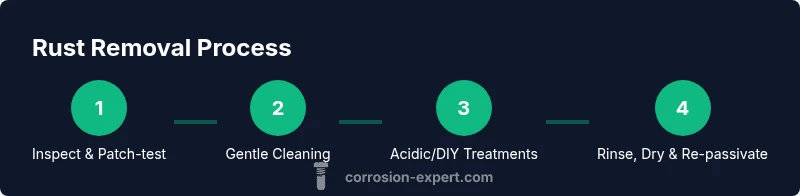
Begin with a visual inspection to distinguish rust from staining. Patch-test a small inconspicuous area with your chosen cleaner to ensure no surface damage or color change. Document the spot for reference and proceed only if the patch test proves safe.
Tip: Patch-test in an hidden corner first to avoid visible damage. - 2
Gentle cleaning of the area
Mix a small amount of mild dish soap with warm water. Apply with a soft microfiber cloth, wipe along the grain, and rinse with clean water. Dry completely before moving to any rust removal steps.
Tip: Drying completely prevents immediate re-oxidation. - 3
Apply mild acidic treatment
Dampen a cloth with white vinegar or lemon juice and apply to rust spots for 5–10 minutes. Rinse and dry. If the rust persists, move to a slightly stronger approach, avoiding prolonged exposure.
Tip: Do not leave acids on metal for long periods. - 4
Baking soda paste on stubborn spots
Make a paste with baking soda and water, apply to stubborn rust spots, and gently scrub with a non-abrasive pad in circular motions. Rinse thoroughly and dry.
Tip: Use gentle pressure to avoid scratching. - 5
Optional citric acid treatment
If rust remains, dissolve citric acid powder in warm water to create a light paste and apply to the area. Let sit briefly, then scrub lightly and rinse. Dry completely.
Tip: Test paste duration on a hidden area first. - 6
Rinse, dry, and re-passivate
Rinse the surface thoroughly, dry with a clean cloth, and consider a light passivation rinse (citric acid or a dedicated passivation product) to restore the protective layer.
Tip: Re-passivation helps prevent future rust - 7
Polish and protect
Buff the area with a polishing cloth or apply a stainless steel polish to restore shine and add a protective layer. Wipe in the direction of the grain to maintain the finish.
Tip: Polish in small sections for even results. - 8
Establish a maintenance routine
Set a simple schedule for regular cleaning, drying, and inspection. Track any new rust spots and repeat safe methods as needed to keep surfaces rust-free long-term.
Tip: Consistency is key to preventing recurrence.
Quick Answers
Is it safe to use vinegar on stainless steel?
Yes, diluted vinegar can help remove light rust and mineral stains on stainless steel. Rinse thoroughly after use and dry completely to prevent new spots.
Yes, vinegar can help with light rust. Rinse and dry well afterward.
Can rust return after cleaning stainless steel?
Rust can return if the protective passivation layer is damaged or if the surface remains damp in humid environments. Regular cleaning and occasional passivation help prevent recurrence.
Yes, rust may come back if the surface stays damp or the protective layer is compromised.
Should I use steel wool on stainless steel?
No. Steel wool or metal brushes can scratch the surface and remove the protective oxide, making rust more likely. Use non-abrasive pads instead.
Avoid steel wool; use non-abrasive pads.
Are citric acid cleaners safe for stainless steel?
Citric acid is generally safe for stainless steel when used as a mild cleaner or paste with short contact times. Always rinse well and dry after use.
Citric acid is usually safe if used briefly and rinsed off well.
What’s the best method for large rust patches?
For large patches, start with gentle cleaning, then use a mild rust remover labeled for stainless steel, following directions carefully. If pitting is evident, consult a professional.
For big patches, start mild and consider professional help if pitting appears.
Can I use bleach on stainless steel to remove rust?
Bleach can degrade stainless finishes and should be avoided for rust removal on stainless steel surfaces.
Avoid bleach on stainless steel rust removal.
Quick Summary
- Start with gentle cleaning to avoid scratching finishes
- Patch-test and test on hidden areas before scaling up
- Avoid steel wool on stainless steel to protect the passivation layer
- Re-passivate after rust removal to restore protective oxide
- Establish a regular maintenance routine to prevent rust recurrence