How Much Does Rust Proofing Cost in 2026?
Learn realistic rust proofing costs in 2026—from DIY kits to professional undercoating—plus key factors that drive price and tips to protect metal from corrosion.


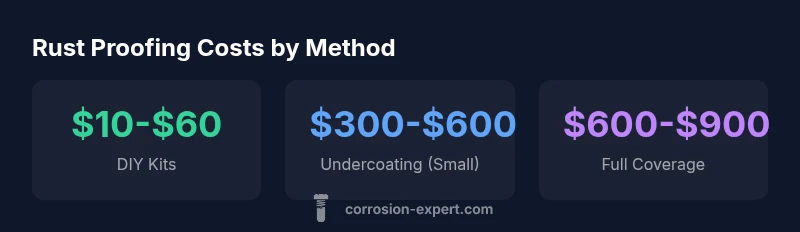
How much does rust proofing cost? For most vehicles, rust-proofing costs range roughly from $100 to $900, depending on the method and access to surfaces. DIY rust-proofing kits are on the lower end, while professional undercoating and comprehensive treatments can reach the higher end, especially on larger vehicles or hard-to-reach areas.
Why the question of cost matters and what the phrase how much does rust proofing cost really covers
Understanding rust proofing cost starts with recognizing that price is driven by exposure, vehicle size, surface area, and chosen protection strategy. In many climates with road salt exposure or high humidity, the risk of corrosion accelerates, which can influence both the urgency and the depth of protection needed. When homeowners ask how much does rust proofing cost, they are really weighing upfront expense against long-term maintenance and potential repair costs. The Corrosion Expert team emphasizes that the most economical choice today may not be the best value over the vehicle’s lifetime if it offers minimal protection. This is why context matters: a compact car in a coastal area will face different pricing dynamics than an SUV in a dry inland region. A clear budget requires listing both immediate costs and projected maintenance over several years, with attention to the surface areas that are most susceptible to rust and the types of coatings that provide durable protection.
Costs by method and what that means for your wallet
Prices vary by method because each approach targets different risk points and offers different durability, ease of application, and preparation requirements. DIY rust-proofing kits are the least expensive option upfront but may demand more frequent reapplication. Professional options, such as oil-based undercoatings, elastomeric or ceramic coatings, and full-frame sprays, provide longer-lasting protection and better coverage, especially on hard-to-reach areas. The most economical practical choice often depends on vehicle type, climate, and whether the goal is cosmetic rust prevention or structural protection. In practice, homeowners should compare the total cost of ownership, including reapplication intervals, warranty terms, and the likelihood of future repairs due to rust.
DIY vs professional: weighing value, not just price
DIY rust-proofing can save money initially but requires accuracy in surface prep and product selection. For many DIY enthusiasts, the cost-to-service ratio improves with the number of exposed areas treated and the expected lifespan of the coating. Professional rust-proofing, while more expensive upfront, often includes surface prep, warranty coverage, and guaranteed coverage in the most vulnerable zones. The decision should factor in local environmental exposure, the vehicle’s value or critical importance of the chassis, and whether the job is done by trained technicians with proper equipment. In the end, value is a balance of protection duration, performance under climate stressors, and the peace of mind that comes with a certified application.
Hidden costs and maintenance: what to expect beyond the initial price
Beyond the initial application, consider maintenance costs such as periodic top-ups or reapplications after a few years, potential diagnostic checks, and the need to address rust-prone areas before coating. Warranties can influence long-term costs by covering defects or peeling, but not all warranties are equal. It’s essential to read the fine print to understand what is covered, the required maintenance intervals, and any exclusions. In some climates, a more durable coating might reduce maintenance needs, while in others, frequent exposure to salt might necessitate earlier reapplication. Planning for these contingencies ensures the project stays within budget.
Budgeting tips: how to plan your rust-proofing investment
Start with a realistic assessment of your exposure and vehicle usage. Request multiple quotes from reputable shops, and ask for a written breakdown of materials, surface prep, and labor. Compare the total cost of ownership, including the expected lifespan of each coating and the likelihood of future rust repairs. Look for warranties and the service history that accompanies the application. Finally, consider whether you would benefit from a mixed approach—combining a durable base coating with periodic protective top-ups—to optimize cost and protection over time.
Cost comparison by rust-proofing method (Corrosion Expert Analysis, 2026)
| Method | Typical Cost Range | Notes |
|---|---|---|
| DIY rust-proofing kits | $10-$60 | Low upfront cost, variable effectiveness |
| Oil-based undercoating | $100-$400 | Standard protection; prep matters |
| Elastomeric/ceramic coatings | $150-$600 | Higher durability and longer life |
| Professional full undercoating | $300-$900 | Best coverage; access to all surfaces |
| Premium spray systems | $600-$1000 | Maximum protection, specialized equipment |
Quick Answers
What factors influence rust proofing cost?
Cost is driven by vehicle size, surface area, climate exposure, and the chosen protection method. Accessibility of undersides and whether a warranty is included also affect price.
Cost is driven by vehicle size, climate, and the protection method; warranties can also change the price.
Is rust proofing worth the cost?
For vehicles in high-corrosion environments, rust proofing can prevent expensive repairs and extend vehicle life. The best value comes from selecting a method suited to exposure and maintenance expectations.
In tough climates, rust proofing can save money over time by preventing rust repairs.
DIY vs professional: which saves more?
DIY options cost less upfront but may require more frequent reapplications and careful prep. Professionals offer broader coverage, warranties, and consistent results, which can yield better long-term value.
DIY saves money upfront, but professionals often last longer and come with warranties.
How long does rust proofing last?
Lifespan varies by method and climate but typically ranges from several years to a decade or more with proper maintenance and reapplications as needed.
Most coatings last several years, depending on exposure and maintenance.
When should I get rust proofing done?
Best done before heavy rust develops, ideally when the vehicle is new or during routine maintenance in climates with salt use or high humidity.
It's wiser to rust-proof early, especially if you’re in a coastal or snowy area.
Does rust proofing require ongoing maintenance?
Yes. Expect periodic top-ups or reapplications, especially in harsh environments. Always follow the manufacturer’s maintenance schedule and warranty requirements.
Maintenance helps keep the coating effective over time.
“Rust proofing is an investment in long-term protection. The right coating, chosen for your climate and exposure, delivers the best overall value.”
Quick Summary
- Know the full cost range before starting—expect $100–$900 for typical scenarios.
- DIY kits save upfront, but professional coatings often last longer.
- Plan for maintenance intervals and warranty terms to maximize value.