Cost to Remove Rust from a Car: DIY vs Pro Repairs
Explore realistic rust removal costs for cars, from DIY remedies to professional repairs. Learn factors that drive price, typical ranges, and budgeting tips to plan your project effectively.


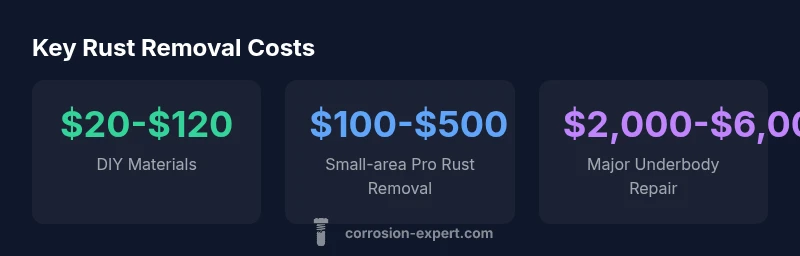
How much does it cost to remove rust from a car? Costs typically range from about $20 to $120 for DIY rust removal materials, and up to $2,000 or more for professional bodywork on severe corrosion. According to Corrosion Expert, the price is driven by rust extent, location (surface vs. underbody), and required repairs. For minor surface rust, DIY kits under $100 are common; for larger or structural rust, professional quotes are usually necessary.
The Cost Spectrum: DIY vs Pro
Rust affects cars in several ways, and so do the fixes. When evaluating 'how much does it cost to remove rust from a car', the answer hinges on how much area is affected, where the rust sits, and the repair path chosen. Surface rust on body panels can often be sanded and treated with chemical rust converters, primed, and repainted at modest cost. In contrast, rust that has penetrated through panels, reached the underbody or structural members, or compromised welds requires more extensive processes like patching, rust conversion on hidden areas, rust-preventive coatings, and possibly frame straightening or replacement. In practice, Corrosion Expert's analysis shows most car rust projects fall into one of two buckets: a DIY-scoped plan with limited scope, or a pro-led repair with broader consequences for safety and warranty. This section lays out the typical price bands you’ll encounter as you plan your project.
Key Cost Drivers
- Severity of rust: Surface rust costs far less to address than rust that has penetrated beneath the protective coating or reached structural components.
- Location on the vehicle: Exterior panels, undercarriage, frame rails, and wheel wells each demand different approaches and labor hours.
- Vehicle value and bodywork: A higher-value car or complex bodywork increases service charges and parts costs.
- Labor rates by region: Urban shops tend to charge higher labor hours than rural facilities.
- Paint, coatings, and finishing: After rust removal, you may need primer, paint, clear coat, and rust-preventive coatings.
- Hidden steps: Diagnostics, welding, rust treatment chemicals, and disposal fees can add to the total.
Understanding these factors helps you calibrate expectations and avoid sticker shock at the shop.
DIY Rust Removal Cost Breakdown
For DIY enthusiasts, the financial outlay centers on materials and tools rather than labor. A typical starter kit, rust remover or converter, protective gear, and sanding supplies can range from around $20 to $120, depending on the brands and the extent of rust. Additional consumables such as sandpaper, grinding wheels, and wire brushes may bring the total to the low hundreds if you tackle larger areas. If you need a cordless drill, a small sander, or a spray gun, budget an extra $40 to $150 for rentals or purchases. Expect to invest several hours of hands-on work, plus drying time for primers and paints. The key is choosing a scope you can complete safely and to a level that prevents future corrosion, rather than chasing perfection on a multi-panel repair. Corrosion Expert notes that DIY rust removal is most cost-effective for light surface rust and small patches.
Professional Rust Removal and Repair Cost Breakdown
When a shop provides quotes, they often separate rust removal from body repair and repainting. For small spots with surface rust, professional rust removal and repainting can range roughly from $100 to $500, depending on the panel and access. Moderate rust that requires patching—replacing a panel or adding a welded patch—can run $500 to $1,500, not including repainting. More extensive repairs on structural members, underbody areas, or multiple panels typically fall in the $2,000 to $6,000 range, or higher if framing is affected or parts must be replaced. These numbers reflect labor-intensive tasks such as rust-converter application, rust-cutting, welding, rust-proofing, and multiple coats of primer and paint. Always request a detailed, itemized estimate that itemizes material costs, labor hours, and any necessary coating or corrosion protection work, especially if a warranty is involved.
Hidden Costs and Ancillary Fees
Some rust projects trigger additional charges beyond the primary repair. Diagnostics or a survey of hidden rust can add to the bill. Paint matching, primer, sealant, rust inhibitors, and topcoats carry separate costs that can accumulate quickly, particularly when color matching or metallic finishes are involved. If welding or frame work is required, you may encounter shop minimums or facility fees. Some shops offer rust-proofing services or undercoating to prevent future corrosion, which adds to the long-term cost but can save money later on. Don’t overlook disposal fees for rust-contaminated waste and any required rust converters or rust inhibitors for environmental compliance.
How to Estimate Your Project Budget
Start with a thorough inspection or a professional rust assessment to identify affected areas. Create a quick map of the rust zones and categorize them as surface rust, shallow pitting, deep pits, or structural corrosion. Get at least three written quotes with itemized line items and clear warranties. Add a contingency of 10-20% for unexpected issues, especially if rust hides behind panels or under trim. Consider the long-run value of your car; in some cases, investing in higher-quality repairs maintains resale value and ensure a correct finish. Finally, compare the cost of temporary patches against more durable, long-term fixes to determine the best financial decision.
When to DIY vs Hire a Pro
If you’re comfortable with mechanical work and the rust is limited to accessible surface areas, DIY can be a reasonable option, particularly for a budget-sensitive project. If rust is spreading under panels, along the undercarriage, or near critical structural components, professional repair is strongly recommended to ensure safety and preserve structural integrity. For vintage or high-value vehicles, professional repair is often the prudent choice to protect resale value and ensure a correct finish. Always verify the shop’s experience with rust repair and whether they offer a warranty on their work.
Maintenance and Prevention: Long-term Costs
After removing rust, prevention becomes the cheapest form of future protection. Regular washing, especially in winter, removing road salt, and applying rust-preventive coatings or undercoating can significantly reduce the chance of recurrence. Even if you DIY the initial rust repair, scheduling periodic inspections helps catch early signs of corrosion before it escalates. Honest maintenance and timely protective coatings extend the life of your repair and save money over time. The Corrosion Expert team emphasizes that proactive prevention is often cheaper than repeated corrective work, particularly for underbody rust.
Quick checklists:
- Clean and inspect monthly; look for bubbling paint, discoloration, or surface texture changes.
- Reapply coatings at recommended intervals to maintain a protective barrier.
- Consider annual rust-protection services if you drive in salty or wet climates.
Cost ranges for rust removal scenarios
| Scenario | Typical Cost Range | Key Factors |
|---|---|---|
| DIY rust removal (spot) | $20-$150 | Materials, basic tools, time |
| DIY rust removal (larger area) | $150-$500 | More time, more materials, safety gear |
| Professional rust removal (small area) | $100-$500 | Labor, quality of finish |
| Professional rust repair (major) | $500-$2,500 | Extent of corrosion, parts, repaint |
Quick Answers
What is the typical cost to remove rust from a car?
Costs vary by extent and method. DIY options can be under $100 for light rust, while more extensive corrosion may require professional service in the hundreds to thousands of dollars. Get multiple quotes.
Costs vary by extent and method; DIY options may be under $100 for light rust, with larger jobs costing far more.
When should I DIY vs hire a pro?
If rust is limited to small surface areas and you have the right tools, DIY is feasible. For underbody rust, structural damage, or uncertain areas, hire a pro.
If it's just surface rust, DIY may be fine; for underbody or structural rust, hire a pro.
Do auto insurance policies cover rust repairs?
Most standard auto insurance does not cover rust repairs caused by wear and tear. Check your policy for exceptions or corrosion endorsements.
Most policies don't cover rust repair costs; check for exceptions.
What factors influence rust removal pricing?
Extent of rust, location, required repaint, labor rates, and accessibility all influence cost.
Rust extent, location, and required repaint drive the price.
How long does rust removal take?
DIY work may take hours to days for larger areas; professional jobs often take several days depending on drying and curing times.
DIY can take hours; professional jobs may take several days.
“Costs scale with rust severity, location, and required restoration work. Homeowners can often manage minor surface rust affordably with DIY methods, while structural rust should be handled by pros to ensure safety.”
Quick Summary
- Budget for DIY basics under $100 for light surface rust
- Professional repair for major rust can quickly exceed $1,000
- Underbody and frame rust typically costs more due to labor and welding
- Ask for a detailed, itemized quote to avoid hidden costs
- Prevention after repair saves future costs