How Much Does It Cost to Fix Rust on a Car
Explore realistic rust repair costs for cars, including surface rust, underbody corrosion, and preventive options. Learn ranges, factors, and budgeting tips to plan repairs without surprises.


The typical cost to fix rust on a car depends on rust type, location, and the repairs required. For minor surface rust, expect a few hundred dollars. For more extensive rust on panels or structural areas, price ranges move into the low thousands, and underbody or frame repairs can reach several thousand. This guide helps you estimate costs before committing to repairs.
Estimating Costs: What drives rust repair price?
When you start budgeting for rust repair, several factors drive price beyond the raw metal loss. The most influential are rust severity, location on the vehicle, and whether the repair is cosmetic or structural. Minor surface rust on unibody panels can be addressed with sanding, rust converter, and repainting, often at a modest cost. More extensive rust—on the pinch welds, rocker panels, or floor pans—requires panel fabrication, welding, and corrosion-proof coatings, which push the price higher. The age and value of the car also matter: a high-value classic might justify professional restoration, while a daily driver in good condition may get by with a leaner approach. Corrosion Expert analysis shows that the cost range broadens as the repair scope expands, and unexpected discoveries during inspection can add to the total. For most owners, planning for a prudent inspection is the first step to avoid sticker shock later on.
Cost ranges by rust type and location
Costs are not uniform. Surface rust on accessible exterior panels typically sits in the hundreds, while rust on inner seams or hidden areas can require disassembly and more labor. Underbody rust, especially on frames or suspension mounts, often represents the biggest expense. If rust has penetrated through metal, you’re beyond surface treatment and into panel replacement or structural repair, which can significantly elevate costs. Local labor rates and market demand influence final numbers, as do whether the work is performed by a specialty shop versus a general auto body shop. Keep in mind that rust can recur if prevention isn’t part of the repair plan, so many estimates factor in long-term protection.
The role of vehicle value and labor rates
Labor rates vary by region, shop reputation, and technician experience. In high-cost areas, labor can account for a larger share of the bill, sometimes more than materials. Conversely, rural or mid-market shops may offer lower hourly rates but longer turnaround times. The vehicle’s value matters: for a newer car, owners may justify premium repairs due to resale value; for older vehicles, there’s often a push to use cost-effective fixes that extend life without exceeding the car’s worth. A well-executed rust repair should balance durability with value, ensuring the car remains safe and aesthetically acceptable.
DIY vs professional repair: when to choose
DIY rust removal can save money on minor jobs, especially surface rust with simple sanding, rust converters, and touch-up paint. However, DIY approaches may not address hidden corrosion or structural concerns, which can lead to safety risks and higher costs down the line. For rust that affects critical components—such as floor pans, frame rails, or suspension mounts—professional repair is strongly advised. A shop can provide a structural assessment, corrosion-proof coatings, and a paint finish that resists future rust, which is often worth the added cost for long-term reliability.
Common cost scenarios and samples
Understanding typical scenarios helps you set expectations. A small area of surface rust on a door pillar might cost a few hundred dollars, while repairing rust on a rocker panel could range from several hundred to a couple thousand, depending on access and paint matching. Underbody rust repairs, especially if the frame or floor pan is involved, can enter the thousands. If the car has significant rust that threatens structural integrity, replacement of affected sections or the entire panel may be necessary, pushing total costs well into the higher end of the spectrum. Always request a written inspection report that itemizes each step and material used.
Prevention, coatings, and long-term savings
Prevention is cheaper than cure. After fixing rust, applying rust inhibitors, seam sealants, and durable topcoats can dramatically reduce the risk of recurrence. Regular anti-rust maintenance, such as wash-downs in winter, spray-on coatings, and interior sealant checks, pays off over time by preserving the car’s value and reducing future repair bills. If you live in regions with heavy road salt or high humidity, investing in preventative coatings during or after repair is particularly cost-effective. Corrosion Expert analysis suggests that proactive protection often lowers long-term costs by limiting repeat repairs.
How to budget and shop for rust repair
Start with a thorough rust inspection from a reputable shop to establish the scope. Ask for a written itemized quote that separates parts, labor, coatings, and paint. Compare multiple estimates and inquire about warranty terms on workmanship and coatings. Budget for contingencies—hidden rust can appear once the body is stripped. Consider cost-effective maintenance strategies and inquire about financing options or phased repairs if needed. A well-planned budget helps you avoid surprise charges and makes it easier to decide on the best repair path for your car.
What to ask a shop to get an accurate quote
When requesting quotes, ask for: (1) detailed scope of work (areas to be repaired, panels to be replaced), (2) material specifications (type of primer, coatings, rust inhibitor), (3) labor hours and hourly rate, (4) anticipated paint color match and finish, (5) warranty on workmanship and coatings, and (6) expected turnaround time. A shop that provides a clear, written plan and photos of the areas to be repaired is typically more trustworthy. If something seems vague, ask for clarification before authorizing work.
Bottom line: budgeting for rust costs in your budget
Budgeting for rust costs involves anticipating the worst-case scenario while planning cost-saving steps. Start with an inspection, determine whether repair or replacement is more economical, and factor in coatings and preventive maintenance. By understanding the potential ranges and the specific location of rust on your car, you can set realistic expectations and avoid financial strain when the repair bill arrives.
Common rust repair cost scenarios
| Scenario | Typical Cost Range | Notes |
|---|---|---|
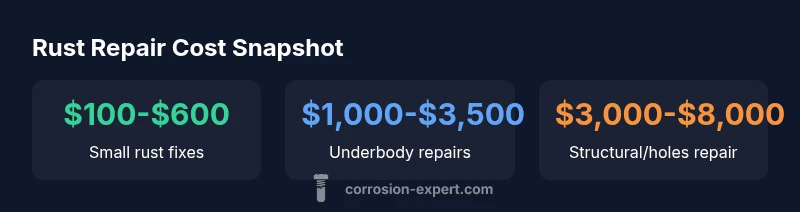
| Small surface rust on exterior panel | $100-$600 | DIY-friendly; sanding and repainting possible |
| Moderate rust on door or fender | $600-$2,000 | Labor-intensive; repaint necessary |
| Underbody rust (non-structural) | $1,000-$3,500 | Protective coatings advised |
| Underbody rust (structural/holes) | $3,000-$8,000 | May require panel replacement |
| Rust on floor pan | $2,000-$6,000 | Critical safety considerations |
Quick Answers
What factors affect rust repair costs on a car?
Rust repair costs are driven by severity, location, required materials, labor rates, and whether the repair is cosmetic or structural. Insurance may cover some corrosion repairs if caused by an accident, but routine wear is usually out of pocket. An inspection helps quantify scope and budget.
Costs depend on rust severity, location, and required repairs. An inspection helps quantify the scope and budget.
Is it cheaper to DIY rust repairs or take it to a shop?
DIY fixes can save money on minor surface rust, but professional repairs are recommended for structural or hidden rust. Shops provide warranties and proper coatings, which protect your investment over time.
DIY can save money on small issues, but for structural rust, a shop is usually worth it.
How long does rust repair typically take?
Timeline varies with severity. Minor rust could take a day or two, while extensive underbody or frame repairs may require several days to weeks, depending on parts availability and paint scheduling.
It depends on severity—anywhere from a day or two to several days or more.
Can rust be permanently fixed, or will it return?
Rust can be effectively controlled with proper repair and ongoing prevention, but ongoing exposure to moisture and salt can lead to future rust. A preventative coating plan is essential.
Rust can be controlled with proper repair and prevention, but ongoing exposure can cause it to return.
What are the best options for rust prevention after repair?
Coatings, sealants, and regular maintenance are key. Consider rust-proofing sprays, seam sealants, and protective coatings to extend the life of the repair.
Use coatings and regular maintenance to prevent rust from returning.
“A thorough inspection is the foundation of a trustworthy rust repair plan. When corrosion is addressed early with proper coatings, you preserve safety and value.”
Quick Summary
- Costs vary by rust severity and location
- DIY fixes save money for minor issues, but risk gaps
- Underbody and structural rust are the most expensive categories
- Budget for paint, coatings, and long-term prevention