How Much Does It Cost to Remove Rust From Undercarriage: A Practical Budget Guide
Learn the realistic cost ranges for removing rust from your vehicle's undercarriage, what factors drive price, DIY vs professional options, and strategies to save money while protecting your investment.


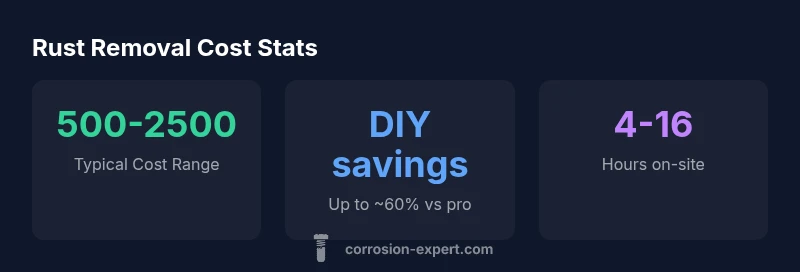
For undercarriage rust removal, expect a broad cost range—from about $500 to $2,500, depending on rust extent, vehicle access, and whether coating or undercoating is added. DIY spot treatments can lower the price, but professional service ensures proper rust remediation and lasting protection. According to Corrosion Expert analysis, budgeting for prevention can reduce future repairs and extend vehicle life.
Cost Overview and Factors
When planning an undercarriage rust removal project, the first question is not just the headline price but what drives that price. The total cost is shaped by rust severity, the area that needs treatment, access to the underbody, existing coatings, and whether you add protective coatings after remediation. According to Corrosion Expert, the most significant swing is between a light, surface-only cleanup and a full, deep treatment that targets hidden pits and severely perforated metal. In many cases, a minor, localized rust spot can be handled with a DIY kit for a modest investment, whereas extensive rust requiring multiple passes, rust converters, and professional undercoating can push the bill higher. The key is to get an accurate scope of work upfront and to differentiate between cosmetic cleanup and structural restoration. This is where quality assessment and licensed inspection pay off in the long run, reducing the risk of future failures or more extensive repairs.
What Influences the Price of Rust Removal on the Undercarriage
Pricing hinges on several core variables. The rust’s depth and spread determine how aggressive the cleaning must be. If the corrosion has penetrated through the metal (perforation) or reached hard-to-access cavities, expect higher labor, longer hours, and more expensive coatings. Vehicle type and design influence accessibility; trucks and SUVs may require different access methods than sedans. If you opt for coatings or sealants after cleaning, those materials add to the cost but can substantially extend the underbody’s life by blocking moisture and salt from reoccurring. Regional labor rates, shop overhead, and whether the service is performed on-site versus in a shop also affect price. The Corrosion Expert team notes that preventive options, such as rust inhibitors and periodic inspections, can be cost-effective over the vehicle’s life.
DIY vs Professional: What You Pay For
DIY approaches can save money upfront, especially for small surface rust using rust converters, wire brushes, and protective sprays. However, these methods may not address hidden rust or structural weaknesses, which can become expensive fixes later. Professional rust removal provides a thorough assessment, internal rust stabilization, and a proper coating or undercoating system that adheres to OEM standards. The cost gap between DIY and pro work typically reflects the certainty of results and warranty options. If you own a high-value vehicle or plan to keep the car for many years, investing in professional remediation and a robust protective layer often proves more economical in the long term, despite higher initial outlay.
Regional Cost Variations and Service Formats
Geographic location influences pricing. Urban areas with higher labor costs and stricter environmental regulations can see higher quotes. Mobile services offer convenience and can reduce shop overhead, but the hourly rate may be higher due to travel and equipment setup. Some shops provide bundled undercarriage cleaning, rust treatment, and coating as a single package, which can be cost-effective compared with purchasing each step separately. It’s important to compare quotes that itemize rust removal, surface prep, rust converters, and coatings, so you can see where costs come from and how much value each component adds.
Budgeting for a Rust Removal Project and Long-Term Costs
A realistic budget should consider both the initial remediation and long-term protection. Basic DIY remediation can be as low as a few hundred dollars, but missed spots and recurring corrosion can lead to costly repairs and structural concerns. A professional undercarriage treatment with a protective coating generally falls in a broader range, reflecting the extent of rust, the coating system chosen, and whether additional protection like underbody sealant is included. To avoid sticker shock, request a detailed estimate, confirm whether coatings are included, and ask about warranties. A proactive approach now reduces the risk of expensive recalls, safety concerns, and rust-related depreciation.
How to Save Money and Prolong Undercarriage Life
There are practical steps to reduce costs over time. Regular undercarriage inspections, especially after winter periods with road salt exposure, help catch early rust before it worsens. Apply preventive coatings or rust inhibitors where appropriate, and schedule maintenance with shops that offer bundled rust remediation plus protective coatings. When possible, combine rust work with other undercarriage services (like frame inspection or suspension checks) to maximize value. Documentation of work and warranty terms gives you leverage to demand long-term protection at a fair price, and performing small touch-ups yourself with approved products can extend the life of a professional treatment.
Typical cost ranges for undercarriage rust removal work
| Cost Item | Typical Range | Notes |
|---|---|---|
| DIY rust removal (basic products) | 50-400 | Self-serve kits with limited access |
| Professional rust removal (undercarriage) | 500-2500 | Includes assessment and remediation |
| Mobile on-site treatment | 750-2000 | Convenience; pricing varies by depth |
| Full underbody coating/primer | 1000-4500 | Adds protection but increases upfront cost |
Quick Answers
Is rust undercarriage removal covered by insurance?
Generally, rust removal is considered maintenance rather than an insurable repair. Coverage may depend on the policy and whether a specific incident caused the rust. Always check with your provider for exceptions.
Usually not covered by standard auto insurance; check your policy for any exceptions.
How long does rust removal take?
Time varies with rust extent and access. Simple jobs may take a few hours, while extensive underbody rust can require a full day or more. Plan for potential follow-up visits if coatings are applied.
Most jobs take a few hours, but extensive rust can stretch into a day.
Can I remove rust undercarriage myself?
Do-it-yourself work is possible for light surface rust but risks missing hidden corrosion. For structural rust or large areas, professional remediation is safer and more durable.
DIY can work for small rust spots, but big jobs are best left to pros.
What coatings are best after rust removal?
Coatings with corrosion inhibitors and wax-based sealants provide long-term protection. A professional-grade undercoating offers the strongest defense against road salt and moisture.
Look for professional-grade coatings that block moisture and rust access.
Will rust return after treatment?
Rust can recur if preventive measures aren’t followed, especially in salty climates. Ongoing maintenance, inspections, and periodic re-coating help minimize recurrence.
Yes, with maintenance, you can keep it from returning.
How do I tell if rust is beyond cheap repair?
If rust has perforated metal, compromised critical structural components, or spans large areas, expensive remediation may be warranted or the vehicle may require replacement. A professional inspection is essential.
Severe, widespread rust needs careful evaluation by a pro.
“Removing rust from an undercarriage isn’t just about scrubbing metal—it's about addressing hidden corrosion and sealing the surface to prevent recurrence.”
Quick Summary
- Get a professional assessment to confirm scope
- DIY options suit small, surface rust to save money
- Expect higher costs for hard-to-reach areas
- Coatings add cost but extend life and reduce future repairs
- Compare quotes with itemized components for clarity