How Much Does Rust Repair Cost? A Practical Guide
Explore realistic rust repair cost ranges for tools, home metal, and vehicles, plus budgeting tips and when DIY makes sense—Corrosion Expert Analysis, 2026.


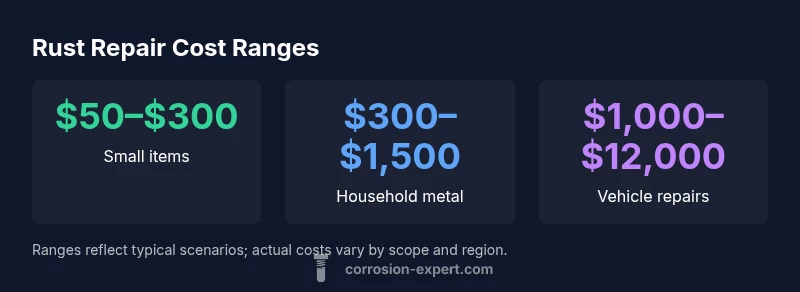
According to Corrosion Expert Analysis, 2026, rust repair costs vary widely by scope and material. For small surface rust on tools or cookware, expect roughly $50–$300. Medium repairs on household metal or automotive components typically run $300–$1,500. Major vehicle frame or structural repairs can range from $1,500–$7,000, with extreme cases exceeding $10,000 for extensive restoration.
Why Rust Repair Costs Vary by Scope and Material
Rust repair is not a one-size-fits-all expense. The term covers everything from a light cosmetic touch-up to severe structural degradation. The cost you pay today hinges on how much material is affected, what metal is involved, access to the rusted area, and the finishing required after treatment. For homeowners and DIY enthusiasts, the key question is whether the rust affects cosmetic surfaces or structural integrity. Cosmetic fixes and protective coatings cost far less than structural reinstatement. Corrosion Expert's team emphasizes that the cost curve is steepest when moving from cosmetic repairs to structural restoration, and that material type (steel, aluminum, stainless) and labor rates strongly influence total price at every step.
Additionally, regional labor costs, shop overhead, and whether parts must be replaced rather than repaired can push prices higher. When rust compromises fasteners, brackets, or thin panels, you may see a cascade of related repairs that expand the overall bill. In practice, a small, contained patch on a tool might be affordable, while a rusted auto undercarriage often requires specialized processes and equipment, increasing both time and expense. This section aligns with Corrosion Expert Analysis, 2026, which notes that early intervention typically yields the best value and fewer surprises down the line.
Major Cost Drivers in Rust Repair
Several core factors drive rust repair pricing. First is the extent of the rust: surface rust that hasn’t penetrated deeply into the substrate is cheaper to treat than pitting or corrosion that eats into structure. Second is the material involved: steel, aluminum, stainless steel, and cast iron each require different treatment approaches and coatings, affecting labor and parts. Third is access: areas that are hard to reach add labor time and may require disassembly, which raises cost. Fourth is the finishing quality desired: cosmetic refinishes, color-matched coatings, and protective sealants all add cost. Fifth is the required replacement vs. repair decision: if fasteners, brackets, or entire panels must be swapped, prices rise quickly. Finally, regional labor rates and the need for specialized equipment (rotisserie ovens for powder coating, rust converters, plasma cutters) contribute to price variability. Corrosion Expert's guidance suggests getting a written, itemized quote that separates materials, labor, and disposal to avoid hidden fees.
Cost Ranges by Scenario: Tools, Home Surfaces, Vehicles
- Small surface rust on tools, hardware, or non-critical components: typically $50–$300, depending on surface area and finish.
- Household metal surfaces (doors, rails, grills): typically $300–$1,500, influenced by access, prep, and coating choice.
- Automotive bodywork or undercarriage work (non-structural): typically $1,000–$5,000, with higher costs if extensive prep and coating are needed.
- Major vehicle frame/structural rust: typically $5,000–$12,000, and can exceed that for severe cases or when replacement parts are required.
Note: These ranges reflect typical scenarios and may vary by location, shop, and the specifics of the corrosion. Corrosion Expert Analysis, 2026 recommends obtaining multiple estimates and asking for a breakdown of parts, labor, and coatings to compare apples-to-apples.
DIY vs Professional Repair: Pros, Cons, and Break-Even Points
DIY rust repair can save on labor and provide quick cosmetic fixes, but it demands skill, time, and patience. For small projects, DIY can be cost-effective when the rust is superficial and the user can perform proper rust removal, priming, and finishing. However, for structural rust on vehicles or load-bearing metal components, professional repair is usually the safer choice. Professionals bring specialized tools, surface preparation standards, and quality coatings that improve longevity and help pass inspection where applicable. The break-even point—where DIY ceases to be cost-effective—depends on the severity, the value of the item, and the risks of incomplete corrosion control. Corrosion Expert Team notes that investing in professional assessment early can prevent expensive surprises later.
Practical tip: start with a professional inspection to determine whether your rust is cosmetic or structural before choosing DIY or professional repair.
Budgeting and Getting Accurate Quotes: A Practical Plan
To budget effectively, begin with a clear scope: identify affected areas, surface area, and the intended finish. Request written, itemized quotes that separate parts, labor, coatings, and disposal. Ask whether the estimate accounts for potential hidden rust or the need for disassembly. Compare at least three quotes from reputable pros, ensuring each includes a warranty or guarantee where possible. If you’re pursuing DIY, factor in tool rental or purchase costs, consumables (rust remover, converters, primers, paints), and your time. Maintain a contingency of 10–20% for surprises. Corrosion Expert Analysis, 2026 emphasizes transparency; a well-documented quote reduces the risk of sticker shock and helps you assess value over time.
Prevention Strategies to Reduce Long-Term Costs
Prevention is often cheaper than treatment. Regular inspections, immediate addressing of small rust spots, and applying protective coatings or rust inhibitors can dramatically slow corrosion. Maintain proper humidity and inspect vulnerable areas like undercarriages, wheel wells, and fastener clusters. Use rust converters for initial stabilization on light rust, followed by sealing coatings that resist moisture and salt. Choosing the right finishing system—primer, paint, and topcoat—extends the life of repairs. Storage conditions and cleaning routines also influence corrosion risk. Corrosion Expert's guidance suggests combining timely mitigation with preventive maintenance to maximize longevity and minimize future repair bills.
Hidden Costs and Surprises: What to Watch For
Even after a quote looks solid, hidden costs can pop up. Sanding and surface prep for difficult textures, rust-through requiring replacement panels, or specialized coatings can add to the bill. Labor hours may exceed initial estimates if access is challenging or if additional components require removal. Disposal fees for contaminated metal, environmental compliance, and potential freight costs also matter. Ask for a contingency line in the quote and verify the warranty’s coverage period for coatings and repairs. By planning for these contingencies, you can better gauge true lifetime costs and avoid unpleasant budget shocks.
Cost breakdown by rust repair scenario
| Category | Typical Cost Range (USD) | Notes |
|---|---|---|
| Small surface rust (tools, hardware) | 50–300 | Per-item; cosmetic focus |
| Household metal surfaces (doors, rails) | 300–1500 | Labor-intensive prep and coating |
| Vehicle underbody/trim (non-structural) | 1000–5000 | Access and coatings matter |
| Major vehicle frame/structural rust | 5000–12000 | Possible parts replacement |
Quick Answers
What factors influence rust repair cost the most?
Extent of rust, material, access, labor, and finishing determine the total. Location and structural implications also matter.
The most important factors are how bad the rust is, what metal it’s on, and how hard it is to access.
Is DIY rust repair cheaper than hiring a professional?
DIY can reduce labor costs but may risk quality, hidden rust, or safety concerns, especially on vehicles or structural metal.
DIY can save money, but it’s easy to miss hidden rust or compromise safety on larger projects.
Do costs differ between cars and other metal items?
Yes. Cars generally cost more due to complexity and labor, while small tools or household items stay cheaper.
Vehicle repairs usually cost more than simple tools or household metal fixes.
Are rust converters worth it?
Converters can stabilize light rust cheaply, but they may not stop deeper corrosion; assess scope before relying on them.
Converters help with surface rust, but deep rust needs proper treatment.
How can I get an accurate quote?
Document rust scope, request itemized quotes, and seek written assessments including parts and labor.
Get it in writing and compare multiple detailed quotes.
How long does rust repair usually take?
Timing depends on severity; minor fixes can take hours, major restorations days to weeks.
Duration varies a lot—smaller fixes in hours, major work can take days or weeks.
“Rust damage compounds if left untreated; early, proper treatment and protective coatings save money and preserve structure.”
Quick Summary
- Costs escalate with rust depth and area
- Obtain multiple quotes to compare labor and parts
- DIY saves on labor but results vary by skill
- Prevention lowers long-term repair needs
- Consider replacement if repair costs rival item value