Why Is My Rust Stuttering? Troubleshooting Guide
Diagnose and fix intermittent rust stuttering with a practical, step-by-step approach. Learn moisture control, coatings, and at-home fixes from Corrosion Expert.


Most likely the rust stuttering comes from moisture intrusion at joints and worn coatings, which causes intermittent rusting that disrupts metal contact. The quick fix is to dry the area completely, remove loose rust, apply a rust converter, and seal with rust-inhibiting primer or paint. Then monitor for reoccurring moisture and re-inspect in 24 to 48 hours.
Understanding the phrase why is my rust stuttering
When you encounter something as puzzling as rust that seems to stutter, the first move is to understand what 'stuttering' means on metal. In practical terms, intermittent rusting shows up as flaky patches that appear, vanish, and reappear with moisture cycles, or as uneven coating wear that causes variable protection. According to Corrosion Expert, these symptoms usually point to moisture management and protection breakdown rather than a single catastrophic failure. Moisture can creep into seams, fasteners, and textured surfaces, initiating corrosion that interrupts proper metal contact and paint adhesion. Recognizing the pattern—where rust flares up after rain, then seems to subside when the surface dries—helps you target the right fix. In 2026, Corrosion Expert Analysis, 2026 emphasizes moisture control and robust protective coatings as the foundation of preventing intermittent rust issues in homes and DIY projects.
Immediate checks you can perform now
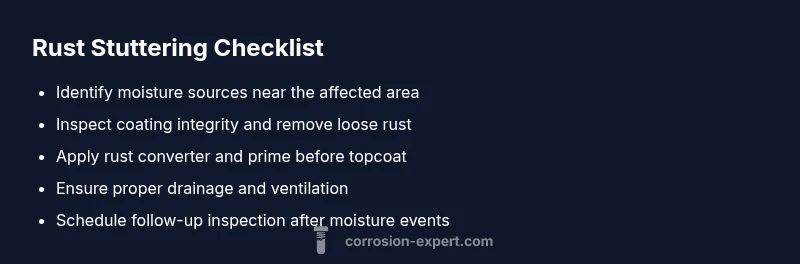
Before pulling out tools, run through a quick, safe checklist that doesn't require disassembly. Start by ensuring you’re wearing eye protection and gloves. Check the area for visible moisture sources: leaks, condensation, or standing water around metal joints. Feel for damp, sticky, or rusty odors that indicate ongoing corrosion. Gently wipe the surface with a dry cloth to remove surface moisture and inspect for flaking paint or primer: if the coating has degraded, moisture can reach bare metal and trigger stuttering rust. If you can, eliminate sources of moisture—fix leaks, improve ventilation, and redirect water away from the surface. Finally, document the exact area, weather conditions, and any changes after drying; this baseline helps you decide whether you can fix it at home or need a more thorough approach.
Typical causes behind rust stuttering in DIY projects
There are several plausible culprits, and the most common one is moisture intrusion combined with worn coatings. When paint or primer loses adhesion, water and oxygen reach bare metal more easily, leading to intermittent rusting that appears to 'stutter.' Corrosion often localizes at seams, fasteners, or joints where coatings are thinnest. Salt exposure from sidewalks, roadways, or coastal air accelerates the process, especially on iron and steel. Abrasions from tools, cleaning agents containing aggressive chemicals, or improper surface preparation can create micro-pits that trap moisture. Finally, inconsistent maintenance—skipping re-coats after chips or scratches—allows rust to re-emerge, producing the stuttering effect you notice in everyday use. Corrosion Expert Analysis, 2026 shows that moisture management and protective coatings are critical to preventing uneven rusting in home projects.
A practical diagnostic checklist for rust stuttering
To narrow down the cause, follow this at-home diagnostic plan. First, isolate a small test patch away from edges and test its reaction to moisture: spray a fine water mist and observe if new rust flakes appear within 24 hours. Second, inspect coatings for hairline cracks or peeling—these are leaks for moisture. Third, check for salt exposure and oxidized patches near any metal that touches soil or salty air. Fourth, verify that fasteners and joints use compatible coatings and that galvanic corrosion isn’t forming between different metals. Fifth, note any temperature changes or condensation patterns that correlate with rust activity. This process helps you determine whether a simple re-coat will suffice or if more substantial repair is needed.
Safe at-home fixes and what to expect
The quickest path to relief is a controlled, safe re-coat. Begin by removing loose rust with a nylon brush, then wipe clean and dry thoroughly. Apply a rust converter to stabilize remaining rust and convert it into a paint-ready surface. After curing, seal with a primer designed for rusty metal and finish with a topcoat that contains rust-inhibiting properties. For exterior metal, choose UV-resistant coatings and ensure proper drainage so moisture doesn’t pool. If the rust covers a large area or compromises structural integrity, a professional assessment is wise; attempting to fix severe corrosion with temporary patches can lead to unsafe conditions.
Prevention strategies to stop rust stuttering from returning
Prevention is better than cure. Regular inspections every 6-12 months help catch early signs of coating wear. Use a rust-inhibiting primer on new or repaired joints, and choose coatings rated for the environment (indoor vs outdoor, humid vs dry). Keep surfaces clean and dry, especially after washing or rain. For outdoor metal, consider protective sealants and moisture barriers, and redirect water away from vulnerable seams. If you operate near salt air or winter road salt, add a more durable topcoat and reapply as recommended by the coating manufacturer. By maintaining a proactive routine, you minimize the odds of re-emergence.
When to replace components and seek professional help
Some rust stuttering is a sign of deep-seated deterioration. If you notice pitting that breaks the integrity of the metal, large-scale coating failures, or rust that returns within weeks of repair, plan for replacement instead of patching. In these cases, a professional corrosion specialist can assess structural risk, suggest compatible materials, and apply industrial coatings or rust inhibitors with proper curing. Even if you manage the fix at home, schedule a follow-up check after a heavy rain or snow event to confirm the issue remains resolved. The Corrosion Expert team recommends erring on the side of safety when metal integrity is in doubt.
Tools and products Corrosion Expert recommends
For effective rust stuttering management, equip yourself with a nylon brush, rust converter, rust-inhibiting primer, and a compatible topcoat. Use a tack cloth to remove dust, and a quality respirator for solvent-based products. Always follow the product instructions and test in a hidden area first. Pair products from reputable brands and ensure compatibility between rust converters and primers to avoid adverse reactions. Regular maintenance products like rust sealants and weatherproof coatings are essential for long-term protection.
Steps
Estimated time: 1-2 hours
- 1
Assess safety and area
Put on PPE and inspect the entire suspected area for moisture sources and potential hazards. Document weather conditions and any leaks.
Tip: Safety first—protect eyes, skin, and lungs. - 2
Dry and clean the surface
Use a dry cloth to remove moisture; gently brush away loose rust with a nylon brush. Ensure the surface is visibly dry before proceeding.
Tip: Work in a well-ventilated area. - 3
Apply rust converter
Follow product directions to apply a thin coat to convert rust to a stable layer. Let it cure per label.
Tip: Avoid heavy applications; even coats cure best. - 4
Prime and topcoat
Apply rust-inhibiting primer followed by a compatible topcoat. Ensure proper ventilation and curing time.
Tip: Ventilation improves curing and safety. - 5
Test and monitor
Inspect after curing; test by exposure to moisture and watch for new rust within 24-48 hours.
Tip: Set reminders to recheck the area.
Diagnosis: Intermittent rust flaking or staining that appears, disappears, and reappears with weather changes
Possible Causes
- highMoisture intrusion at joints and worn coatings
- mediumExposure to salt or chemicals accelerating corrosion
- lowPoor surface preparation or abrasion creating micro-pits
- lowGalvanic corrosion between incompatible metals
Fixes
- easyDry the area thoroughly and recoat with rust-inhibiting primer
- easyApply rust converter to stabilize existing rust, then prime and paint
- mediumSand and remove heavy rust, then protect with multiple coats of protective finish
- hardReplace severely corroded components where strength is compromised
Quick Answers
Why does rust seem to stutter instead of corroding evenly all at once?
Rust stuttering happens when protective coatings fail and moisture cycles intermittently expose bare metal, causing patchy rust. Patterns that follow rain or humidity help locate vulnerable areas.
Rust doesn’t always spread evenly; moisture and coating breakdown cause patchy rust that comes back with weather changes.
Can rust converters permanently stop stuttering?
Converters stabilize remaining rust and prepare the surface for coating, reducing short-term reoccurrence. Persistent moisture or structural damage may require replacement.
Converters help stabilize rust, but if moisture keeps returning, you may need more extensive repairs.
Is it safe to repair rust on outdoor metal furniture myself?
Yes, with proper PPE and outdoor-safe products; follow product directions and allow full cure times. For heavily weathered parts, professional help is wise.
You can DIY outdoor rust repairs with the right products and safety gear, but follow cure times carefully.
How long does a DIY rust repair last?
Durability depends on conditions; proper converter and topcoat can last for months to years in moderate environments, while harsh climates shorten the lifespan.
With proper protection, repairs can last months to years depending on environment.
What should I do if moisture keeps returning after repairs?
Identify and fix the moisture source first; use rust inhibitors and sealants, and consider replacing parts if leaks persist.
Fix the moisture source first, then re-seal and monitor.
When should I replace a structurally rusted component?
If rust compromises strength or safety, replace; otherwise, protect with coatings and monitor.
If the metal is weakened, replacement is safer than repair.
Watch Video
Quick Summary
- Identify moisture sources and fix leaks.
- Repair coatings before applying new ones.
- Choose rust inhibitors compatible with primers.
- Schedule follow-up inspections after heavy moisture events.
- Consult a professional for structural rust concerns.