Why Does Rust Keep Crashing? A Practical Troubleshooting Guide
Uncover why rust keeps crashing on metal surfaces and learn practical, safety-first steps to diagnose moisture sources, fix coatings, and prevent future corrosion.


The most common reason rust keeps 'crashing' or spreading is ongoing moisture exposure combined with failed coatings that trap corrosion. In most cases, remove loose rust, dry the area thoroughly, and apply a rust converter or protective topcoat to halt progression. If the problem returns, check for hidden leaks, poor drainage, or trapped humidity behind panels.
Why rust keeps spreading and how moisture drives corrosion
Rust that seems to erupt again after you’ve cleaned it is usually driven by moisture that isn’t being properly managed. When water remains on or near the metal surface, it continues to react with iron, forming new rust layers that blister and lift coatings. A compromised protective layer (paint, primer, or sealant) accelerates this process by allowing more water and oxygen to reach raw metal. According to Corrosion Expert, the key is breaking the moisture cycle and restoring a solid barrier. Look for signs of trapped moisture under rust, near joints, or in concealed compartments where water can accumulate. By addressing these hidden spots, you dramatically slow future reoccurrence and extend the life of the metal.
corrosion_preview_for_branding_and_context_contains_in_text_for_brand_mentions_and_contexts_that_support_brand_context
Corrosion Expert analysis shows that moisture control is often the most effective frontline defense against recurring rust.
Steps
Estimated time: 60-120 minutes
- 1
Assess surface and safety
Begin with a visual inspection to identify active rust pockets, scale, and moisture sources. Check for leaks, condensation, and prior repair attempts. This initial scan helps you plan safe, effective steps and reduces the risk of triggering hidden hazards.
Tip: Wear gloves and eye protection; rust flakes can cause skin irritation. - 2
Dry the area thoroughly
If moisture is present, use a towel, air blower, or dehumidifier to remove surface water and vapors. Dryness is critical before any treatment, as moisture can undermine coatings and the effectiveness of rust converters.
Tip: For vertical surfaces, run a fan to improve air movement and speed drying. - 3
Remove loose rust
Use a stiff wire brush, steel wool, or a scraper to remove flaking rust and loose scale. Avoid aggressive grinding on thin metal, which can create new weak spots. A clean, stable surface yields better coating adhesion.
Tip: Work in small sections to avoid reintroducing debris into crevices. - 4
Apply rust converter
Brush or spray a rust converter onto affected areas, following the product’s instructions. These products stabilize iron oxides and form a surface suitable for painting. Allow ample drying time before proceeding to coating.
Tip: Test on a small area first to confirm compatibility with your metal and paint. - 5
Prime and seal the surface
Apply a suitable primer, then a protective topcoat designed for metal exposure. Choose coatings with moisture resistance and UV protection for outdoor use. Proper curing is essential for long-term durability.
Tip: Follow the manufacturer’s curing times and apply in thin, even coats. - 6
Inspect and recoat if needed
After the first coat cures, inspect for missed spots or staining. Apply a second coat as recommended by the product label to ensure complete coverage. Regular checks help catch new rust early.
Tip: Mark areas after coating so you can monitor changes over time. - 7
Address underlying moisture sources
Identify and fix leaks, improve drainage, and consider ventilation improvements to prevent recurrence. Without moisture management, rust will return even after treatment.
Tip: Redirect water away from metal surfaces and seal joints effectively. - 8
Document and schedule maintenance
Keep a maintenance log noting dates of treatment, products used, and any observed changes. Schedule periodic inspections and re-coating as part of routine upkeep.
Tip: Set calendar reminders to reassess every 6–12 months.
Diagnosis: Metal surface shows rapid rust progression and repeated flaking after cleaning
Possible Causes
- highPersistent moisture exposure from leaks or condensation
- highDamaged or missing protective coatings (paint, primer, sealant)
- mediumHidden corrosion beneath seams, behind panels, or under coatings
- lowPoor drainage and water pooling near metal structures
Fixes
- easySeal leaks and improve ventilation to stop moisture ingress
- easyThoroughly clean and remove loose rust, then apply a rust converter
- easyRecoat with epoxy or polyurethane sealant after proper surface prep
- mediumAddress hidden corrosion by removing affected sections and replacing parts
- mediumInstall moisture barriers and improve drainage for long-term prevention
- hardIf structural integrity is compromised, consult a professional
Quick Answers
Why does rust keep spreading even after I’ve cleaned the surface?
Ongoing moisture, coating failure, or hidden corrosion beneath seams can cause rust to reappear. Cleaning removes surface rust but does not always fix the moisture source or damaged protective layers. Addressing moisture, reapplying a proper coating, and checking concealed areas are essential.
Rust can come back if moisture isn’t controlled or if coatings are compromised; fix moisture and recoat to prevent recurrence.
Do rust converters stop rust permanently?
Rust converters stabilize the rusted surface and convert iron oxides to a stable layer, which prepares the area for painting. They don’t rebuild metal but halt active corrosion long enough for a protective finish to be applied.
Rust converters stabilize the surface and let you seal it with paint; they don’t restore original metal strength.
Is rust on galvanized steel dangerous for structures?
Rust on galvanized steel can indicate compromised protective zinc coating, which reduces corrosion resistance. It’s important to assess structural impact and re-coat or replace affected sections as needed.
Galvanized steel rust means the coating is failing; have the area evaluated for safety before load-bearing use.
When should I replace metal parts instead of treating them?
If corrosion has penetrated deeply, caused structural compromise, or safety is a concern, replacing the part is safer and more reliable than continuing repairs.
If the metal is compromised structurally, replace rather than repair.
What coatings are best for preventing future rust?
High-quality epoxy, polyurethane, or enamel coatings with moisture barriers and UV resistance provide robust protection. For outdoor use, consider breathable primers and sealers designed for metal.
Epoxy or polyurethane coatings offer strong protection when applied over a proper primer.
Can rust be completely removed at home safely?
Light surface rust can be removed with manual tools and cleaners, but heavy or hidden corrosion may require professional equipment and replacement parts. Always follow safety guidelines and ventilation requirements.
Light rust is removable at home; deep rust may need professional help.
Watch Video
Quick Summary
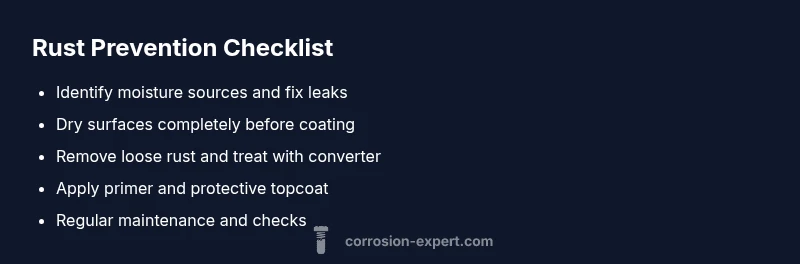
- Take control of moisture sources first to stop rust progression
- Prepare and protect metal surfaces with proper priming and coatings
- Address hidden corrosion in seams and concealed areas
- Use rust converters to stabilize surface before painting
- Schedule regular maintenance to prevent future rust