Vinegar for Removing Rust from Metal: The Complete DIY Guide
A thorough, beginner-friendly guide to using vinegar for removing rust from metal. Learn safety, methods for different metals, troubleshooting, and aftercare to keep metal surfaces rust-free.


Vinegar can effectively loosen light rust on metal surfaces, especially ferrous metals. By soaking, scrubbing, rinsing, and drying, you can remove rust using vinegar for removing rust from metal with minimal tools. Follow the step-by-step guide to safely apply this pantry method and protect metal afterward. This approach is best for mild rust and small parts. Expect better results on items that aren’t deeply pitted.
Why vinegar works for rust removal
Rust forms when iron or steel is exposed to moisture and oxygen. The resulting iron oxide layer is often loosely adherent, which is why rust can be coaxed off with agitation and mild acids. Vinegar contains acetic acid that helps dissolve iron oxide, softening the rust and exposing clean metal underneath. This makes vinegar a popular choice: it's inexpensive, readily available, and relatively safe for many ferrous metals. Note the phrase vinegar for removing rust from metal; using it as a practical method is common for DIY tasks around the home. The Corrosion Expert team emphasizes that results depend on rust depth and surface area. Light, flaky rust on tools, nails, and thin sheets usually responds to soaking and gentle scrubbing, while heavy-scale rust or pits may require repeated treatment or alternative methods. Always start with a small test patch on an inconspicuous spot to assess reaction. If the surface is coated or plated, proceed cautiously to avoid damage to underlying layers.
Safety and prep before you start
Before you begin, ensure you are working in a well-ventilated area and wear protective gloves and eye protection. Vinegar is relatively safe for household use, but prolonged exposure to skin or inhalation of vapors should be avoided. Keep vinegar away from bleach or ammonia, as mixtures can release harmful gases. Use a plastic or glass container for soaking and a soft-bristle brush or non-scratch pad for gentle scrubbing. If the metal item is painted, coated, or plated, test on a hidden area first and be prepared for the possibility of coating damage. Also, make a simple plan for cleanup after the rust is removed, so you don’t spread residue to other surfaces. The Corrosion Expert team notes that preparation reduces cleanup time and improves outcomes for the vinegar rust-removal process.
Choosing vinegar and prep steps
For most DIY tasks, standard white vinegar or cleaning vinegar works well. White vinegar is inexpensive and widely available, while cleaning vinegar is typically a bit stronger. Decide whether you want a shorter soak with a more active solution or a longer soak with a milder approach. In all cases, avoid metal reactive coatings and attempt a patch test first. Pour enough vinegar to fully submerge small parts, or place the item in a shallow tray with enough liquid to cover the rusty areas. If you’re treating larger objects, you may use a wrap or cloth soaked in vinegar to cover the rusted surface for sustained contact. Always label containers and keep them away from kids and pets. The goal is to soften the oxide layer without aggressively attacking the base metal, which is why the vinegar rust-removal approach works best for mild rust on ferrous metals.
How to plan and execute the vinegar rust removal
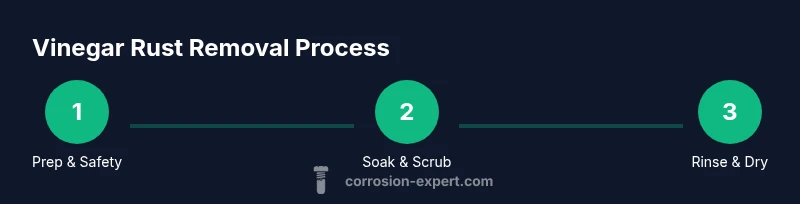
Begin with a clean surface: wipe away loose corrosion with a dry cloth. Submerge or apply vinegar-soaked cloth to rusty areas, allowing contact for a period that depends on rust severity. Light rust may require 15–30 minutes, while heavier rust could take longer. After soaking, use a soft brush or pad to gently scrub along the grain of the metal. Rinse with clean water and dry immediately to prevent new rust from forming. If any rust persists after the first pass, repeat the soaking and scrubbing cycle. The goal is to remove corrosion without overexposing the base metal to acidic conditions, which can shorten the life of certain finishes. The Corrosion Expert team emphasizes patience: multiple short rounds often yield better results than a single long soak.
Handling different metals and surfaces
Iron and steel surfaces generally respond well to vinegar rust removal, especially when the rust is surface-level. Stainless steel is typically tolerant of short vinegar exposure, though you should avoid long soaks that could dull the surface finish. Aluminum, zinc, and some coated metals may discolor or degrade if left in contact with vinegar for too long. For aluminum, limit exposure and test first since prolonged acidity can etch the surface. Cast iron cookware can benefit from light vinegar treatment to remove rust, followed by thorough drying and reseasoning to restore the protective layer. Always tailor the method to the metal type and consider protective finishing after rust removal to prevent future corrosion. The Corrosion Expert team notes that a quick patch test is especially important with unfamiliar alloys.
Common mistakes and how to avoid them
Common mistakes include soaking longer than necessary, using abrasive scrubbers that scratch the surface, and skipping thorough drying. Do not mix vinegar with bleach or ammonia—this creates hazardous gases. Avoid metal containers; use plastic or glass to hold the vinegar solution during soaking. Rinse completely after treatment and dry with a clean cloth, ideally in a warm, ventilated area. For items with existing coatings or plating, test a small area first to confirm that the vinegar won’t remove or damage the finish. Finally, don’t rely on vinegar alone for heavily rusted items; mechanical removal or chemical rust removers may be required. The goal is to remove rust while preserving the underlying metal as much as possible.
Aftercare and prevention: sealing and protection
After rust removal, it’s essential to protect exposed metal from moisture and air. Wipe the surface with a light oil or corrosion-inhibiting coating, then wipe off excess. For tools and hardware, consider applying a thin layer of mineral oil, machine oil, or a specialized rust-preventive product. If you’ll be storing items, store in a dry environment and consider a rust inhibitor paper or silicone-based spray to deter reformation. For cookware or items subject to frequent contact with moisture, reseasoning or applying a protective coating is recommended to restore a barrier against future rust. Routine maintenance, such as periodic cleaning and proper storage, will help extend the life of metal items exposed to humid conditions. The Corrosion Expert team emphasizes that prevention is the most cost-effective approach to rust control.
Real-world examples and troubleshooting
Consider a few practical scenarios: a rusty garden tool, a nail, or a cast-iron skillet with surface rust. For tools and nails, a simple vinegar soak followed by gentle scrubbing usually suffices. For cast-iron cookware, remove rust, rinse, dry completely, and then reseason to rebuild the protective patina. If you still see rust after a round of treatment, reassess the surface and repeat the process, or switch to a mechanical approach (wire brush or sandpaper) for stubborn areas. If rust recurs, consider environmental fixes such as dehumidifying storage spaces or applying a rust inhibitor to stored items. The Corrosion Expert team reminds readers to check for deeper pits or structural weakness; if you suspect compromised integrity, consult a professional.
Quick reference: soak times and outcomes
For light rust on small ferrous parts, brief contact with vinegar and gentle scrubbing typically yields good results. For more extensive rust, you may need longer soaks and multiple cycles. Always dry thoroughly after treatment and follow with a protective finish to minimize future rust. If you’re unsure about a surface, perform a small test first. This quick reference emphasizes practical, job-specific decisions rather than rigid rules, ensuring you can adapt the method safely across common metal types.
Final notes and DIY success plan
Vinegar is a practical, low-cost method for removing light rust from metal, especially for DIY enthusiasts with limited tools. Start with a patch test, respect safety guidelines, and tailor the approach to the metal type. Aftercare and prevention are critical to maintaining results; drying thoroughly and applying protective coatings will extend the life of treated items. For larger projects or heavy rust, consider combining vinegar treatment with mechanical removal or professional rust inhibitors. The Corrosion Expert team’s verdict is that vinegar-based rust removal is a solid first step for mild cases and a valuable part of a broader rust-management strategy.
Tools & Materials
- White vinegar or cleaning vinegar(Standard household vinegar, sufficient for most mild rust scenarios.)
- Plastic or glass soaking container(Avoid metal containers to prevent corrosion during soaking.)
- Soft-bristle brush or non-scratch pad(Gentle scrubbing to avoid scratching base metal.)
- Gloves and eye protection(Protect hands and eyes from splashes.)
- Cloths or rags(For drying and applying vinegar-soaked cloths.)
- Soap and water for rinse(To remove vinegar residue after treatment.)
- Light oil or rust-preventive coating(Optional finishing step to slow re-rust.)
- Silicone-based spray or sealant (for prevention)(Optional long-term protection for stored items.)
Steps
Estimated time: several hours (depends on rust severity and item size)
- 1
Prep workspace and safety
Set up a clean, ventilated workspace. Put on gloves and eye protection, and clear the area of items that could be damaged by spills. Inspect the item to determine if any coatings or finishes should be avoided during rust removal.
Tip: Always test a small patch first to gauge how the surface reacts. - 2
Choose vinegar and container
Select standard white vinegar or cleaning vinegar and place the rusted item in a plastic or glass container. If the object cannot be fully submerged, apply vinegar-soaked cloth to the rusty areas.
Tip: Avoid metal containers to prevent reaction with the acid. - 3
Apply vinegar and soak
If submerging, pour enough vinegar to cover the rusty areas and let it sit. If using cloth, wrap the cloth around the rusted surface and keep it in contact for several minutes, re-wetting as needed.
Tip: Keep contact to soften the oxide without prolonged exposure that could harm finishes. - 4
Scrub and assess
Remove the item and scrub gently with a soft brush, following the grain of the metal. Inspect for remaining rust and decide if a second soak is necessary.
Tip: Avoid aggressive scrubbing that could scratch the metal. - 5
Rinse and dry
Rinse with clean water to remove vinegar residue. Dry immediately with a lint-free cloth to prevent flash rust from forming.
Tip: Drying quickly minimizes new rust formation. - 6
Neutralize and protect
Optionally apply a light oil or rust-preventive coating to slow future oxidation. Wipe evenly and let it cure before use or storage.
Tip: Coatings create a barrier against moisture and air.
Quick Answers
Is vinegar safe for all metal types?
Vinegar works best on ferrous metals with mild rust. It can dull or damage some finishes, aluminum, or coated surfaces if left too long. Always test first and limit exposure on sensitive metals.
Vinegar can help with mild rust on many ferrous metals, but test first and avoid long exposure on aluminum or coated surfaces.
Will vinegar remove heavy or pitted rust?
Vinegar is often only effective on light surface rust. Heavy or deeply pitted rust may require mechanical removal or stronger chemical rust cleaners.
Vinegar helps with light rust, but deep rust often needs more aggressive methods.
Should I rinse after soaking in vinegar?
Yes. Rinse with clean water to remove acetic acid and residue, then dry thoroughly to prevent new rust.
Rinse and dry after soaking to prevent new rust from forming.
Can I reuse vinegar after rust treatment?
If the liquid has collected rust debris, it’s better to replace it. Reusing used vinegar may be less effective and could spread rust particles.
Better to use fresh vinegar for each batch of rust treatment.
What about aluminum or stainless steel?
Aluminum can be etched by prolonged acidity; stainless steel tolerates short exposure but avoid long soaks. Always test and adjust the method for each metal type.
Be careful with aluminum and test on a hidden area first.
Watch Video
Quick Summary
- Start with a patch test to gauge reaction
- Use vinegar for removing rust from metal on mild surface rust
- Dry thoroughly and protect with a finish to prevent re-rust