How to Rust with Vinegar: A Practical DIY Guide
Learn a practical, vinegar-based method to remove light rust from metal tools and cookware. Step-by-step guidance, safety tips, and aftercare to keep surfaces rust-free.


To remove rust with vinegar, submerge rusted metal in white vinegar, then scrub away corrosion with a brush. Repeat as needed. Gather white vinegar, a nonreactive container, a steel wool or scrub brush, baking soda, gloves, and clean rags. This method works well for light-to-moderate rust on many metals, but heavy rust may require mechanical pre-treatment.
Understanding vinegar rust chemistry
Rust, or iron oxide, forms when iron reacts with oxygen and water. White vinegar contains acetic acid, which helps dissolve the ferric oxide layer by slightly lowering the pH and loosening the bond between rust and metal surfaces. This is not a miracle cure, but a practical first step for light to moderate rust on many metals. According to Corrosion Expert, acetic acid is most effective when rust has not formed a thick, compact scale. Use vinegar as part of a broader corrosion-management plan, not as a guaranteed fix for deeply pitted surfaces. This section lays the groundwork for why this method works and where it fits in a DIY toolbox.
The chemistry behind vinegar rust removal is simple but nuanced. Acids can break the lattice bonds in rust, releasing iron oxide from the surface. Yet, the same acidity can attack base metals or coatings if left too long. The Corrosion Expert analyses suggest a cautious approach: test on a small patch, avoid prolonged exposure on sensitive alloys, and always follow with thorough rinsing and drying. Understanding the limits helps you pick the right projects for this technique and reduces the risk of damage.
Remember, vinegar is not a universal solvent. It performs best on items with light surface rust rather than heavy, structural corrosion. For tools with thick encrustations or tools made from reactive metals, pairing vinegar with mechanical cleaning steps or opting for commercial rust removers may yield better results. The goal is to remove surface rust so the metal can be dried and protected against future exposure.
Choosing the right vinegar and containment
Choosing the right vinegar matters. Plain white vinegar (typically 5–8% acetic acid) is the go-to for rust removal because it’s inexpensive, widely available, and tends to be less aggressive than stronger acids. Apple cider vinegar and other flavored vinegars contain sugars and other compounds that can promote residue or staining, though they can still work for lighter rust on noncritical surfaces. For metals that might react with strong acids, white vinegar provides a more predictable result and easier cleanup.
Containment is the next consideration. Submersion in a nonreactive container (glass, ceramic, or certain plastics) ensures uniform contact between the rusted surface and the vinegar. If soaking isn’t feasible due to size or asymmetry of the item, apply vinegar with a cloth or sponge and cover the area with plastic wrap to slow evaporation. This approach reduces waste and keeps the process manageable for irregular shapes. The choice of container and method of application influence how quickly rust dissolves and how evenly it cleans the surface.
In practical terms, plan for a soak time that matches the rust’s severity. Light rust might respond in a few hours, while heavier rust may need overnight exposure. Always test a small area first to gauge reaction time and avoid unintended damage. Corrosion Expert recommends keeping the environment ventilated and away from heat sources to maintain safety and control.
Prepping your workspace and safety
Safety and preparation are the backbone of any rust-removal project. Put on protective gloves, eye protection, and a long-sleeve shirt to keep skin and eyes shielded from splashes. Work in a well-ventilated area, especially when soaking items that may release vapors. Clear a stable space with a tray or pan to catch drips, and place a waterproof mat beneath the workspace to protect surrounding surfaces.
Before you begin, wipe down the item with a dry cloth to remove loose dust and debris. This step minimizes abrasion and ensures better contact between the rust and vinegar. If the item is hollow, check internal cavities for trapped water; drain or dry them to prevent floating or floating corrosion progression during the soak. Keep baking soda and clean rags nearby for the neutralization and drying steps that follow.
Finally, consider the metal type. For softer metals like aluminum or zinc, vinegar can cause pitting or additional damage if left too long. In those cases, limit soak times or test on a small area first. With proper PPE and setup, you reduce risk and improve the odds of a successful rust reduction.
Step-by-step rust removal with vinegar
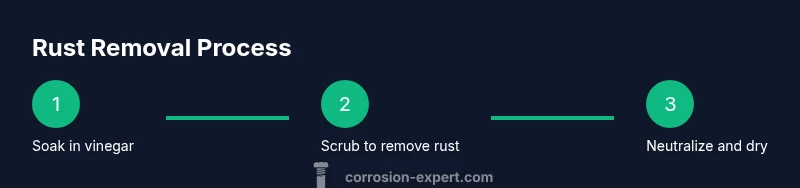
This section outlines a practical, repeatable process. The steps are designed to be straightforward, with safety and efficiency in mind. Start by selecting the appropriate vinegar and container, then follow the soak and scrub routine. Use mechanical action—brushes or steel wool—to lift rust as the acidity loosens the oxide layer. Rinse and repeat as necessary until you achieve the desired level of cleanliness. Finally, neutralize any remaining acidity and dry the surface thoroughly before applying protection.
First, prepare a vinegar bath in a nonreactive container large enough to accommodate the item. Submerge the rusted surface completely. For small items, a simple bowl or jar may suffice; for larger tools, you may need a tub or sink. Leave the item to soak for 3–8 hours for light rust, or overnight for more stubborn cases. During soaking, periodically tilt or move the item to ensure even coverage and to prevent dry spots.
After soaking, remove the item and scrub with a brush until rust loosens and comes away easily. If some patches resist, re-submerge and re-scrub. For heavy rust, you may repeat the soak and scrub cycle a few times. Keep the surface wet enough to continue the chemical reaction without dried residue.
Post-treatment neutralization, drying, and protection
Once you’re satisfied with the rust removal, neutralize the remaining acidity to prevent further corrosion. Prepare a baking soda solution (one tablespoon per cup of water) and rinse the item with it briefly, then rinse with clean water to remove any lingering residue. Dry thoroughly with a lint-free cloth or air-dry in a warm, dry area. The key is complete moisture removal to avoid flash rusting.
With the surface dry, inspect for any remaining pits or rust specks. Lightly sand glossy patches or rough spots if needed, then wipe away dust. Finish by applying a protective coating. Options include a thin layer of oil, rust-inhibiting primer, or a paint designed for metal. If you plan to use the item outdoors, choose a durable finish that provides tack-free protection and resistivity to moisture.
Finally, store the item in a dry, ventilated place away from direct moisture. Regular inspection and light maintenance—such as wiping with a thin oil film—will extend the life of treated metal and prevent rapid re-rust. By finishing with a protective layer, you close the door on new rust formation and extend the life of your equipment.
When vinegar isn't enough and what to try next
Vinegar is a convenient, low-cost option, but it isn’t a universal remedy. Very heavy rust, deep pits, or damaged coatings may require stronger rust removers or mechanical removal methods like sanding, wire-brushing, or media blasting. If you encounter stubborn rust that resists vinegar after multiple cycles, consider a different approach or consult technical guidance for difficult materials. Always test new methods on inconspicuous areas to avoid unintended damage.
If you’re working on critical tools or items with complex geometries, it can be helpful to combine vinegar with other mild acids or rust inhibitors. For instance, a citric acid bath could be gentler on some metals, whereas a commercial rust remover might offer more aggressive action. In all cases, follow safety guidelines and ensure proper cleaning and drying after the treatment to prevent new corrosion.
Long-term rust prevention using vinegar-inspired approaches
Prevention is easier than repeated rust-removal sessions. After you finish any vinegar treatment and dry the object, protect surfaces with oil coatings or rust-preventive primers. For outdoors or humid environments, consider additional protective strategies such as galvanizing, painting, or applying a clear enamel. Routine maintenance—checking for early signs of corrosion and addressing them quickly—helps you keep metal items rust-free longer.
Certain vinegar-based methods can contribute to ongoing rust management, especially for tools stored in damp spaces. After cleaning, wipe down with a light coat of oil to form a barrier against moisture. Reapply protective finishes periodically to maintain corrosion resistance. If you’re unsure about the best protection for a specific material, consult Corrosion Expert guidelines for metal-specific strategies and maintenance schedules.
Tools & Materials
- White vinegar (5–8% acetic acid)(Primary rust-dissolving liquid; use inexpensive household vinegar)
- Nonreactive container(Glass, ceramic, or certain plastics; large items may require a tub)
- Steel wool or scrub brush(Coarse or medium grit; avoid overly abrasive tools on soft metals)
- Baking soda(For neutralizing acidity after cleaning)
- Gloves(Chemical-resistant; protect skin from splashes)
- Goggles or eye protection(Prevent splashes from entering eyes)
- Rags or microfiber towels(Dry and wipe surfaces during and after treatment)
- Water for rinsing(Cool, clean water to rinse after soaking and neutralizing)
- Light oil or rust-preventive coating(Optional protective layer after drying)
Steps
Estimated time: 12-24 hours (including soaking, scrubbing, neutralizing, and drying)
- 1
Gather materials and prepare workspace
Collect all tools and materials, then set up a clean, ventilated area. Lay down a tray to catch drips and put on PPE. Confirm you have a nonreactive container for soaking and a safe surface for drying.
Tip: Pre-inspect the item for delicate parts or coatings that could be damaged by acids. - 2
Assess rust extent and select approach
Examine the rust layer to determine whether soaking will work or if mechanical pre-cleaning is needed. Light surface rust responds well to soaking; heavy rust may require initial scrubbing.
Tip: Patch-test a small area to ensure compatibility with vinegar. - 3
Submerge or apply vinegar to rusted areas
Submerge the item completely in white vinegar or apply the liquid generously to rusted zones. Ensure full coverage and prevent air pockets by repositioning the object periodically.
Tip: Cover the container to reduce evaporation and prolong contact time. - 4
Scrub and reapply vinegar as needed
After soaking for the initial period, remove and scrub with steel wool or a stiff brush. Re-submerge if heavy rust persists and repeat the soak-and-scrub cycle until clean.
Tip: Use firm but controlled strokes to avoid scratching the base metal. - 5
Neutralize acidity and rinse
Prepare a baking soda solution and rinse the item to neutralize residual acid. Rinse with clean water to remove any remaining solution.
Tip: Avoid letting acidic residue sit on metal longer than necessary. - 6
Dry thoroughly and inspect
Dry the object completely with a rag or air-dry in a warm environment. Inspect for remaining rust and spots; repeat steps if necessary before finishing.
Tip: A moisture-free surface is critical to prevent flash rust. - 7
Apply protective finish
Apply a light oil or rust-preventive coating to inhibit future corrosion. If painting, use a primer suitable for metal followed by a topcoat designed for outdoor or in-use use.
Tip: Choose a finish appropriate for the item’s use and environment.
Quick Answers
Can vinegar remove rust from all metals?
Vinegar is effective for many metals but can damage aluminum, magnesium, or coatings if left too long. Always test a small area and follow up with thorough rinsing and drying.
Vinegar works on many metals, but test first, especially on aluminum or coated items to avoid damage.
How long should items soak in vinegar?
Soak times vary: light rust may respond in a few hours, while heavier rust can require overnight soaking. Check periodically and limit exposure to protect the base metal.
Soak for a few hours to overnight depending on rust severity; check periodically.
Is white vinegar better than apple cider vinegar for rust removal?
White vinegar is typically preferred because it is clear, cheaper, and contains fewer additives. Apple cider vinegar can work but may leave residues that require extra cleaning.
White vinegar is usually best for rust removal due to its clarity and purity.
Will vinegar hurt painted surfaces or coatings?
Yes, prolonged exposure can degrade paint and coatings. Use vinegar selectively and rinse well, or apply it directly to rust patches only.
Be careful around paint—apply carefully and rinse to protect coatings.
Can this method be used on cast iron cookware?
Vinegar can help with rust on cast iron if used sparingly and followed by proper seasoning. Avoid soaking highly irritable surfaces for long periods and dry thoroughly afterward.
Vinegar can help cast iron rust, but don't soak too long and season afterward.
What should I do with the vinegar after soaking?
Pour the used vinegar into a drain with plenty of water. If any rusty residue remains, rinse and dispose of safely. Clean up the workspace to prevent slips and corrosion.
Dispose the used vinegar safely?rinse and clean up after use.
Watch Video
Quick Summary
- Vinegar helps remove light rust via acetic acid.
- Always neutralize acidity and dry completely after treatment.
- Protect the surface with oil or primer to prevent re-rust.
- Test on patch areas before full application.
- Heavy rust may require alternative methods beyond vinegar.