Rust or Mold: Side-by-Side Comparison for DIY Homeowners
Explore rust or mold issues with an evidence-based comparison. Learn diagnosis, remediation options, and prevention strategies for rust and mold in homes, with practical, safety-focused guidance from Corrosion Expert.


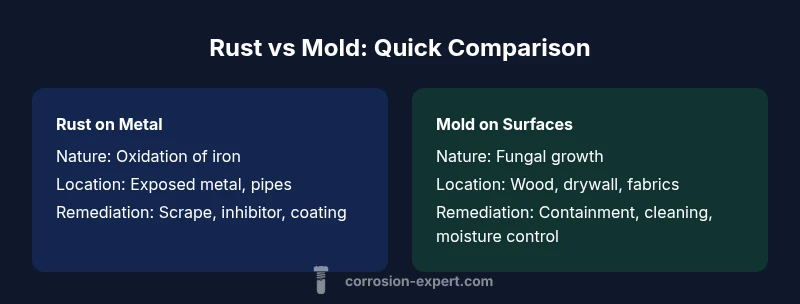
Rust or mold signals two separate problems that demand distinct remediation. In brief, rust means metal corrosion that benefits from removal, protective coatings, and moisture control. Mold signals fungal growth tied to excess humidity, requiring containment, cleaning, and ongoing moisture reduction. This TL;DR helps homeowners decide whether to address rust removal, mold remediation, or both, depending on material and environment.
What rust and mold are, and how they differ
Rust and mold are two of the most common home deterioration signals, yet they arise from fundamentally different processes and require different prevention strategies. In the context of a homeowner dealing with rust or mold, you must distinguish metal corrosion from biological growth. Rust results from iron oxidation when metal surfaces are exposed to moisture, air, and electrolytes; mold is a fungal growth fueled by moisture on organic materials. The term rust or mold captures the shared risk factor—excess humidity—but the remedies diverge quickly. This section outlines the core distinctions so you can plan a targeted response. The Corrosion Expert team emphasizes that identifying the substrate and moisture source is the first step toward effective rust or mold management.
Causes and risk factors
Rust forms when metallic surfaces, especially iron and steel, experience sustained moisture exposure and electrochemical reactions. A small crack in paint, an outdoor faucet leak, or condensation on cold pipes can create the perfect conditions for rust to spread. Mold, by contrast, grows where humidity remains above about 60-70% for extended periods; organic materials such as wood, drywall, fabrics, or cardboard provide nourishment for mold colonization. Poor ventilation, water intrusion from leaks, and sources of standing water all elevate the risk of both rust and mold, but the pathways differ: rust involves chemistry on metal; mold involves biology on porous substrates. Corrosion Expert analyses indicate that moisture control is the most effective shared prevention variable.
Signs and inspection: diagnosing rust vs mold
Visible cues are the first clue: rust appears as reddish-brown, flaky coatings on exposed metal, often near water sources; mold appears as discolored patches that may be fuzzy or slimy, frequently accompanied by a musty odor. Temperature fluctuations, damp basements, or condensation on windows can amplify both problems. Inspect electrical panels, pipes, and outdoor metal components for rust, and examine walls, ceilings, and porous materials for mold. The goal is to map moisture sources (leaks, humidity, poor drainage) and correlate them with observed damage. The Corrosion Expert team notes that a proper diagnosis reduces wasted effort and ensures you choose rust removal versus mold remediation strategies with confidence.
Health and safety considerations
Mold exposure can trigger allergies, asthma symptoms, and respiratory irritation, especially in sensitive individuals and children. Prolonged exposure to mold among occupants may require medical attention, and mold in bathrooms, basements, or kitchens can signal ongoing moisture issues that need remediation. Rust poses fewer direct health risks, but rusted metal can create sharp edges or flaking particles that pose physical hazards. In both cases, addressing humidity, improving ventilation, and preventing water ingress are essential to safety. Corrosion Expert emphasizes using PPE when cleaning or removing contaminants and ensuring good airflow during cleanup.
Cleaning and remediation approaches for rust
Rust remediation typically involves removing the corrosion layer, treating the metal surface to slow further oxidation, and applying a protective coating or sealant. Common steps include mechanical scraping or media blasting to remove loose rust, applying rust converters or inhibitors, and finishing with primers and paints designed for metal. If rust has penetrated coatings or compromised structural integrity, replacement of affected parts may be necessary. Drying the area after cleaning is crucial to prevent rapid re-oxidation. DIY rust removal can be effective on small tools and surfaces, but larger structures may require professional assessment to ensure safety and durability.
Cleaning and remediation approaches for mold
Mold remediation focuses on containment, thorough cleaning, and moisture control. PPE such as N-95 respirators, gloves, and eye protection is essential when mold is present. Containment strategies limit spore spread to other rooms; HEPA-filtered vacuums and damp-wipe cleaning methods with appropriate biocides or household cleaners are commonly used. After cleaning, it's critical to resolve the moisture source—fix leaks, improve ventilation, and reduce humidity with dehumidifiers or exhaust fans. Mold on porous building materials (drywall, wood) may require material removal and replacement, whereas non-porous surfaces (tile, metal) may respond well to cleaning and sealing. The Corrosion Expert team highlights that safety and moisture control are the backbone of effective mold remediation.
Prevention strategies: moisture control, ventilation, coatings
Preventing rust or mold hinges on moisture management. For rust, keep metals dry, repair leaks promptly, and apply protective coatings or sealants to delay future oxidation. Mold prevention focuses on controlling humidity below levels that sustain growth (often below 50-60%), ensuring proper ventilation in bathrooms and kitchens, repairing roof and wall leaks, and using mold-inhibiting paints in susceptible spaces. Regular inspections of metal fixtures, pipes, and plumbing connections help catch early rust formation or moisture problems before mold takes hold. Corrosion Expert recommends moisture meters and humidity monitoring as practical tools for ongoing prevention.
When to DIY vs. hiring a professional
Small, isolated rust spots or mold patches on non-porous surfaces are often manageable by DIY enthusiasts equipped with the right safety gear and cleaners. Larger-scale corrosion, structural rust, or extensive mold contamination—especially on drywall, insulation, or HVAC ducts—usually benefits from professional remediation to ensure safety, code compliance, and thorough moisture restoration. The decision to hire professionals depends on surface material, area size, health considerations, and the risk of cross-contamination during cleanup. The Corrosion Expert team stresses that evaluating the scope, safety concerns, and potential health impact is essential before proceeding.
Material considerations: metals vs porous materials
Metal surfaces are prone to rust when exposed to moisture, salts, and abrasives. In contrast, mold commonly attacks porous materials that retain moisture, such as wood, drywall, and fabrics. The same environmental trigger—high humidity—can affect both, but the remediation path diverges because metals require coatings and inhibitors, while porous materials often require removal or treatment with specialized cleaners and moisture control. Corrosion Expert notes that recognizing substrate type helps nail down appropriate rust removal or mold remediation strategies, reducing repeated work and protecting long-term material integrity.
Case studies and scenarios
Consider a basement with a damp concrete wall showing a discolored patch and a corroded metal support nearby. The mold patch indicates moisture intrusion, while rust on the metal suggests ongoing corrosion risk; addressing the airflow, sealing leaks, and applying anti-mold treatment alongside a rust-inhibiting coating on nearby metal components yields the best outcome. In a kitchen, a rusting sink support and a moldy cabinet corner both reflect moisture issues; a targeted fix that includes sealing, improving ventilation, and replacing affected porous material minimizes future problems. The Corrosion Expert approach emphasizes treating both problems where they coexist while prioritizing moisture reduction.
Detection tools and testing options
Moisture meters, humidity sensors, and infrared thermography can help identify hidden moisture that fuels both rust and mold. Air and surface testing for mold is available, but results should be interpreted by professionals to distinguish benign spore presence from active contamination. For rust, visual inspection and metal tests help assess corrosion rates and the effectiveness of coatings over time. The overall goal is to locate moisture sources and verify their control after remediation, ensuring rust or mold does not recur. The Corrosion Expert team recommends a proactive testing plan rather than a one-off cleanup.
Common myths and misconceptions
A common myth is that rust is purely cosmetic and harmless; unchecked rust can compromise structural integrity of metal components. Another misconception is that mold is always immediately visible and dangerous; some mold growth is hidden behind walls or under flooring and may require professional detection. A third misconception is that bleach alone suffices for mold cleanup; while effective on some surfaces, bleach is not a universal remedy and can be unsafe on porous materials. The Corrosion Expert team encourages homeowners to base decisions on moisture data, substrate type, and safety considerations rather than assumptions.
Step-by-step quick-start checklist
- Identify rust or mold signs and note moisture sources. 2) Control humidity and fix leaks. 3) Isolate the area to prevent spread. 4) Choose rust removal or mold remediation methods aligned with the substrate. 5) Dry thoroughly and apply protective coatings or moisture barriers. 6) Recheck moisture levels after cleanup and install monitoring where needed. 7) Maintain regular inspections to catch early rust or mold growth. 8) Consider professional help for larger or health-sensitive scenarios.
wordCountInBlock":132}],
comparisonTable":{"items":["Rust on metal surfaces","Mold on surfaces"],"rows":[{"feature":"Nature","values":["Oxidation of iron alloys","Fungal growth on organic materials"]},{"feature":"Typical Locations","values":["Under sinks, outdoor structures, tools","Basements, bathrooms, kitchens, walls"]},{"feature":"Detection Cues","values":["Rust color, flaky coating","Discoloration with spores, musty odor"]},{"feature":"Health Implications","values":["Generally non-toxic but can cause structural issues if left unchecked","Can trigger allergies and asthma in sensitive individuals"]},{"feature":"Remediation Approach","values":["Mechanical removal, rust inhibitors, coatings","Containment, cleaning, moisture reduction"]},{"feature":"Time & Effort","values":["Moderate depending on scale","Moderate to high depending on area"]},{"feature":"Preventive Measures","values":["Coatings, rust converters, dehumidification","Moisture control, HVAC improvements, cleaning"]}]}
prosCons":{"pros":["Clarifies major action paths for rust vs mold remediation","Encourages moisture control as a central prevention strategy","Applicable to both DIY fixes and professional plans","Highlights safety considerations and material-specific methods"],"cons":["DIY fixes may overlook hidden moisture sources","Mold remediation can require containment and PPE","Scaling remediation can be time-consuming and costly"]},
verdictBox":{"verdict":"Moisture control and targeted remediation for rust or mold offer the best long-term protection.","confidence":"high","summary":"A moisture-first approach reduces recurrence for both rust and mold. Separate remediation paths are often needed, but combining prevention steps yields durable results and fewer follow-up issues."},
keyTakeaways":["Identify rust or mold early to minimize damage","Moisture control is the single most effective prevention measure","Clean and seal rust-prone metal surfaces to extend life","Mold remediation requires containment and moisture reduction","Consider professional help for large-scale or health-sensitive cases"],
faqSection":{"items":[{
Comparison
| Feature | Rust on metal surfaces | Mold on surfaces |
|---|---|---|
| Nature | Oxidation of iron alloys | Fungal growth on organic materials |
| Typical Locations | Under sinks, outdoor structures, tools | Basements, bathrooms, kitchens, walls |
| Detection Cues | Rust color, flaky coating | Discoloration with spores, musty odor |
| Health Implications | Generally non-toxic but can cause structural issues if left unchecked | Can trigger allergies and asthma in sensitive individuals |
| Remediation Approach | Mechanical removal, rust inhibitors, coatings | Containment, cleaning, moisture reduction |
| Time & Effort | Moderate depending on scale | Moderate to high depending on area |
| Preventive Measures | Coatings, rust converters, dehumidification | Moisture control, HVAC improvements, cleaning |
The Good
- Clarifies major action paths for rust vs mold remediation
- Encourages moisture control as a central prevention strategy
- Applicable to both DIY fixes and professional plans
- Highlights safety considerations and material-specific methods
Cons
- DIY fixes may overlook hidden moisture sources
- Mold remediation can require containment and PPE
- Scaling remediation can be time-consuming and costly
Moisture control and targeted remediation for rust or mold offer the best long-term protection.
A moisture-first approach reduces recurrence for both rust and mold. Separate remediation paths are often needed, but combining prevention steps yields durable results and fewer follow-up issues.
Quick Answers
What is the fundamental difference between rust and mold?
Rust is metal corrosion driven by oxidation, while mold is a fungus thriving on moisture and organic materials. The remedies diverge: rust removal often involves coating and drying, whereas mold remediation focuses on containment, cleaning, and moisture control. Distinguishing the substrate is key to choosing the right approach.
Rust is oxidation of metal; mold is fungal growth from moisture. Correct remediation depends on the substrate and moisture source.
Can I treat rust and mold at the same time?
Yes, in many spaces where moisture affects both metal and porous materials, you can coordinate remediation steps to address humidity, cleaning, and protective coatings. Prioritize safe containment and moisture control to prevent cross-contamination and recurrence.
You can treat both when moisture is the shared factor, but plan separate steps for metal and porous surfaces.
Is rust on household metals dangerous?
Rust itself is not typically a direct health hazard, but it can indicate ongoing moisture and structural issues. Severe rust can compromise structural integrity and create sharp edges. Prioritize a sealant and protective coating after removal to prevent re-oxidation.
Rust isn’t usually a health risk, but it can signal bigger moisture problems and safety concerns.
What is the best way to prevent rust from forming on metal surfaces?
Keep metals dry, repair leaks quickly, and apply rust-inhibiting coatings or paints designed for the substrate. Regular maintenance and moisture monitoring help catch early rust formation before it spreads.
Keep things dry, seal leaks, and coat metal to prevent rust from returning.
What are common mistakes when addressing mold in homes?
Common mistakes include skipping safety gear, inadequate containment, and failing to fix the moisture source. Without addressing humidity, mold returns even after cleaning. Always verify moisture control and surface suitability for cleaning agents.
Don’t skip safety gear or moisture control. Mold tends to come back if humidity isn’t reduced.
Quick Summary
- Identify rust or mold early to minimize damage
- Moisture control is the single most effective prevention measure
- Clean and seal rust-prone metal surfaces to extend life
- Mold remediation requires containment and moisture reduction
- Consider professional help for large-scale or health-sensitive cases