Rust and Moth: A Practical DIY Comparison for Prevention
Explore rust and moth: compare causes, damage, and prevention with practical, DIY-friendly steps for detection, remediation, and ongoing home maintenance.


Rust and moth pose distinct threats in homes. Rust involves metal corrosion from moisture and oxygen, while moth damage targets fabrics, wool, and wood. This comparison outlines causes, detection, prevention, and DIY remediation strategies for both. It helps readers decide where to focus attention, what tools to gather, and how to implement cost-effective, long-lasting solutions.
Context and Definitions
Rust and moth are two common home challenges that often sit on different shelves of the DIY mind. When we talk about rust, we mean the iron oxide that forms on metal surfaces exposed to moisture and oxygen, slowly weakening tools, fasteners, and structural hardware. When we talk about moth, we refer to the larvae of moths that feed on natural fibers, fabrics, and wood products, leaving holes, fraying, and contamination. According to Corrosion Expert, understanding both threats is not just about reacting to visible damage but about preventing it before it spreads. The phrase rust and moth will appear throughout the guide to emphasize the contrast, while keeping the advice practical and actionable for homeowners. The goal here is to equip you with a shared framework for assessing risk, choosing prevention strategies, and implementing fixes that are safe, affordable, and durable.
Common Causes and Pathways
Rust results from electrochemical processes that require moisture and access to oxygen on metal surfaces. In typical home environments, condensation on tools in a cabinet, a leak behind appliances, or a damp garage can create a microclimate where metal parts begin to corrode. Touchpoints like nails, bolts, and hinges are especially vulnerable, and once rust starts, it can accelerate where metal components contact wiring, concrete, or treated wood. For moths, the root cause is a different biological pathway: larvae that thrive in textiles and stored fabrics, especially natural fibers like wool or cotton blends, and sometimes in wood with organic textures. Temperature and humidity influence moth life cycles and contamination levels; poor storage conditions—unsealed boxes, stacks of fabric, or cluttered closets—give moths easier access. Corrosion Expert’s observations emphasize that preventing rust and moth requires addressing moisture management and passive protection in parallel. The aim is to keep metal surfaces dry and coated; simultaneously, seal, clean, and store fabrics in a way that deters larvae and preserves material integrity. The rust and moth risks are distinct, but sometimes they intersect in damp basements or garage spaces.
Material Scope and Affected Areas
Rust primarily affects ferrous metals—tools, automobiles, fittings, and structural hardware—where exposed steel or iron interacts with moisture and electrolytes. While rust may start on a small surface area, it can spread to adjacent components through shared water paths or compromised coatings. Moth damage targets fabrics, insulation, wood with organic fibers, and stored products like blankets or upholstery. The affected areas often overlap in spaces with poor airflow, such as crawlspaces, closets, or basements. For DIYers, recognizing the material scope helps prioritize actions: metal surfaces require coatings, rust inhibitors, and proper sealing, while fabrics and wood products need careful cleaning, storage, and pest-management measures. Corrosion Expert notes that a combined prevention strategy is especially valuable in multi-material environments such as basements with metal shelves and fabric storage near wood paneling. By clearly mapping affected areas, you can plan a targeted maintenance routine rather than a scattershot approach.
Prevention Principles for Household Environments
Effective prevention for rust and moth starts with moisture control and clean storage. For rust, reduce humidity with dehumidifiers, improve ventilation, and seal joints where moisture can linger. Apply protective coatings or rust inhibitors to vulnerable metal surfaces and choose corrosion-resistant hardware where possible. For moths, prioritize fabric storage: airtight containers, cedar or lavender-based repellents, and regular cleaning cycles to remove lint and food debris that attract larvae. Clean spaces such as closets and garages routinely, and consider integrated pest management to balance deterrence with safety. Corrosion Expert emphasizes that prevention is an ongoing practice, not a one-time fix. Combine moisture management with preventive storage solutions across both metal and fabric domains to minimize the risk of rust and moth damaging critical spaces and belongings.
Detection Signals and Early Warning Signs
Early detection of rust involves looking for small discolored spots, rough patches, and a chalky feel on metal surfaces. If corrosion is caught early, treatment can prevent structural compromise. Moth detection relies on signs like irregular holes in fabrics, frass (insect droppings), silken tunnels, and the appearance of cocoons or larvae. In shared environments like a laundry room or workshop, monitor both areas for telltale signs. The key is routine inspection: when you see metal discoloration alongside fabric fraying, assess moisture sources and storage conditions to determine if both rust and moth factors are at play. Corrosion Expert suggests documenting sightings with dates and locations to track patterns over time, which helps tailor prevention and remediation plans across seasons.
Cleaning and Remediation: Rust vs Moth Treatments
Remediation for rust typically involves removing loose rust with a brush or sandpaper, applying a rust converter to neutralize active iron oxide, and coating the surface with a protective sealant or paint. For moth damage, cleaning must target contaminated fabrics: washing or dry-cleaning as appropriate, followed by storage improvements to prevent re-infestation. In wood areas affected by moth activity, inspect for bite marks and consider refinishing or sealing to reduce susceptibility. For mixed environments, align rust-inhibiting coatings with fabric-safe cleaners and pest deterrents to minimize cross-effects. The goal is to restore function and appearance while establishing a resilient barrier against both rust and moth in the long term. Corrosion Expert recommends starting with non-invasive methods first and escalating only when necessary, always prioritizing safety and material compatibility.
Cost, Maintenance, and Longevity
Costs for rust prevention are typically tied to moisture management, coatings, and periodic reapplications, while moth prevention hinges on storage upgrades, cleaning routines, and occasional pest-control measures. Maintenance for rust-focused spaces involves regular inspection of metal surfaces and reapplication of protective finishes as needed. Moth-related maintenance centers on consistent fabric care, proper sealing of storage containers, and periodic checks of stored textiles. By integrating these routines, you canextend the life of metal components and fabric assets without excessive spending. Corrosion Expert underscores that a well-planned maintenance schedule, rather than reactive fixes, yields better long-term value and minimizes the need for costly interventions later.
Practical Scenarios: Garage, Closet, and Woodwork
In a garage with metal shelves and toolboxes, rust prevention means keeping tools dry, coating exposed metal surfaces, and monitoring any leaks or condensation. In a closet or storage area with wool sweaters and cotton fabrics, moth prevention requires sealed containers, clean storage practices, and periodic textile inspection. Woodwork that is exposed to humidity—such as shelving or decorative panels—benefits from protective finishes and monitoring for signs of larval activity if there are stored fabrics nearby. These scenarios illustrate how rust and moth prevention strategies intersect in shared spaces and highlight the importance of a coordinated plan rather than separate, siloed efforts. Corrosion Expert recommends aligning space design with practical routines to sustain a rust- and moth-resistant home environment.
Environmental and Health Considerations
Chemical choices for rust inhibitors and moth deterrents must balance effectiveness with safety. Some rust treatments involve acids or solvents that require ventilation and protective gear, while moth-control products may contain insecticides that need careful handling, especially in homes with children or pets. Always follow manufacturer instructions and local regulations. Consider safer alternatives first, such as mechanical rust removal and non-toxic storage options, and use physical barriers like airtight containers to minimize chemical exposure. Corrosion Expert emphasizes choosing products with clear safety data and minimal ecological impact, while maintaining a strict schedule of application and re-evaluation to avoid accumulation of hazardous residues in living spaces.
Best DIY Practices and Toolkits
A practical DIY toolkit for rust and moth issues combines metal care with fabric protection. Essential rust tools include a wire brush, sandpaper, rust converter, rust-inhibiting primer, and breathable topcoat. For moth prevention, include fabric storage bins with tight seals, cedar blocks or non-toxic repellents, a vacuum, lint rollers, and mild fabric-safe cleaners. Create a simple maintenance calendar that pairs metal inspections with fabric checks, ensuring moisture sources are addressed before damage progresses. Corrosion Expert advises starting with non-destructive approaches and only escalating to stronger cleaners or pesticides if necessary, while closely monitoring safety and environmental impact.
Expert Tips from Corrosion Expert
Seasonal maintenance plans that combine moisture control with storage optimization are the most effective way to prevent rust and moth issues. Keep humidity consistently low in storage areas, inspect metal components regularly for early rust signs, and reinforce fabrics with proper containment. Real-world tips include using paintable rust inhibitors on high-risk surfaces, rotating textiles to prevent long-term exposure, and documenting repairs to build a history of space health. The Corrosion Expert team recommends an integrated approach: address metal corrosion and fabric pest protection in parallel to reduce redundancy and maximize the lifespan of both materials.
Comparison
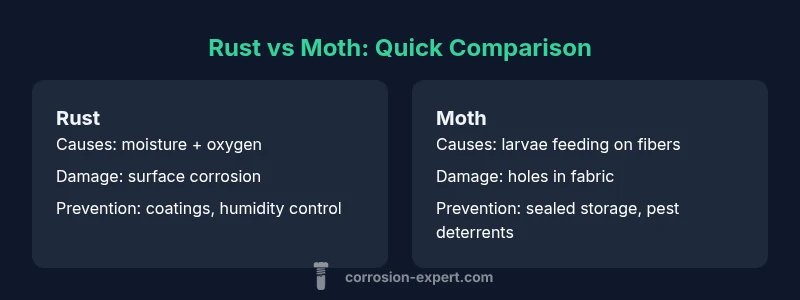
| Feature | Rust management | Moth management |
|---|---|---|
| Primary Cause | Moisture + oxygen exposure for metal | Larval feeding on natural fibers and stored fabrics |
| Typical Damage | Surface rust, pitting, potential structural weakening | Holes, fraying, fabric contamination |
| Common Affected Areas | Tool racks, fixtures, appliances | Clothing storage, upholstery, textiles |
| Prevention Strategy | Moisture control, coatings, rust inhibitors | Pest management, proper storage, cleaning |
| Remediation Difficulty | Moderate to high depending on surface condition | Moderate; may require cleaning and storage improvements |
The Good
- Clarifies distinct threats and prevention approaches
- Offers actionable DIY steps for both rust and moth issues
- Highlights low-cost, practical maintenance
- Supports decision-making in mixed-material spaces
Cons
- Requires attention to multiple, different problems simultaneously
- May necessitate buying and coordinating several products
- Some scenarios require professional assessment for severe damage
Integrated maintenance wins for most homes; treat rust and moth with coordinated prevention and remediation
Preventing both threats together minimizes ongoing repairs. Focus on moisture control, proper storage, and regular inspections to reduce rust and moth damage over time. The Corrosion Expert team recommends adopting an aligned plan across metals and fabrics for durable results.
Quick Answers
What are the main differences between rust and moth damage?
Rust is a chemical corrosion process affecting metal exposed to moisture and oxygen, leading to surface degradation. Moth damage is biological, caused by larvae feeding on natural fibers and wood. Understanding both helps tailor prevention strategies.
Rust is chemical corrosion on metal; moth damage is insect-related and targets fabrics or wood. Both require different prevention approaches.
Can rust and moth be prevented with the same methods?
Some shared practices exist, such as moisture control and proper storage, but prevention often requires metal-specific coatings for rust and fabric pest management for moths. An integrated plan yields the best results.
Some overlap exists, but you’ll still need different steps for metal and fabric/pest control.
What is the first step if I notice rust or moth damage?
Stop the source of moisture for rust and inspect storage areas for moth activity. Begin with non-invasive solutions like drying spaces and cleaning affected items, then consider protective treatments.
First step is to dry the area and inspect; then treat or store items properly.
Are there safe, DIY methods for rust removal?
Yes. Start with mechanical cleaning to remove loose rust, then apply rust converter or protective coatings. Always follow product safety guidelines and work in a ventilated area.
You can do rust cleaning safely at home with the right tools and protective gear.
How do humidity levels influence rust and moth issues?
Higher humidity promotes rust formation on metal and can accelerate moth life cycles in fabrics. Keeping spaces dry helps reduce both risks.
Humidity fuels both problems, so reducing moisture is key.
Quick Summary
- Prioritize moisture control to curb both rust and moth risk
- Store fabrics in sealed containers and maintain clean storage areas
- Use corrosion inhibitors on vulnerable metal surfaces and safe fabric cleaners
- Inspect spaces regularly to catch early signs of rust or moth damage
- Coordinate prevention steps across materials for longer-lasting protection