Repair Rust: A DIY Guide to Fix and Prevent Corrosion
Learn practical, step-by-step methods to repair rust on metal surfaces, from assessment and removal to priming and protection. This Corrosion Expert guide helps DIY homeowners restore strength and longevity while preventing future rust.


By the end of this guide, you will be able to repair rust on metal surfaces with confidence. You’ll learn how to assess damage, choose the right removal method, prep the area, apply coatings, and prevent future corrosion. This step-by-step approach is designed for DIY enthusiasts and homeowners. Whether you’re fixing a gate, a railing, or tools, the process remains the same.
What Is Rust and Why It Happens
Rust is the natural oxidation process that occurs when iron or steel is exposed to moisture and oxygen over time. When you set out to repair rust, you’re choosing to slow this course and restore a functional, attractive surface. Left unchecked, rust can compromise strength, create unsightly stains, and spread to adjacent metal surfaces. According to Corrosion Expert, understanding the chemistry behind rust helps you choose safer, more durable repair methods rather than quick fixes. In most DIY projects, the goal is to halt progression, restore a smooth surface, and create a uniformly protected finish that resists future exposure to humidity, salt, or chemicals. The key is to start early and control moisture, then select a repair approach that matches the level of damage.
Assessing Damage and Deciding If Repair Is Practical
Not every rust issue is worth repairing. Begin with a careful assessment: test for flaking, deep pits, or compromised structural integrity. If the corrosion has hollowed out a critical area or penetrated load-bearing sections, replacement may be safer and more cost-effective in the long run. Corrosion Expert emphasizes a simple rule of thumb: if you can remove the rust and restore a solid metal surface, repair is worth doing; if metal fatigue is present, consider replacement and proper recycling. Document the damage with photos to guide your approach and to compare results after each stage.
Surface Rust vs. Structural Rust: How to Tell Them Apart
Surface rust is a cosmetic problem that sits on top of the metal and is usually removable with brushing and mild abrasion. Structural rust penetrates deeper, weakening the metal and often requiring more intensive treatment or professional inspection. A magnet test can help roughly gauge thickness loss, but visual inspection and a careful tap test provide better guidance. The line between surface and structural rust can blur in outdoor environments, so err on the side of caution if moisture exposure is ongoing. For DIY repairs, 시작 with surface rust removal and monitor closely for any signs of continuing deterioration.
Methods for Repair: Mechanical Removal, Chemical Treatments, and Converters
There are several paths to repair rust, each with its own pros and cons. Mechanical removal (wire brushing, sanding, grinding) is fast and leaves you with a clean base. Chemical rust removers dissolve oxidized metal, but require careful handling and ventilation. Rust converters transform remaining rust into a stable, inert layer that primes the metal for painting. For light to moderate rust, mechanical removal plus primer often suffices; for stubborn corrosion, combining a converter with a topcoat delivers the best long-term protection. Corrosion Expert recommends starting with mechanical methods on small areas to test adhesion and finish before committing to larger repair work.
Prep Work: Workspace, PPE, and Surface Cleaning
A clean, well-ventilated workspace is essential. Put on gloves, eye protection, and a dust mask or respirator, especially when grinding or using chemicals. Remove any dust, grease, and loose rust with a stiff brush and solvent, ensuring the surface is dry before applying any treatment. Mask surrounding areas to protect paint, glass, and plastics. Label containers and follow manufacturer instructions for any chemical products. Proper prep dramatically improves coating adhesion and rust resistance over time.
Step-By-Step Overview of the Repair Journey
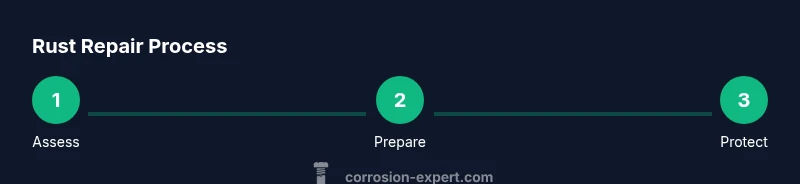
This section provides a high-level map of the repair journey. The detailed Step-By-Step block below walks you through each action in sequence, with practical tips and safety reminders. Expect to spend several hours on a complete repair for a single item, with additional time for drying and curing between coatings.
Aftercare and Prevention: Prime, Paint, and Protect
Once the surface is clean and rust-free, protect it with a high-quality primer designed for metal, followed by a durable topcoat. Use rust-inhibiting primers and epoxy paints for outdoor or humid environments. Apply a sealant or clear protective layer to prevent moisture ingress. Regular maintenance, such as gentle cleaning and periodic inspection, helps prevent a return of rust. In coastal areas or winter climates with road salt, re-coating every few years keeps metal surfaces looking good and functioning safely. Corrosion Expert’s guidance highlights that prevention is cheaper and less time-consuming than repeated repairs.
Common Mistakes and Troubleshooting
Rushing a repair often leads to poor adhesion and a short lifespan. Skipping proper surface cleaning or choosing an unsuitable primer can cause coating delamination. Always test primer-adhesion on a small patch before full application. If rust reappears, re-evaluate the surface, ensure complete removal of rust, and consider a different coating system or protective finish. In tougher cases, consulting a professional may prevent structural failure and costly replacements.
tip1_spotlight_placeholderzioni_dummy_key_ensure_2_4_sentences_3_5
Tools & Materials
- Wire brush or abrasive wheel(Stiff bristles; use with a grinder or drill for efficiency)
- Angle grinder or handheld sander(Attach a wire wheel for rust removal; wear hearing protection)
- Sandpaper (60-120 grit)(For smooth metal after initial rust removal)
- Chemical rust remover or rust converter(Optional; follow safety data sheet; ensure ventilation)
- Metal primer (rust-inhibiting)(Choose epoxy or urethane primer for best adhesion)
- Two-part epoxy or enamel coating(Durable topcoat; outdoor use requires UV-protective finish)
- Solvent or degreaser(Clean surface thoroughly before painting)
- Protective gear (gloves, goggles, respirator)(Respirator for chemical use; goggles for eye protection)
- Drop cloths and masking tape(Protect surrounding surfaces and fixtures)
- Water, detergent, and clean rags(Dry surface before painting; remove residues)
Steps
Estimated time: 4-8 hours
- 1
Assess the rust
Begin by inspecting the area to determine rust depth and surface condition. Look for flaking, pits, or perforation that would affect structural integrity. Take photos for reference and plan your approach before lifting tools. Why: knowing the extent helps you choose the right method and avoid wasting time on unnecessary steps.
Tip: Document the damage with close-up photos from multiple angles. - 2
Protect yourself and the workspace
Set up in a well-ventilated area. Put on gloves, eye protection, and a respirator if you’re using chemicals or grinding. Cover nearby surfaces with drop cloths and tape off edges to prevent accidental abrasion. Why: safety and a clean work area reduce mistakes and cleanup time.
Tip: Inspect PPE fit and ensure filters or cartridges are not expired. - 3
Remove loose rust and debris
Use a stiff wire brush or a wire wheel on a grinder to scrub away loose rust and paint. Start with light pressure and increase as needed, keeping the tool moving to avoid gouging the metal. Why: this creates a sound, clean base for adhesion of primers.
Tip: Keep the grinder at a steady speed and wear hearing protection. - 4
Abrade to clean metal and create a profile
Progressively sand the area with 80-120 grit sandpaper until the metal shows a uniform, bright surface. This removes remaining rust and keys the surface for primer. Why: a roughened surface improves coating adhesion and lifespan.
Tip: Wipe away dust with a damp cloth before applying primer. - 5
Apply rust converter (optional)
If deep rust remains skin-deep, apply a rust converter according to the product instructions. It chemically stabilizes the rust and prepares the surface for priming. Why: converters are a convenient alternative when complete rust removal is impractical.
Tip: Test a small area first to confirm compatibility with your primer. - 6
Prime and seal the surface
Apply a metal primer designed for rust-prone areas. After the primer dries, apply a second coat if recommended. This creates a barrier to moisture and oxygen, extending the life of the coating. Why: primers are essential for long-term protection.
Tip: Brush or spray evenly to avoid runs or thin spots. - 7
Apply the topcoat
Coat with a high-quality epoxy or enamel paint suitable for metal. For outdoor use, choose UV-stable finishes and follow recoat times exactly. Why: the topcoat provides the final barrier against moisture and damage.
Tip: Allow the paint to cure fully before handling or exposure to weather. - 8
Cure, inspect, and maintain
Let the coating cure as recommended by the manufacturer. Inspect the repaired area weekly for signs of cracking or peeling and touch up as needed. Why: early maintenance prevents rust from returning and extends service life.
Tip: Create a simple maintenance schedule to catch issues early.
Quick Answers
What exactly is rust and how does it form on metal surfaces?
Rust is iron oxide formed when iron or steel reacts with moisture and oxygen. It weakens metal over time and can spread if left untreated. Regular maintenance and protective coatings help slow or prevent rust formation.
Rust happens when iron reacts with moisture and air, creating iron oxide that weakens metal. Regular protection helps slow it down.
Is rust repair always possible, or should I replace the item?
Most small to moderate rust problems can be repaired with proper removal, priming, and coating. If the metal is structurally compromised or perforated, replacement may be safer and more cost-effective.
For many items you can repair rust, but if the metal is structurally weak, replacement is a better option.
Can I repair rust on cast iron or galvanized steel?
Cast iron and galvanized steel can be repaired, but the approach differs. Cast iron often needs careful cleaning and seasoning, while galvanized metal requires less aggressive rust removal due to its protective coating. Consider specialized products for these materials.
Cast iron can be repaired with thorough cleaning, but galvanized steel needs gentler treatment to protect its coating.
Do I need specialized safety gear for chemical rust removers?
Yes. Use gloves, eye protection, and a respirator in poorly ventilated spaces. Follow product instructions for ventilation and disposal.
Always wear gloves, goggles, and a respirator when using rust removers, and follow the product directions.
How long does a rust repair typically take before I can use the item again?
Total time depends on the rust extent and drying/curing times. Plan for several hours of work plus 24 hours of cure before heavy use.
It usually takes several hours to complete the repair, plus a day for curing before heavy use.
Watch Video
Quick Summary
- Identify rust depth early to choose the right repair method
- Differentiate surface rust from structural rust before starting
- Prep, prime, and protect to maximize coating longevity
- Use rust converters cautiously as a supplementary step when needed
- Maintenance is essential to prevent recurrence and extend life