Paint Rust: DIY Guide to Safe, Lasting Coatings
Learn how to paint rust safely and effectively with step-by-step prep, rust converters, primers, and topcoats to extend metal life. Practical tips for DIY enthusiasts.


Goal: learn how to paint rust effectively on metal surfaces. This guide walks you through assessing damage, stabilizing corrosion with rust converter or removal, priming, and applying a durable topcoat. You'll prep, mask, and cure in stages, with practical safety tips and product considerations to extend the life of treated metal.
Understanding why painting rust is a practical DIY fix
Painting rust is a practical DIY fix when metal surfaces show surface corrosion but are not structurally compromised. The phrase paint rust captures a strategy: stabilize, seal, and shield the metal from moisture and oxygen, which drive further decay. When done correctly, painting rust can extend the life of fences, tools, patio furniture, grills, and vehicle panels without expensive replacements. According to Corrosion Expert, the success of any rust painting project begins with a clear diagnosis of the damage, selecting the right rust treatment system, and following a repeatable process. You will learn how to identify when rust can be treated with coatings and when you should replace a part. The steps described here emphasize prevention as much as restoration: a sound base layer, compatible primers, and a topcoat designed for the environment. By the end, you’ll know how to paint rust in a way that resists water intrusion, resists abrasion, and looks neat for months or years rather than weeks. This article uses everyday, accessible tools so DIY enthusiasts can achieve professional-looking results on a weekend.
Safety and prepping tools
Before you touch metal with paint, assemble personal protective equipment and prepare the workspace. Wear a respirator or mask, safety glasses, and gloves to guard against dust and solvents. Ventilate the area well, especially when using solvent-based primers or rust converters. Lay down drop cloths and seal off adjacent areas to avoid dust spreading. In this section we’ll also introduce the essential tools and materials and explain how each contributes to a long-lasting, rust-resistant finish. Safety first ensures you can paint rust confidently and achieve a professional-looking result.
Assessing the rust damage and deciding your approach
Not all rust is the same. Surface rust that rubs off with a finger brush is different from pitting that undermines metal strength. Start by scraping a small area to judge how deeply the corrosion has progressed. If you see structural flaking or deep pits, you may need to replace the panel or structure rather than attempting a coating. For most DIY jobs, you’ll aim to stabilize the surface with a rust converter and proceed with primer and paint. The decision also depends on location and function: outdoor items facing weather require more robust coatings than indoor tools. Corrosion Expert’s guidance emphasizes a conservative approach: treat the problem at the surface, then seal it with products designed for your environment. This helps ensure the coating remains intact through wind, rain, and sun exposure.
Conversion vs removal: how to stabilize rust before painting
There are two common paths for rusty surfaces: chemical stabilization with rust converters or physical removal of as much rust as possible. Rust converters convert residual rust into a stable, inert film that bonds with the primer. They are especially useful on cryptic grooves or etched areas where mechanical removal is impractical. For light to moderate rust, a thorough mechanical removal plus converter often yields the best long-term results. If the metal shows significant pitting or weakness, you should consider repair or replacement first. The goal is to present a clean, firm base for primer that will resist moisture and abrasion. Corrosion Expert notes that the converter step is not a substitute for surface preparation; it complements the process when used correctly.
Primers, paints, and coatings: choosing the right system
Selecting the right system begins with understanding the environment and the metal type. For rusty surfaces, epoxy-based primers provide strong adhesion and corrosion resistance, forming a formidable barrier under the topcoat. If you expect heavy moisture or outdoor exposure, choose primers labeled for exterior use and compatible with your topcoat. The topcoat should be a rust-inhibiting enamel or polyurethane designed for metal, with UV resistance if the item is outdoors. When painting rust, the goal is to build multiple protective layers: a stabilized base, a durable primer, and a topcoat that tolerates temperature changes and abrasion. Reading product labels carefully helps avoid mismatched chemistries and peeling. Corrosion Expert’s approach combines proper prep with a proven primer/topcoat pairing to maximize longevity.
Step-by-step surface prep in action
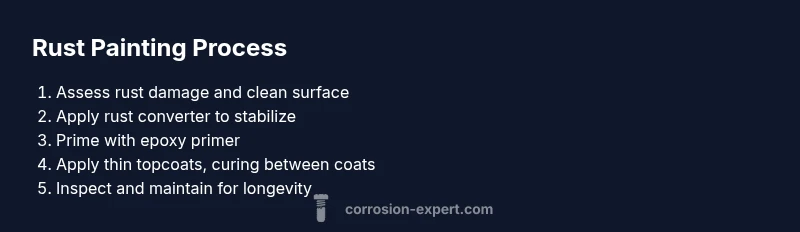
Here is a practical, field-ready sequence you can follow. First, remove loose rust with a wire brush until the surface looks uniform. Second, degrease the area to remove oils and residues that hinder adhesion. Third, lightly sand rough areas to create a mechanical key for the primer. Fourth, apply rust converter to any stubborn spots and let it cure according to the instructions. Fifth, wipe the surface and allow a thorough dry time before priming. The aim is to have a surface that accepts paint evenly and resists moisture entry. This section demonstrates how to structure prep so you can paint rust with confidence and achieve a durable finish.
Application techniques for even coverage
Application technique makes a big difference in how paint rust performs over time. Use thin coats rather than thick globs to prevent runs and ensure uniform color. With a brush, work from edges toward the center to minimize brush marks; with a roller, select a nap suited to the coating; with a spray, maintain a consistent distance and overlap. Temperature and humidity affect curing, so choose a dry day and moderate indoor humidity when possible. Allow each coat to dry fully before applying the next one, and inspect for any missed spots after the final coat. This method yields a smooth, durable surface that resists moisture ingress and wear.
Curing, maintenance, and long-term rust prevention
After the final coat has been applied, allow the finish to cure fully according to product instructions. Even the best rust paint looks poor if treated roughly during cure. Regular maintenance checks should occur every season: wipe away dirt, inspect for chips, and touch up areas showing wear before rust returns. For outdoor items, consider periodic cleaning and re-coating to preserve the barrier. The long-term plan should include keeping metal surfaces dry, reducing moisture traps, and reapplying topcoat when gloss fades. With proper care, painting rust remains a cost-effective defense against corrosion.
Common mistakes and how to fix them
Common errors include painting over loose rust, skipping degreasing, and failing to allow adequate drying time between coats. Another frequent pitfall is selecting a primer that isn’t compatible with the topcoat or environment. Such mismatches lead to peeling, blistering, and early failure. To fix issues, remove failed coatings, re-clean thoroughly, and re-apply with the correct primer system. If rust returns, re-evaluate the treatment path, considering conversion plus a stronger topcoat or replacement for severely corroded parts. The goal is to build a durable, attractive finish that will stand up to weather and use over time.
Tools & Materials
- Wire brush(Remove loose rust and scale; choose stiff-bristle for hard-to-reach areas)
- Sandpaper (60-120 grit)(Smooth edges and feather edges of remaining rust)
- Degreaser or mineral spirits(Remove oils and grease for better coating adhesion)
- Rust converter(Stabilize remaining rust to convert it into a paintable film)
- Epoxy primer(Provide a corrosion-inhibiting base for topcoat adhesion)
- Rust-inhibiting topcoat (paint)(Choose outdoor-rated or indoor/outdoor depending on location)
- Painter’s tape(Mask edges and protect nearby surfaces)
- Drop cloth or plastic sheeting(Contain mess and protect surroundings)
- Respirator or chemical cartridge mask(Offer respiratory protection from dust and fumes)
- Safety goggles(Protect eyes from splashes and dust)
- Putty knife or filler(Fill deep pits if necessary)
Steps
Estimated time: 6-12 hours
- 1
Prepare workspace and gather materials
Set up your area with ventilation, lay out drop cloths, and gather all tools. Confirm you have a clear plan for rust treatment, priming, and painting. This ensures a smooth workflow without repeated trips to the toolbox.
Tip: Label containers and check the weather before starting, especially if outdoor work. - 2
Degrease and clean the surface
Use a degreaser to remove oils and contaminants. Wipe with clean rags until the surface shows no residue. A clean base improves adhesion and reduces the risk of coating failure.
Tip: Work in small sections to prevent recontamination during cleaning. - 3
Remove loose rust with a wire brush
Scrub off loose rust and scale until you reach intact metal or a uniform dull finish. This step creates a stable surface for subsequent treatments and coatings.
Tip: Dress corners and edges where rust hides; use a wire brush attachment on a drill for faster progress. - 4
Assess pits and decide on repair method
Inspect for deep pitting. If pits cut through metal or hold moisture, fill with metal filler or consider replacement. For shallow pits, sanding may suffice.
Tip: Deep pits may require professional repair or component replacement to ensure structural integrity. - 5
Apply rust converter to remaining rust
Follow product instructions to apply converter; it chemically converts residual rust into a paintable layer. Allow the recommended dwell time for the film to form.
Tip: Test a small area first to confirm compatibility with your chosen primer. - 6
Rinse and dry completely
If required, rinse off any chemical residues and dry thoroughly. Moisture will hinder adhesion and lead to blisters or coating failure.
Tip: Use a hair dryer on low heat for trapped moisture in confined areas. - 7
Apply epoxy primer
Coat the surface with a rust-inhibiting epoxy primer. Allow adequate drying time as per manufacturer guidelines before applying topcoat.
Tip: Apply in a well-ventilated area and keep coats light to avoid runs. - 8
Paint with thin, even coats
Apply the topcoat in thin, even passes, perpendicular to the substrate. Two to three coats yield best coverage and durability; let each coat dry before the next.
Tip: Maintain a consistent distance for even spray or brush strokes. - 9
Cure, inspect, and finish
Allow final coat to cure fully before heavy use. Inspect for missed spots or gloss inconsistencies and touch up as needed.
Tip: Avoid heavy handling until the coating reaches its full hardness.
Quick Answers
Do I need to remove all rust before painting?
Not all rust must be removed. Remove loose rust and thin the rest with a rust converter to stabilize the surface before priming. Deep pits may require filling or replacement.
You should remove loose rust and stabilize remaining rust with a converter; deep pits may need repairs.
What is rust converter and when should I use it?
Rust converter chemical converts remaining rust into a stable, paintable layer. Use it after removing loose rust when you still see oxidation and before priming.
Use rust converter after removing loose rust to stabilize the surface before priming.
What primer is best for rusty metal surfaces?
An epoxy-based, rust-inhibiting primer is typically the best choice for rusty metal, followed by a durable topcoat. It provides adhesion and corrosion protection.
Epoxy rust-inhibiting primers are usually the best choice for rusty metal surfaces.
Can I paint rust outdoors in humid climates?
Yes, but choose products labeled for outdoor use and ensure surfaces are dry and corrosion-free before applying. Humidity can slow curing and affect adhesion.
You can paint outdoors, but ensure dry surfaces and proper weather windows to get good adhesion.
How long will a painted rust repair last?
Lifespan depends on prep, products, and environment. With proper prep, primer, and topcoat, expect several seasons of service before recoat.
A properly prepped rust repair can last multiple seasons depending on weather.
Is it safe to paint over rust on cast iron?
Painting over rust on cast iron is possible, but cast iron requires careful prep because its porosity holds moisture. Ensure complete rust removal and use appropriate primers.
Cast iron needs thorough prep and the right primer to prevent future issues.
Watch Video
Quick Summary
- Proper prep beats rushed painting every time
- Use rust converter for stubborn areas
- Epoxy primer is crucial for durable results
- Follow cure times for best longevity