How to Remove Paint and Rust: A DIY Guide
Learn how to safely and effectively remove paint and rust from metal surfaces, then restore with primers and protective coatings. This comprehensive, step-by-step guide is designed for DIY enthusiasts and homeowners seeking long-lasting results.


You will learn a practical, step-by-step approach to remove paint and rust from metal surfaces, assess corrosion, choose safe methods, and finish with priming and protective coatings. The guide covers mechanical and chemical options, safety practices, and maintenance to prevent future rust, empowering DIY enthusiasts to restore metal assets at home.
What removing paint and rust accomplishes
Removing paint and rust is more than cosmetic. It exposes clean metal free of corrosion by removing loose coatings and flaky rust that interfere with adhesion. When you strip away the old layers, you create a uniform surface that accepts primers and paints evenly, extending the life of doors, rails, tools, and hardware. According to Corrosion Expert, a clean metal substrate is the foundation of a durable finish. This step not only improves appearance but also reduces future maintenance by stopping ongoing corrosion at its source and creating a reliable base for protective coatings.
Safety first: PPE, ventilation, and disposal
Safety is the backbone of any rust removal project. Wear approved safety goggles, a resistant respirator or dust mask, and chemical-compatible gloves. Ensure adequate ventilation, especially when using solvent-based paints or acid-based rust removers. Protect surrounding areas with drop cloths and seal off the workspace to prevent fumes from spreading. Dispose of waste according to local regulations, and never mix incompatible chemicals, which can create dangerous reactions. These precautions safeguard your health and the project’s outcome.
Surface assessment: what you’re dealing with
Before you pick a method, inspect the metal substrate. Look for surface rust that wipes away, flaky paint, and any signs of pitting or thinning. Light rust on sturdy metal is usually reversible with gentle methods, while deep pits may need more aggressive treatment or replacement of the affected part. If the area bears critical load or structural function, consult a professional. This assessment helps tailor your plan and prevents wasted effort. Corrosion Expert emphasizes starting with a patch test on a hidden area to gauge how the material will react to cleaners and abrasives.
Mechanical rust removal methods
Mechanical removal uses physical abrasion to lift rust and paint. Start with a plastic scraper to remove loose coatings, then move to wire brushes, handheld grinders with abrasive discs, or a flap wheel for larger areas. When using power tools, maintain a steady, moderate speed to avoid gouging the metal. After abrasion, wipe the surface clean and inspect for remaining rust. This approach is fast, inexpensive, and effective for large, flat surfaces, but it can generate dust and require cleanup.
Chemical rust removal approaches
Chemicals can dissolve or convert rust with less physical effort. Rust converters transform iron oxide into a stable layer that acts as a primer, while rust removers (often acid-based) dissolve rust deposits. Always follow product instructions, work in a well-ventilated area, and test on a small patch first to avoid damage. Rinse thoroughly after treatment and neutralize residues if the product requires it. This path is gentler on delicate contours and can reach into corners that mechanical methods miss.
Paint removal methods and compatibility
If paint remains after rust treatment, use a paint stripper suitable for metal. Apply, wait per label, then remove with a plastic scraper or nylon brush to minimize scratching. For stubborn coats, repeat or combine with light sanding. Always ensure the surface is dry and free of stripper residues before priming, as any left-over chemicals can interfere with adhesion. Corrosion Expert recommends choosing a stripper compatible with your metal type and coating system to prevent reactions that weaken the finish.
When to use heat or less aggressive methods
Heat can loosen paint and softens coatings for easier removal. Use a heat gun on a low setting and maintain a safe distance to avoid warping thin sections or damaging coatings underlying the rust. Do not use open flame on flammable primers or solvents. Heat is most effective for flat, broad areas but requires careful handling near plastics, rubber gaskets, and fuel lines.
Cleaning, drying, and protecting the surface
After mechanical or chemical treatment, rinse with clean water or a degreasing solution to remove residues. Dry the surface completely—preferably with a clean cloth and a heat source—to prevent flash rust. If needed, use a mild acid etch or cleaner to improve primer bonding on non-painted metal. Proper drying ensures the next layers adhere firmly and last longer.
Priming and painting for lasting protection
Choose a rust-inhibiting primer designed for metal and compatible with your topcoat. Apply in thin, even coats and let each layer dry fully before applying the next. Finish with a high-quality enamel or epoxy-based paint designed for metal, followed by a protective topcoat if exposure to moisture or chemicals is likely. Proper curing times matter; avoid handling until the coating has fully cured.
Maintenance and prevention after treatment
Regular maintenance extends the life of the finish. Inspect surfaces seasonally for chips or scratches, touch up promptly, and clean with mild detergents that won’t corrode the surface. Consider applying a clear rust-inhibiting sealer in high-humidity areas. The goal is to prevent moisture contact and oxygen exposure that fuel rust formation, keeping metal assets protected for years.
Aftercare: long-term maintenance and storage
Store treated items in a dry, ventilated space away from direct rain and humidity. For outdoors, use UV-resistant topcoats and corrosion inhibitors that suit the local climate. Periodic reapplication of protective finishes may be necessary in salty or industrial environments. This final stage seals the work and ensures durable performance over time. The Corrosion Expert team emphasizes consistent maintenance as the best defense against future rust.
Tools & Materials
- Safety goggles(ANSI Z87.1 rated for splash and impact protection)
- Respirator or dust mask(NIOSH-approved for dust and chemical fumes)
- Nitrile gloves(Chemical-resistant, long cuffs preferred)
- Drop cloths or plastic sheeting(Protects floors and nearby surfaces)
- Plastic scraper(Non-marring, for removing loose paint)
- Wire brush set(Cup brush and hand brush for rust scale)
- Sandpaper assortment(Coarse to fine grits (80, 120, 220) for smoothing)
- Power drill or grinder with flap discs(Optional for large areas or heavy rust)
- Rust remover or rust converter product(Follow label directions for contact time)
- Paint stripper (metal-safe)(Use only on compatible coatings)
- Degreaser/soap(Pre-clean surface to remove oils and grime)
- Water source and bucket(For rinsing and wash-downs)
- Soft rags or lint-free towels(Drying and residue wipe-downs)
- Primer (etch primer if bare metal)(Choose compatible products with topcoat)
- Rust-inhibiting topcoat or primer(UV-stable and environment-appropriate)
- Mineral spirits or equivalent cleaner(For cleaning tools and residue)
Steps
Estimated time: 2-6 hours
- 1
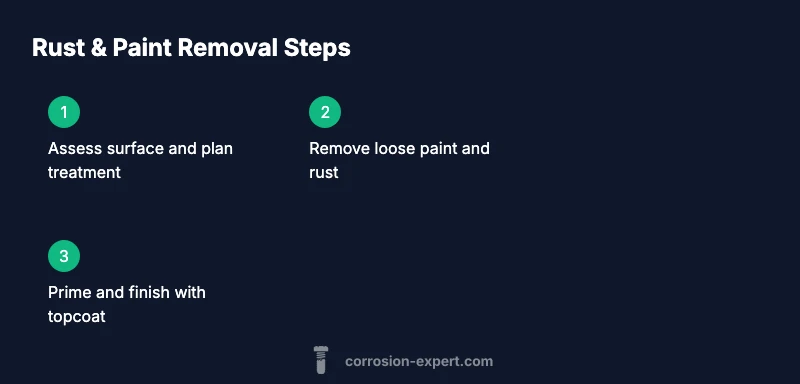
Inspect surface and plan treatment
Assess the extent of paint and rust, determine if the metal is structurally sound, and decide whether to start with mechanical or chemical methods. Photograph the area for reference and create a simple plan outlining steps and timing.
Tip: Document before photos and map out sections to keep the project organized. - 2
Remove loose paint and debris
Begin with a plastic scraper to lift loose paint. If stubborn coatings resist, switch to a safe chemical stripper or a heat-assisted approach on non-delicate areas. Always work in a well-ventilated space.
Tip: Avoid gouging the metal; keep scraper at a shallow angle to lift rather than cut. - 3
Roughen the surface for better adhesion
Use a medium-grit abrasive to create a roughened profile that helps primers grip. Wipe away dust after roughening and inspect for remaining rust spots that may require additional treatment.
Tip: Aim for a uniform matte finish, not a polished surface. - 4
Apply mechanical rust removal
Utilize a wire brush, cup brush, or flap discs to remove more stubborn rust. Work in small sections, keeping the tool moving to avoid heat buildup and gouging.
Tip: Keep tool pressure light and steady to avoid warping thin metal. - 5
Use chemical rust remover or converter
Apply rust remover or converter according to label instructions. Allow the required dwell time, then wipe or rinse away residues. Neutralize if the product requires it and ensure the surface is clean before the next step.
Tip: Test a small area first to verify compatibility with the substrate. - 6
Clean, dry, and prepare for priming
Rinse thoroughly with clean water or a degreasing solution to remove chemicals and oils. Dry completely, using heat if needed, then apply an etch cleaner if your primer requires it.
Tip: A completely dry surface prevents blotching and poor adhesion. - 7
Apply primer suitable for metal
Choose an appropriate primer, preferably etch primer for bare metal. Apply thin, even coats and allow full drying between coats. A good primer establishes a strong bond for the finish coat.
Tip: Follow temperature and humidity guidelines on the product label. - 8
Finish with paint and topcoat
Apply rust-inhibiting paint according to the manufacturer’s directions. If outdoors or in high humidity, add a protective topcoat and ensure full cure before exposure to elements.
Tip: Avoid high-build coats that trap moisture; multiple thin coats win over one thick layer.
Quick Answers
Do I need to remove all rust before painting?
Ideally, remove loose rust and create a smooth surface. Very deep pitting may reduce adhesion and could require repair or replacement of the part.
Yes, start with removing loose rust and smoothing the surface for solid primer adhesion.
Can I use household vinegar for rust removal?
Vinegar can remove light rust on some metals, but it’s slower and less effective on heavy rust. It is best used as a supplementary step after mechanical cleaning.
Vinegar can help with mild rust, but for heavy rust you’ll want stronger methods.
Is heat safe for removing paint?
Heat can loosen paint, but it risks damage to thin metals and seals. Use a heat gun on a low setting and keep moving to avoid scorching.
Heat can help loosen paint, but use it carefully on delicate parts.
How long does priming take to dry?
Primer drying times vary by product and conditions. Expect at least 30 minutes to several hours before applying a topcoat, following the label for specifics.
Primer usually dries in a short time, but always follow the product label for accuracy.
Will rust converters prevent rust forever?
Rust converters slow further rusting by forming a protective layer, but ongoing maintenance and proper coatings are essential for long-term protection.
Converters help, but you still need protection and maintenance to prevent future rust.
Can I remove rust from galvanized steel the same way?
Galvanized steel is more resistant but can still rust. Use gentler mechanical methods and compatible coatings designed for galvanized surfaces.
Galvanized surfaces need special coatings and gentle rust removal methods.
Watch Video
Quick Summary
- Plan before you strip and test small areas
- Choose the right method for your surface type
- Ensure complete drying before priming
- Use compatible primers and topcoats for best adhesion
- Regular maintenance prevents future rust formation