Rust Removal: A DIY Guide for Homeowners
Learn practical, safe rust removal methods for metal surfaces. This step-by-step guide covers mechanical, chemical, and protective finishing tips for DIY homeowners.


By the end of this guide, you’ll know how to remove rust from common metal surfaces using safe, home-friendly methods. You’ll assess rust depth, choose the right approach, and apply step-by-step techniques that minimize damage. From mechanical scrubbing to chemical rust removers and protective finishes, this rust how to remove process covers all practical routes for DIY enthusiasts.
rust how to remove: prep and safety basics
Preparation and safety are the foundation of any successful rust removal project. Before touching a tool or chemical, identify the type of metal you’re working on and the extent of the rust. Light surface rust on steel and iron is very different from deep pitting on mild steel or cast iron, and aluminum or stainless steel require gentler handling to avoid scratches or heat damage. Wear a full set of PPE: chemical-resistant gloves, safety goggles, and a dust mask or respirator when chemicals are involved. Work in a well-ventilated area, away from pets and children. Lay down drop cloths to protect adjacent surfaces, and have a disposal plan for oily rags and used chemicals. If you’re unsure about the metal’s compatibility with aggressive methods, test a small inconspicuous spot first. According to Corrosion Expert, safety and proper assessment dramatically improve outcomes for rust removal projects.
This phase also involves gathering your materials and planning your steps. A simple checklist keeps you from missing critical actions or rushing through a step that could damage the base material. Keep your work area organized, and document any unusual findings (such as flaking coating or severe pitting) so you can adjust your approach accordingly.
Understanding the kind of rust you’re dealing with - whether it’s surface rust, flash rust, or deep rust - helps determine which method to start with. For most DIY tasks, begin with the least aggressive approach and escalate only if resistance remains. The goal is to restore the surface to a clean, stable state without removing more material than necessary or compromising structural integrity.
By starting with careful prep, you reduce the risk of creating new damage and set up a smoother path to finishing and protection after rust removal.
noteToEditor":null
tip":"Always test a small area first to gauge reaction before committing to the full surface."
Tools & Materials
- Safety PPE (gloves, goggles, mask/respirator)(Nitrile gloves, ANSI Z87.1 goggles; respirator for chemical use)
- Wire brush / steel wool(Medium to coarse grit for initial rust removal)
- Sanding block or drill with sanding discs(Grips: 60-120 grit for initial work, finer grits for finishing)
- Chemical rust remover or rust converter(Follow manufacturer instructions and dwell times)
- Rags, bucket, and water for rinsing(Keep spare rags for quick cleanups; use separate cloths for oil and chemical residues)
- Mineral spirits or acetone (cleanup) (For degreasing tools and surfaces before finishing)
- Primer and rust-inhibiting paint or sealant(Apply after drying to prevent re-oxidation)
- Sandpaper assortments (60, 120, 220)(Progressively smoothen the surface before coating)
Steps
Estimated time: 60-120 minutes
- 1
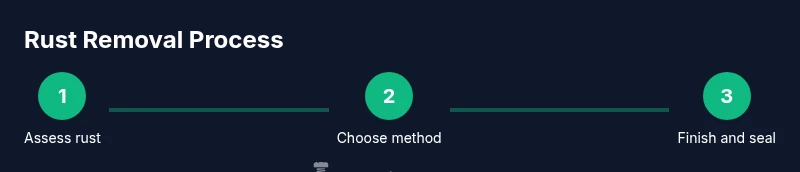
Assess rust and prepare the area
Begin by visually inspecting the metal for rust type, depth, and coating integrity. Identify whether the rust is superficial or has penetrated the base material. Clear the workspace of loose paint and debris, then clean the surface with a damp cloth to remove dust. This evaluation informs the choice of method and safety precautions. Waiting time isn’t required here, but take 5–10 minutes to observe the surface under good lighting.
Tip: Document findings with notes or photos to guide subsequent steps. - 2
Secure the object and protect surrounding areas
Secure the item to prevent movement during scraping or sanding. Use painter’s tape to shield nearby finishes and remove any removable parts to avoid collateral damage. If the object is large, create a stable work zone with clamps and supportive stands. This step minimizes accidents and keeps your work area clean.
Tip: Ensure the object is well-supported before applying force to scraping actions. - 3
Remove loose rust and scale mechanically
Start with a dry wire brush or steel wool to remove loose rust and surface scale. Use steady, even strokes and work along the grain if possible. For flat surfaces, a sanding block with 60–120 grit can help lift stubborn rust without gouging the metal. Wipe away debris frequently to assess progress.
Tip: Don’t press too hard; let the abrasive do the work to avoid gouging the base metal. - 4
Apply chemical rust remover or rust converter
If rust is persistent, apply a manufacturer-approved rust remover or converter. Follow dwell times carefully and work in a ventilated area. After the dwell time, wipe off residue and rinse thoroughly with water. Wear PPE during this step and never mix chemicals.
Tip: Never let chemicals dry on skin or reach your eyes; use protective gear at all times. - 5
Rinse, dry completely, and inspect
Rinse the surface with clean water to remove all chemical residues, then dry thoroughly with a clean cloth or heat source. Inspect the area for remaining rust, pits, or scale. If any dark stains or rough patches remain, repeat mechanical or chemical steps as needed until the surface is stable.
Tip: Moisture left on metal can trigger flash rust; dry completely before proceeding. - 6
Sand and smooth the surface for finishing
Progress through grits from 120 to 220 to achieve a smooth, paint-ready surface. Wipe clean between grits to remove dust. If pits remain, fill them with an appropriate metal filler and allow to cure as recommended by the filler manufacturer. Sand again until flush with the surrounding area.
Tip: Work evenly to avoid creating low spots that will show after painting. - 7
Prime and apply protective coating
Apply a rust-inhibiting primer suitable for the metal type, followed by a topcoat of paint or clear protective sealant. Allow adequate curing time between coats and in a well-ventilated area. This final step seals the surface and helps prevent new rust from forming.
Tip: Choose products designed for outdoor or high-humidity conditions for best long-term protection.
Quick Answers
What is the best method for light surface rust?
Light surface rust typically responds best to mechanical methods like brushing or light sanding, followed by cleaning and applying a protective coating. Avoid aggressive grinding to prevent thinning the metal.
For light rust, start with brushing or sanding, then seal the surface with primer and paint.
Can rust be removed from all metals?
Most ferrous metals (like steel and iron) respond well to rust removal methods. Aluminum and stainless steel require gentler approaches to avoid pitting or surface damage.
Most metals can be treated, but pick methods suited to the metal type.
Is electrochemical rust removal safe for home use?
Electrochemical methods can handle deeper rust, but they require proper equipment and precautions. They’re not ideal for thin or heat-sensitive parts and can be hazardous if misused.
Electrochemical methods work well for heavy rust when done with care and proper gear.
Do I need to remove all rust to finish the job?
Ideally, remove loose rust and scale. Small surface rust residues can be sealed with primer; deep pits may require filling or more extensive treatment to restore structural integrity.
You don’t need perfect removal, but you should eliminate loose rust and protect the surface.
What safety precautions should I take?
Wear PPE, ensure proper ventilation, follow chemical product instructions, and keep chemicals away from children and pets. Dispose of used rags and containers safely.
Always wear protective gear and follow the product directions for safe use.
Watch Video
Quick Summary
- Assess rust extent before choosing methods
- Start with mechanical methods for surface rust
- Wear PPE and maintain ventilation during chemical use
- Finish with a rust-inhibiting coating to prevent recurrence
- Document progress and inspect for pits throughout the process