How to Take Rust Off a Grill: A DIY Guide
Learn practical, safe methods to remove rust from grill grates and surfaces, plus prevention tips to extend your grill’s life and keep cooking surfaces safe.


Goal: safely remove rust from grill surfaces and extend their lifespan. Start with safety checks, then scrub off loose rust with a grill brush, soak grates in a mild vinegar solution if needed, rinse, dry thoroughly, and re-season with oil. Expect about 60–90 minutes for most grills, with long-term benefits from proper sealing.
Why rust on grills happens
If you’re wondering how to take rust off grill, understanding why rust forms is the first step. Grills are metal exposed to moisture, heat, and food acids, which accelerate oxidation. Exposure to rain, humidity, or stored moisture creates tiny rust starts on grates, flavor bars, and hardware. Left untreated, these patches can grow, flake, or trap particulates that affect flavor and heat distribution. The Corrosion Expert team notes that quick intervention plus a preventive routine can drastically slow future corrosion and extend grill life. By recognizing signs of surface rust versus deep pitting, you can tailor your approach and avoid unnecessary work.
What you’ll achieve by cleaning rust off a grill
A thorough rust removal restores heat distribution, improves searing, and reduces the risk of rust flakes ending up in food. When the surface is smooth, seasoning is more effective and creates a protective barrier against moisture. You’ll also lessen future maintenance if you implement a simple routine after each cook: quick scrub, a light oil coat, and proper storage. This section lays the groundwork for practical techniques you can perform with common tools and safe household solutions.
Safety first: planning and protecting your workspace
Before you begin, turn off any gas supply and disconnect propane lines from gas grills, or unplug electric grills. Work in a well-ventilated area and wear protective gloves and safety goggles to guard against sharp edges and flying debris. Clear the area of flammable items, and lay down old towels or a drop cloth to catch rust particles and drips. The safest approach combines mechanical cleaning with gentle, non-corrosive cleaners, avoiding harsh chemicals near food-contact surfaces. Corrosion Expert recommends a calm, methodical start to prevent accidents and ensure you don’t miss hidden rust spots.
Mechanical cleaning methods that respect the metal
Mechanical cleaning is often the first and most reliable step for light to moderate rust. Start with a stiff grill brush to dislodge loose rust, then switch to steel wool or scouring pads for stubborn patches. For flat surfaces, a plastic scraper helps remove baked-on residue without gouging. If the rust is stubborn, repeat gentle brushing in a circular motion, which typically removes the majority of surface corrosion without affecting the base metal. Remember to work on all removable parts separately to ensure full coverage.
Gentle chemical options that are food-safe when used properly
For rust that resists mechanical cleaning, safe household solutions like a 1:1 white vinegar–water soak can loosen mineral buildup and soften rust. Submerge detachable grates in the solution for 15–60 minutes, depending on the level of corrosion. Rinse thoroughly and dry completely before proceeding. If you prefer a baking-soda paste, rub it onto rust patches, let it sit for 10–15 minutes, then scrub and rinse. Avoid harsh chemical rust removers on surfaces that contact food or where fumes could collect near the cooking area.
Stepwise approach to rust removal on grill grates (overview)
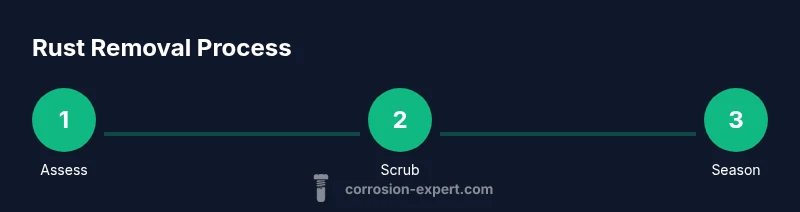
This overview integrates the steps you’ll take in the full guide: remove loose rust with a brush, soak or apply an acidic cleaner to loosen stubborn patches, scrub again, rinse and dry, and finally re-season. For cast-iron grates, seasoning is especially important to rebuild the protective coating. If grill components show deep pitting, consider whether replacement parts may be more cost-effective in the long run. A careful approach minimizes waste and maintains cooking performance.
Re-seasoning and protecting grill surfaces after rust removal
Seasoning rebuilds a protective layer on bare metal and helps repel moisture. Apply a thin coat of high-smoke-point oil (such as canola or grapeseed) to grates and heated surfaces, then heat the grill to the smoking point for several minutes. Repeat the process a second time if the coating looks uneven. Consistent seasoning makes future rust formation harder and easier to clean off, especially after high-heat cooks or acidic marinades.
Safety reminders and maintenance best practices
Always ensure there’s no gas on the line before cleaning a propane grill, and never spray water directly onto a hot surface. If you notice bubbling, cracking, or severe flaking, stop and inspect for structural damage. Keep a routine: quick wipe after cooking, dry storage, and a deeper seasonal rust check. These habits dramatically extend grill life and keep you cooking safely.
When to replace components and how to decide
Surface rust can often be cleaned, but if you see deep pits, cracked coatings, or compromised structural integrity, replacement parts may be necessary. Compare the cost of new grates to potential repairs, and consider whether other components (baskets, flavorizer bars, or burners) show similar wear. Replacing worn parts promptly reduces the risk of uneven heating and safety hazards during searing.
Authority sources and further reading
For more reliable guidance on metal corrosion, see authoritative sources: the National Institute of Standards and Technology (NIST) and safety guidelines from OSHA. University Extension resources also provide practical tips on metal care and safe rust removal practices. These sources help you understand the science behind rust and how to manage it responsibly.
Tools & Materials
- Heavy-duty grill brush(Stiff bristles; metal brush preferable for rusted surfaces)
- Wire wool pads(Use with care to avoid leaving fibers)
- Plastic scraper(For baked-on residue on grates)
- Protective gloves(Grip and hand protection)
- Safety goggles(Eye protection from debris)
- White vinegar(1:1 soak or spray for gentle cleaning)
- Baking soda(Creamy paste for mild rust data)
- Lemon juice(Acidic boost for lighter rust)
- Neutral cooking oil or spray(For seasoning after cleaning)
- Dish soap(To wash surfaces after soaking)
- Towel or rag(Drying and wiping)
- Bucket or basin(For soaking removable parts)
- Old toothbrush or small brush(For hard-to-reach areas)
Steps
Estimated time: 90-120 minutes
- 1
Prepare and protect the area
Turn off gas and disconnect propane lines if using a gas grill. Move the grill to a well-ventilated area and lay down towels to catch debris. Gather all materials before starting to keep the workflow smooth.
Tip: Wear gloves and goggles; secure long sleeves to avoid catching embers. - 2
Remove grates and loose debris
Take off the grates and remove any loose rust with the grill brush on both sides. Clear off any ash or char from burner surfaces or heat shields where applicable.
Tip: Work in a container to catch rust particles and prevent them from spreading. - 3
Brush away surface rust
Use the heavy brush and steel wool pads in firm, deliberate strokes to remove loose rust without gouging the metal. Pay attention to edges and corners where rust can hide.
Tip: Keep the bristles at a slight angle to avoid scratching through protective coatings. - 4
Apply vinegar soak or paste
If rust persists, soak removable grates in a 1:1 white vinegar solution for 15-60 minutes. For non-removable surfaces, apply vinegar with a spray bottle and let sit briefly before scrubbing again.
Tip: Do not exceed recommended soaking time on cast iron parts to prevent dehydration. - 5
Rinse, scrub, and repeat if needed
Rinse thoroughly with warm water, scrub again, and inspect for remaining spots. Repeat soak and scrub as needed, especially on heavily corroded patches.
Tip: Use lemon juice on tough rust spots for an extra acidic boost, then rinse well. - 6
Dry completely
Dry the grates and all components completely to prevent new rust. Use towels and, if possible, place components in a warm, dry environment or a low oven to ensure dryness.
Tip: Moisture is the enemy of seasoning—no damp surfaces before sealing. - 7
Season the grates
Apply a thin coat of high-smoke-point oil over all metal surfaces. Heat the grill to a high temperature to polymerize the oil, then repeat once for even coverage.
Tip: Wipe off excess oil to prevent pooling and smoke odor. - 8
Check hoses and seals (gas grills)
Inspect gas hoses and seals for cracks or swelling. If you detect damage, replace components before using the grill again.
Tip: Do not reuse damaged hoses; safety comes first. - 9
Plan ongoing prevention
Clean after each use, dry thoroughly, and store covered to minimize moisture exposure. Schedule a seasonal rust check and re-season as needed to maintain protection.
Tip: A simple post-cook wipe can greatly extend grate life.
Quick Answers
Can rust on a grill be fully removed, or is replacement necessary?
Surface rust can often be cleaned with the right technique, but deep pitting or structural damage may require replacing grates or components. Assess after cleaning and consider long-term cost.
Most surface rust can be cleaned, but deep pits may need replacement.
What should I avoid when removing rust from a grill?
Avoid using harsh chemicals on hot surfaces and never spray water onto burning or heated metal. Don’t soak gas lines or burners, and don’t use metal tools that gouge protective coatings.
Avoid harsh cleaners on hot grills and don’t soak gas lines.
Is it safe to cook on a grill after rust removal?
Yes, provided you remove all residues, re-season the surface, and inspect for any flaking. If the metal is severely pitted, replacements may be safer than continuing to cook on it.
Yes, after thorough cleaning and seasoning, cooking is safe.
What if my grill is painted and rust forms underneath?
If rust is under paint, you’ll usually need to carefully remove the damaged area and recoat. In many cases, replacing the affected part prevents risk of flaking into food.
Careful cleaning with attention to paint integrity is key; replace if coating is compromised.
How often should I clean and season my grill to prevent rust?
Clean after every use, dry thoroughly, and season at least seasonally. A quick wipe and oiling after cooking reduces moisture and extends life.
Clean after every use and re-season as needed to prevent rust.
Watch Video
Quick Summary
- Use safety checks before cleaning.
- Start with mechanical scrubbing to remove loose rust.
- Vinegar or baking soda are safe options for stubborn spots.
- Season grates after cleaning to prevent future rust.
- Maintain a regular post-cook cleaning routine.