How to Take Out Rust: A Practical DIY Guide for Homeowners
Learn practical, step-by-step methods to remove rust from metal surfaces, tools, and appliances, plus prevention tips to keep rust at bay and extend the life of your gear.


Learn how to take out rust on metal surfaces with a practical, step-by-step approach. This guide covers safety PPE, choosing between mechanical and chemical methods, and applying protective coatings to prevent recurrence. Whether you're restoring tools, furniture, or outdoor hardware, you can achieve lasting results with the right technique and patience.
Why rust forms and why it matters
Rust forms when iron or steel is exposed to moisture and oxygen, triggering a chemical reaction that creates iron oxide. This process gradually weakens metal and can spread beneath coatings, leading to flaking, staining, and loss of strength. If you’re learning how to take out rust, understanding the underlying chemistry helps you choose the most effective approach. Light surface rust is typically easiest to treat, while deeper pits require more careful work or replacement. Outdoor metalwork is especially susceptible due to humidity and temperature cycles. Recognizing patterns of rust helps you plan safer removal and longer-lasting protection. By treating rust early, you improve the odds of restoring function without costly repairs while keeping your belongings safer and more visually appealing.
Safety first: PPE, ventilation, and workspace setup
Before any rust removal, assemble a basic safety kit: eye protection, nitrile gloves, and a respirator or dust mask when using chemical products. Work in a well-ventilated area and protect floors with drop cloths or old newspapers. Clear the area of flammables and unplug or disconnect power if working near electrical parts. If the item is painted, test a small, inconspicuous area to ensure your chosen method won’t damage coatings or finishes. Proper PPE and setup are essential because mistakes can cause injuries or release fumes, which is why this section emphasizes safety as a foundation for how to take out rust.
Surface evaluation: cast iron, wrought iron, steel, or stainless steel
Different metal substrates respond to rust removal methods in distinct ways. Mild surface rust on steel or wrought iron often responds well to mechanical polishing (brush, wheel, or sanding), while cast iron may pit more quickly and require slower, gentler approaches. Stainless steel rust is less common but can occur as staining or superficial corrosion; it usually cleans up with non-abrasive methods. When deciding how to take out rust, match the method to the surface type: avoid aggressive grinding on delicate finishes, and reserve stronger chemical treatments for heavily corroded areas. This evaluation helps you select a method that minimizes damage while delivering effective rust removal.
Mechanical rust removal methods: quick, versatile, and accessible
Mechanical methods rely on physical abrasion to remove rust and restore the metal surface texture. Start with a stiff wire brush or abrasive pad to knock off loose rust, then progress to steel wool (0000 grade) and progressively finer sandpapers (e.g., 120, 220 grit) to smooth the surface. For larger or more stubborn areas, you can use a power drill with a wire brush attachment or an angle grinder with a wire wheel, but operate at low to medium speed to avoid heat buildup and gouging. Mechanical techniques are popular for their accessibility and safety compared with strong acids, but they generate dust and require consistent effort.
Chemical rust removal methods: when to reach for cleaners and acids
Chemical rust removers often rely on phosphoric or oxalic acid-based formulations that convert iron oxide to a water-soluble compound you can wipe away. Follow product instructions precisely, including dwell times and ventilation requirements. For a gentler approach, you can use household options like white vinegar or lemon juice for light rust; these are slower but safer for beginners. Always remove residue with clean water and dry the metal thoroughly to prevent flash rust. Chemical methods can be particularly effective on pits or stubborn stains where mechanical means fall short.
Post-removal protection: sealing out moisture to prevent recurrence
Once rust is removed, dry the metal completely and apply a rust-inhibiting primer or sealant before painting or finishing. A good practice is to use a metal conditioner or rust converter if you cannot immediately paint, which helps neutralize remaining rust and blocks further oxidation. Choose a coating that suits the environment: high-humidity areas benefit from epoxies or marine-grade paints, while indoor items may get a simple rust-inhibiting primer plus enamel. Proper finishing is essential for how to take out rust in a way that lasts.
Maintenance and disposal: care tips to extend life and recycle safely
Regular maintenance helps prevent new rust from forming. Inspect items every few months, touch up chips in the coating, and store metal goods in dry, ventilated spaces. Clean tools after use, dry them completely, and store away from moisture. For chemical cleaners, follow local disposal guidelines and avoid pouring leftovers down the drain. Keeping a simple maintenance routine ensures your rust removal efforts pay off over time and supports a longer, safer life for your metal belongings.
Tools & Materials
- Safety goggles(Eye protection to guard against flying debris and splashes)
- Nitrile gloves(Protect hands from sharp edges and chemical exposure)
- Dust mask or respirator(Ventilate and filter air when using aerosols or acids)
- Long-sleeved shirt and pants(Minimize skin exposure to rust particles and chemicals)
- Wire brush(First line for removing loose rust)
- Steel wool (0000 grade)(Fine abrasion for smoother finish)
- Sandpaper (grits 120, 220)(Fine smoothing after initial rust removal)
- Abrasive pads or a polishing wheel(Optional for hard-to-reach areas)
- Plastic or metal scraper(Useful for lifting loose rust from corners)
- Rust remover solution (phosphoric or oxalic acid-based)(Use if mechanical methods don’t fully remove rust (follow label))
- White vinegar or lemon juice(Natural rust-removal option for light staining)
- Drop cloths or old newspapers(Protect surfaces and catch debris)
- Rags and towels(Drying and cleaning after treatment)
- Protective coating: rust-inhibiting primer and paint or clear sealant(Seal the surface to slow future rust)
Steps
Estimated time: 60-90 minutes
- 1
Identify rust extent and method
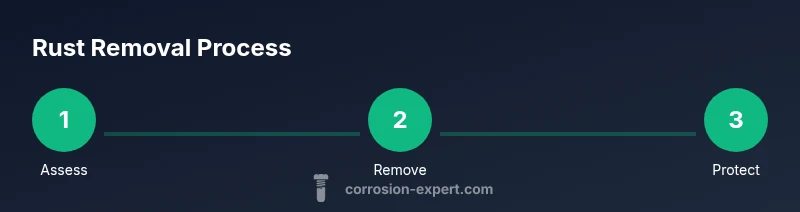
Assess how deep the rust goes and which method fits the material. Light surface rust is usually removable with mechanical techniques, while deeper pitting may require chemicals or a protective finish after removal.
Tip: Check for pits with a finger or needle probe; if deep pits are present, consider replacement or specialty repair. - 2
Prepare workspace and PPE
Lay down drop cloths, remove nearby items, and put on PPE. Ensure proper ventilation when using chemicals, and keep a water source nearby to rinse hands or tools.
Tip: Ventilate the room well and avoid mixing cleaners in closed spaces. - 3
Remove loose rust mechanically
Use a stiff wire brush to remove loose rust, then switch to steel wool and fine sandpaper to smooth the surface. Work in the direction of the grain or along the edges to avoid gouging.
Tip: Always test a small area first to gauge how the metal responds to abrasion. - 4
Apply chemical remover for stubborn spots
If rust remains after mechanical work, apply a chemical rust remover following the product's dwell time. Wipe away residue with clean cloth and rinse with water as directed.
Tip: Keep the area well-ventilated and wear gloves protected from chemical contact. - 5
Rinse, dry, and seal
Rinse thoroughly, then dry the metal completely to prevent flash rust. Apply a rust-inhibiting primer or sealer before painting, and allow full cure per product guidelines.
Tip: Drying thoroughly prevents new rust from forming before coating.
Quick Answers
Is rust removal safe on stainless steel surfaces?
Stainless steel rust is uncommon and typically superficial. Use non-abrasive cleaners first; if rust persists, consider a mild chemical rust remover with care, and avoid aggressive grinding that could scratch the surface.
Rust on stainless steel is usually just surface staining. Start with gentle cleaners and avoid aggressive tools; use a rust remover only if needed.
Can white vinegar remove rust effectively?
White vinegar can dissolve light surface rust and is a safe, household option. It requires longer dwell times and thorough drying afterward. For deeper rust, you may need stronger cleaners or mechanical methods.
Vinegar works for light rust but takes longer. For heavy rust, you’ll likely want additional methods.
What tools are essential for large outdoor rust removal projects?
For large outdoor projects, start with a rigid wire brush or grinder for rapid rust removal, then refine with steel wool and sandpaper. Protect surrounding surfaces and plan for weather exposure by sealing after treatment.
A wire brush or grinder, plus steel wool and sandpaper, works well for big jobs. Finish with a protective coating.
How long does a rust-proof coating last?
Durability varies with environment and product quality. Outdoor areas with moisture benefit from durable primers and topcoats, while indoor items may last longer with standard rust inhibitors.
Coating longevity depends on use and environment; outdoor items may need more frequent refreshment.
Should I remove rust before painting?
Yes. Remove as much rust as possible to ensure good adhesion of primer and paint. Any remaining rust can continue to corrode under the finish. A clean surface improves both appearance and durability.
Always remove rust before painting for better adhesion and durability.
Is rust removal dangerous, and what precautions are needed?
Rust removal can involve sharp edges and chemical fumes. Wear PPE, work in a ventilated space, and follow product directions. Keep children and pets away from treated areas until surfaces are dry.
It can be hazardous—protect yourself with PPE and follow the product directions.
Watch Video
Quick Summary
- Assess rust depth before choosing a method.
- Use PPE and proper ventilation for safety.
- Combine mechanical and chemical methods as needed.
- Protect the surface after rust removal to prevent recurrence.