How to Clean Rust BBQ Grill: A Step-by-Step Guide
Learn proven methods to remove rust from your BBQ grill, protect grates, and prevent future corrosion with a safe, practical maintenance routine.


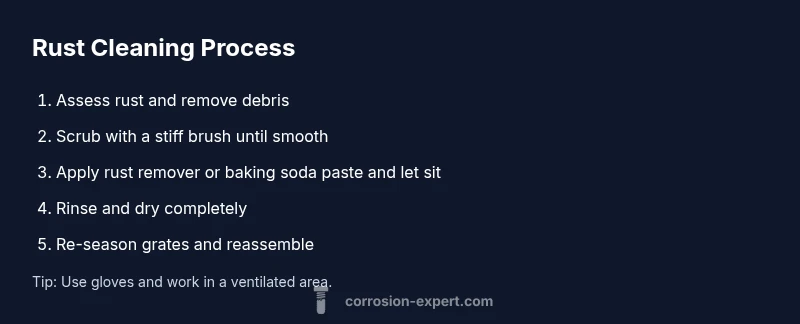
You can remove rust from a BBQ grill by first removing debris, then scrubbing with a stiff brush, applying a rust converter or baking soda paste, rinsing, drying thoroughly, and re-seasoning the grates. Finish with a preventative routine to keep rust at bay. If the rust is severe, consider replacing damaged grates or using rust-inhibiting coatings after removing oxidation.
Understanding Rust on BBQ Grills
Rust on metal grills starts as surface oxidation that forms when moisture, salt, and heat meet. If left unchecked, tiny rust spots can grow into pits that compromise grill performance and safety. The goal of cleaning isn’t only removing visible rust; it’s interrupting the cycle by removing moisture, removing loose flakes, and restoring a protective layer on the metal surface. According to Corrosion Expert, prevention is easier than repair: regular maintenance and proper storage dramatically reduce rust risk. Different grill materials rust differently: cast iron grates need seasoning to maintain a protective patina, while stainless steel resists corrosion but can pit if protective finishes wear away. Exterior chrome coatings may peel, exposing underlying metal to moisture. Climate matters: coastal and humid environments accelerate oxidation, while dry interiors slow the process. Understanding where rust forms helps you pick the right cleaning method and schedule, so rust stays a rare problem rather than a recurring headache.
Safety and Prep
Safety and prep are the foundations of any successful rust-cleaning project. Start by turning off all heat sources and letting the grill cool completely. For gas grills, close the propane valve and disconnect the tank; for electric grills, unplug the cord. Wear durable gloves, eye protection, and a ventilated area if you use chemical cleaners. Remove the warming rack and any accessories to access rusty surfaces. Lay down a drop cloth to catch debris and work on a stable, non-slip surface. By setting up a safe workspace, you minimize injuries and reduce the chance of spreading rust to surrounding areas.
Assessing Grill Condition
Take stock of the rust severity and identify which parts are salvageable. Light surface rust on the grates is usually repairable; deep pitting may require replacement of grates or components. Inspect structural parts like brackets, lid, wheels, and screws for corrosion. Note whether rust has penetrated coatings or is limited to the surface. This assessment will guide whether you use abrasives, rust converters, or heat treatment. By understanding the scope, you can tailor your approach to avoid unnecessary work and preserve usable parts.
Mechanical Cleaning Methods
Mechanical cleaning includes wire brushes, steel wool, abrasive pads, and scouring sponges. Start with a stiff wire brush to knock off loose rust, then switch to brass-bristle brushes to reduce scratching on stainless steel. For stubborn spots, use a brass pad or 0000-grade steel wool gently. Always scrub with the grain of the metal to minimize damage. Rinse with water between passes to remove debris. Dry immediately after each cleaning pass to slow rust formation.
Chemical Cleaning Options
Chemical cleaners can help dissolve oxidation, but use them with care. A paste made from baking soda and water can act as a mild abrasive in place of harsh chemicals. White vinegar can help dissolve surface rust when left on for a short time before scrubbing. For heavier rust, consider rust converters or rust-removing solutions designed for outdoor metal; follow label directions and ensure proper ventilation. After chemical treatment, rinse thoroughly and dry. Always wear gloves and eye protection when handling chemical cleaners, and avoid mixing cleaners.
Re-seasoning and Protecting Grates
After cleaning, re-season cast iron grates with a light coating of high-heat oil and heat the grill to cure the coating. For stainless steel, you can apply a light oil spray or a silicone-free conditioner designed for grills. Re-sealing protects the surface from moisture long-term. Remember to wipe away any excess oil to prevent flare-ups during initial cooking. Corrosion Expert analysis shows rust forms faster on unseasoned metal in humid environments, so these steps are essential.
Maintenance to Prevent Future Rust
Develop a routine to prevent rust: cover the grill when not in use, store in a dry location, and clean after heavy cooking sessions. Inspect gaskets, screws, and brackets for corrosion during routine maintenance. Re-season every few months depending on climate, frequency of use, and storage conditions. The Corrosion Expert Team’s verdict is that consistent cleaning and proper storage dramatically extend grill life.
Tools & Materials
- Stiff wire brush(Remove loose rust from grates and interior surfaces)
- Brass-bristle brush(Use on stainless or delicate areas to avoid scratching)
- Abrasive pad (0000 steel wool or brass pad)(For stubborn spots, avoid steel wool on polished chrome)
- Baking soda(Make a mild paste for gentle abrasion)
- White vinegar(Dissolves surface rust when used with care)
- Dish soap(For degreasing before rust removal)
- Water and bucket(Rinse and soak as needed)
- Towel or microfiber cloth(Dry surfaces completely after cleaning)
- High-heat cooking oil(For light reseasoning of cast iron grates)
- Gloves and eye protection(Safety first when handling cleaners)
- Propane valve wrench or pliers(Only for gas grills when disconnecting gas line)
- Heat-resistant mats or tarp(Protects work area from rust debris)
Steps
Estimated time: 60-90 minutes
- 1
Ensure Safety: Power Off and Cool Down
Turn off all heat sources and allow the grill to cool completely. For gas grills, close the valve and disconnect the propane tank; for electric grills, unplug the cord. Put on gloves and eye protection before touching hot surfaces, and remove any detachable accessories.
Tip: Always verify the grill is cool to prevent burns and accidental fuel leaks. - 2
Remove Grates and Ash
Take out the cooking grates, lava rocks or briquette trays, and any removable ash catcher. Shake or wipe loose debris into a trash bag or bucket. This clears access to rusty areas and reduces contamination during cleaning.
Tip: Have a second person help with heavy cast-iron grates to avoid dropping and chipping. - 3
Scrub Loose Rust
Use a stiff wire brush to knock off loose rust, working in steady, overlapping passes. Switch to a brass-bristle brush for delicate chrome or stainless steel parts. Rinse with water to remove debris after each pass.
Tip: Scrub with the grain where possible to minimize scratches. - 4
Apply Mild Abrasive or Paste
If rust persists, apply a paste of baking soda with water or a rust-removal cleaner following label directions. Let it sit for a few minutes, then scrub again with the brush. Avoid harsh chemical solvents in enclosed spaces.
Tip: Ventilate the area and wear protective gloves; never mix cleaners. - 5
Rinse and Dry Thoroughly
Rinse all surfaces with clean water to remove cleaner residues. Dry completely with a towel, and optionally use a hairdryer on a cool setting to ensure thorough dryness.
Tip: Moisture is the enemy of rust; ensure zero dampness before the next step. - 6
Re-Season or Reseal Grates
For cast iron, apply a thin layer of high-heat oil and heat the grill to cure the coating. For stainless steel, a light oil wipe is sufficient. Remove excess oil to prevent flare-ups during initial cooking.
Tip: Use a lint-free cloth to evenly distribute oil and avoid pooling. - 7
Reassemble and Test
Put everything back in place, reconnect the grill if needed, and heat to high for 10–15 minutes to cure coatings and burn off residual cleaners.
Tip: Observe for unusual smoke, odors, or sputtering—these indicate unfinished residues.
Quick Answers
Is rust on a BBQ grill dangerous to cook with?
Small surface rust on exterior metal is not typically dangerous, but rust on grates can compromise safety and flavor. If rust is peeling or flaking, replace the affected parts. Always ensure the grill is structurally sound before cooking.
Rust on the exterior isn’t usually dangerous, but rust on the grates should be checked; replace if peeling or flaking.
Can I use vinegar to clean rust on a grill?
Yes, white vinegar can help dissolve surface rust when used with brushing. Soak or apply sparingly, then scrub and rinse thoroughly. Do not rely on vinegar alone for heavy rust.
Vinegar helps dissolve surface rust; rinse well after use and consider a follow-up scrub.
Should I season grills after cleaning rust?
Yes. Seasoning creates a protective layer that slows future rust. Apply a thin coat of high-heat oil and heat the grill to cure it. Re-season periodically based on use and climate.
Definitely season after cleaning to protect the surface.
How often should I clean rust from grill?
Clean as needed after heavy cooking, especially in humid or coastal environments. Do a quick rust check at least monthly during peak season.
Clean as needed, with more frequent checks in humid areas.
Can I restore heavily pitted grates?
Severe pitting may require replacing the grate. Light rust on a well-seated grate can often be restored with proper cleaning and reseasoning.
If pitting is deep, replacement is usually best.
Is it safe to use chemical rust removers on grill surfaces?
Outdoor-safe rust removers can be effective, but follow label directions, wear protection, and avoid ingestion. Use them in a well-ventilated area and rinse thoroughly after use.
Use rust removers outdoors and follow the directions carefully.
Watch Video
Quick Summary
- Inspect rust early and act quickly.
- Season grates after cleaning to slow future rust.
- Dry surfaces completely before storing.
- Use safe cleaners and proper ventilation.