How to Remove Rust Stains from Pool Steps
Learn how to remove rust stains from pool steps with proven methods, safety steps, and a clear, step-by-step plan for DIY homeowners seeking durable results.


This guide shows how to remove rust stains from pool steps using safe cleaning methods, mechanical brushing, natural acids, and when to employ commercial rust removers. You’ll assess stain type, prep surfaces, follow a step-by-step process, and implement preventive measures to keep steps rust-free. Expect a practical plan you can execute with common tools and household products.
Understanding rust stains on pool steps
Rust stains on pool steps are a common DIY challenge for homeowners. They usually appear as reddish-brown patches on concrete, plaster, or fiberglass steps and can vary from light specks to dark, embedded discoloration. The primary keyword phrase should appear: how to remove rust stains from pool steps. The stains originate when metal ions (like iron from water pipes, fittings, or rebar) oxidize and migrate to the surface, especially when water chemistry is unbalanced or when surfaces are porous. For pool owners, stains can be more than cosmetic; persistent rust can indicate ongoing corrosion beneath the surface or mineral staining from dissolved metals in the water. The good news is that with a structured approach, most rust stains respond to careful cleaning and preventive steps. In this guide, we’ll outline a practical plan that a DIY enthusiast can follow with common household materials and pool-safe cleaners. According to Corrosion Expert, rust stains on pool steps are manageable when you address both the stain and the source.
Identifying the cause and stain type
Not all stains are true rust. Some are mineral stains from dissolved metals, and others are aluminum or iron oxides embedded in the surface. The first step is to observe the stain’s color, texture, and how deeply it sits in the surface. True iron stains typically appear brownish with a reddish hue and may lift gradually with cleaners that target iron. Porous concrete and plaster absorb stains more readily than glazed surfaces, so the approach will differ. If the stain bleeds when you rinse, it’s likely metallic; if it remains stubborn after rinsing, you’re dealing with embedded mineral deposits or weathered surface material. Corrosion Expert recommends confirming stain type before choosing cleaners, as wrong products can worsen the look or damage the surface over time.
Safety and prep before you start
Safety first. Wear chemical-resistant gloves and eye protection. Ventilate the area if you’re using acids or strong rust removers, and protect surrounding plants and pool equipment from splashes. Remove any loose debris from the steps with a gentle rinse. If you have fresh or thin plaster or sensitive finishes, test cleaners on a small, inconspicuous patch to avoid etching. Lay down a disposable sheet or plastic to catch drips and prepare your cleaning plan so you can stage steps sequentially without redoing sections. A well-prepped workspace reduces the chance of spreading stains to other surfaces and minimizes cleanup time later. Corrosion Expert stresses that prep work is often the deciding factor between a successful stain lift and a frustrating, partial result.
Mechanical cleaning: scrubbing techniques that work
Mechanical cleaning is the foundation of rust stain removal. Start with a mild cleaner (diluted white vinegar or a dedicated pool-safe rust remover) applied with a plastic spray bottle. Use a non-metal brush to scrub in gentle, circular motions, moving from the clean edges toward the stain to prevent spreading. Rinse frequently and avoid aggressive scrubbing that can scratch or scar the surface. For tougher stains, switch to a nylon-bristled brush and increase contact time on the stain, but do not let cleaners dry on the surface. Patience is key—a few targeted scrubs over several minutes often lift stains without harming the material. This approach minimizes the risk of introducing new damage while maximizing stain lift.
Chemical options: acids and rust-removers you can use safely
If natural cleaners don’t fully lift the stain, you can employ rust-removal products designed for concrete and stone pool steps. Always follow the product label and perform a patch test first. When using acids, ensure proper dilution and ventilation, and never mix chemicals. Chemical selections range from mild acids (like dilute vinegar or citric acid solutions) to stronger rust removers formulated for porous surfaces. Corrosion Expert recommends starting with milder options and escalating only if needed, to protect the surface integrity. After applying any chemical, rinse the area thoroughly and inspect for remaining color. Repeat as necessary on small patches to avoid overexposure on larger surfaces.
Natural remedies: vinegar, lemon juice, and citric acid
Natural remedies offer a gentler alternative for light rust stains. A solution of white vinegar (one part vinegar to one part water) can lift light stains when applied with a spray bottle and scrubbed with a soft brush. Lemon juice and citric acid also have mild chelating properties that can help lift stains from porous concrete. Test any natural method on a small, hidden area first to verify that it doesn’t discolor or dull the surface. While natural remedies are safe for many DIY projects, they may require more time and multiple applications for stubborn stains, especially on highly porous steps. Corrosion Expert notes that patience with natural methods often yields results without harsh chemicals.
Preventive measures: stop rust from returning
Prevention is easier than removal. Maintain balanced pool chemistry by ensuring proper pH, alkalinity, and calcium hardness, and routinely check for iron or copper presence in the water. Regular brushing and a periodic application of a surface sealant designed for pool steps will reduce porosity exposure and slow stain formation. Keep metal fixtures away from direct contact with the steps where possible, and replace corroded hardware to minimize iron leaching. These steps, combined with timely staining removal, create a practical defense against future rust stains.
Material-specific considerations: concrete, plaster, fiberglass
Different pool step materials respond differently to cleaners. Concrete and plaster are porous and respond well to gentle chelants and light scrubbing, while fiberglass requires gentler handling to avoid scratching the glossy surface. In all cases, avoid abrasive tools that can scratch or dull finishes. For embedded stains on delicate surfaces, consult a professional if you’re unsure about the compatibility of cleaners with the material. Corrosion Expert emphasizes tailoring your approach to the surface type to preserve the step finish while lifting stains.
Case study: common scenarios and practical fixes
Concrete steps with mild rust stains often respond to diluted vinegar and a nylon brush, followed by a light sealant. Heavier stains over time may need a stronger rust remover designed for porous concrete, with careful testing and thorough rinsing after treatment. Plaster-based steps tend to stain more deeply due to their porosity, but the same cleaning sequence—test patch, apply, scrub gently, rinse—can still be effective with additional passes. Fiberglass steps require a softer touch and avoiding harsh chemicals that could dull the surface gloss. Practical fixes and consistent maintenance yield the best long-term results.
Maintenance plan: long-term protection and routine checks
Create a simple maintenance plan that pairs stain prevention with routine checks. Schedule monthly visual inspections of the steps, especially after heavy rainfall or periods of high iron in the water. Maintain water chemistry as prescribed for your pool type, and run circulation cycles to keep metals in suspension and away from surfaces. Apply a compatible sealant after cleaning to seal porous surfaces and reduce future staining. A written plan helps you stay organized and reduces the chance of overlooking staining before it becomes dark or embedded.
Tools & Materials
- Rubber gloves(Non-slip, chemical resistant)
- Safety goggles(Eye protection from splashes)
- Non-metal scrub brush(Plastic bristles; prevents scratching)
- Stiff nylon brush(For tougher stains on firm surfaces)
- Plastic spray bottle(Apply cleaners precisely and evenly)
- White vinegar(Dilute 1:1 with water for mild stains)
- Citric acid powder(Can aid stain lift and pH balance)
- Oxalic acid rust remover(For stubborn stains; follow safety guidelines)
- Pool-safe rust remover product(Follow label directions for surface compatibility)
- Clean water supply(Rinse residues and flush cleaning area)
- Old nylon sponge(Dab in crevices without scratching)
Steps
Estimated time: 60-90 minutes
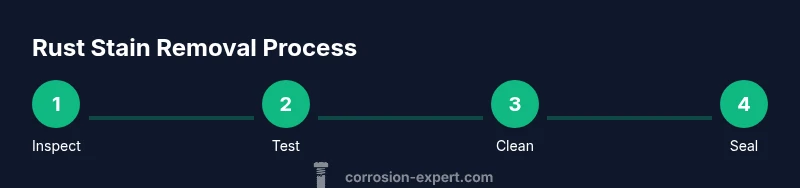
- 1
Inspect and plan
Begin by visually assessing the stain size, location, and surface type. Decide whether to test cleaners on a small, inconspicuous patch before full application. This prevents unexpected damage and gives you a baseline for success.
Tip: Take photos before you start to track progress. - 2
Protect yourself and area
Put on gloves and goggles. Isolate the cleaning area to avoid splashes on surrounding deck surfaces and plantings. If you’re cleaning indoors or in a sheltered area, ensure ventilation.
Tip: Work in shaded areas when using acids to slow rapid evaporation. - 3
Light wetting and testing
Rinse the stained area with clean water to remove loose debris. Lightly test a fabric or sponge with a mild cleaner on a small patch to observe any adverse reaction.
Tip: If the surface foams or discolors, stop and reassess cleaner choice. - 4
Mechanical scrubbing
Apply a mild cleaner (like diluted vinegar) with a plastic spray bottle. Scrub using a non-metal brush in circular motions, moving from the clean edge toward the stain to prevent spreading.
Tip: Avoid aggressive grinding that can scar the surface. - 5
Chemical lift for tougher stains
If stains persist, move to a more robust rust-removal method following the product label. For natural acids, keep a close eye on the surface and rinse frequently to prevent surface etching.
Tip: Never mix cleaners; use one product at a time. - 6
Rinse and re-evaluate
Flush the area with clean water and inspect the stain. If any iron particles remain, repeat the cleaning cycle on a smaller area to avoid overexposure.
Tip: A second pass often removes residual staining. - 7
Apply protective finish or sealant
After drying, apply a penetrating sealant or suitable coating designed for your pool step material to slow future oxidation and staining. Follow the manufacturer directions for cure time.
Tip: Choose a sealant compatible with your pool surface. - 8
Record and maintain
Note the cleaner used, stain response, and water chemistry checks. Schedule periodic tests and cleaning sessions to prevent recurrence.
Tip: Keep a small maintenance log near your pool equipment.
Quick Answers
Are rust stains permanent on pool steps?
Most rust stains can be removed with proper cleaning and patience. Deep or embedded stains may require repeated treatments or professional assessment.
Most rust stains can be removed with the right cleaning steps; deeper stains may take several treatments.
Can I use vinegar for all pool step materials?
Vinegar is effective for concrete and plaster steps but can etch sensitive surfaces like certain stones or polished finishes. Test first.
Vinegar works on many concrete steps, but test on a hidden area first to avoid etching.
What water chemistry changes help prevent rust stains?
Keep iron sources minimal and maintain balanced pH and alkalinity. Regular circulation helps prevent metal buildup that can cause stains.
Keep metals out and maintain balanced water chemistry to prevent stains.
Should I use oxalic acid or commercial rust removers?
Oxalic acid and rust removers can be effective but should be used with care and according to label instructions, especially on porous surfaces.
Yes, but follow the product label carefully and test first.
Is it safe to scrub with a metal brush?
No. Metal brushes can scratch pool surfaces and worsen staining; use plastic bristles and non-metal tools.
Avoid metal brushes; use plastic tools to prevent scratching.
How long does it take to see results?
Mild stains may disappear after a single session; tougher stains may require multiple passes over a few days.
Some stains lift the first time, others take a few passes over days.
Watch Video
Quick Summary
- Assess stain type before cleaners
- Use gentle scrubbing first
- Rinse thoroughly between steps
- Prevent recurrence with sealant and balanced water