How to Get Rust Stains Out of Concrete: A DIY Guide
Learn proven methods to remove rust stains from concrete with safe steps, tools, and aftercare. This Corrosion Expert guide covers household cleaners and rust removers, plus prevention tips for lasting results.


How to get rust stains out of concrete: According to Corrosion Expert, rust stains can be removed safely using common cleaners or specialty rust removers, with patience and proper timing. This quick guide outlines what you’ll do, the essential tools, and the key steps to restore a clean, durable concrete surface without damaging the slab.
Understanding Rust Stains on Concrete
If you’re wondering how to get rust stains out of concrete, you’re not alone. Rust stains appear as reddish-brown marks that can mar driveways, sidewalks, garage floors, and patios. They form when iron compounds in metal objects—like nails, rebar, or tools—leach into the concrete while moisture is present. Over time, iron oxide migrates toward the surface, leaving a stubborn stain. The concrete’s porosity means stains can penetrate beyond the surface, so early treatment yields better results. According to Corrosion Expert, starting with milder cleaners first reduces the risk of etching the cement and helps preserve the slab’s texture. Before you begin, test a small, inconspicuous patch to gauge how the surface responds. Gather your materials, wear protective gear, and work in a well-ventilated area. This plan helps you avoid over-wetting, streaking, or spreading the stain to adjacent areas. Remember: rust stains are typically more stubborn than dirt or oil, so patience and multiple passes may be required. With the right approach, you can restore a more uniform color and improve curb appeal without replacing concrete.
Why Rust Stains Form and Why They Persist
Rust stains form when iron oxide particles migrate from metal sources into porous concrete. Water acts as the carrier, dissolving tiny iron salts that travel through capillaries and surface again as a stain. Rust tends to persist if the stain has penetrated deeper or if moisture continues to contact the area. The best way to approach is to assess stain age: fresh stains are more responsive to milder cleaners, old stains may require stronger rust removers or repeated applications. Corrosion Expert analysis shows that stain age, concrete porosity, and moisture level all influence results. For exterior slabs, rain and irrigation can re-wash cleaning residues and re-activate rust, so plan multiple passes with drying breaks. Indoor concrete can be less porous but still accepts iron deposits over time. To keep expectations realistic, know that some stains may fade gradually rather than disappear completely. In all cases, protect plants and surfaces nearby, and avoid aggressive solvents that can damage the finish. By understanding how rust forms, you can tailor your method and reduce the chance of re-staining.
Compare Removal Methods: Household Cleaners vs Commercial Rust Removers
Household cleaners can provide gentle, effective rust stain removal on concrete when used promptly and correctly. White vinegar or lemon juice acid can loosen iron oxide; baking soda paste provides mild abrasive action. A spray bottle, a stiff brush and water are typically enough for small stains. For older or more stubborn stains, commercial rust removers, often based on oxalic acid or a safer alternative, may be more effective. Always follow product label directions and test first on a hidden patch. Corrosion Expert notes that consumer products work best on light to moderate staining and when used in combination with scrubbing and thorough rinsing. Commercial rust removers often rely on stronger chemistry; they should be used with gloves and eye protection, and never mixed with bleach. If you’re dealing with very dark or widespread staining, consider professional assistance. The goal is to lift iron particles without roughening the concrete surface. Remember, the stain’s depth matters, so results can vary.
Safety and Prep Before You Start
Preparation is as important as the cleaning itself. Wear protective gloves and eye protection, and ventilate the area. Protect nearby plants, carpets, and pavers with drop cloths or plastic sheeting. Test any cleaner on a small patch first to confirm it won’t discolor or harm the finish. Read labels and follow safety guidelines for chemical cleaners, especially near metal edges or freshly poured concrete. Keep children and pets away from the work zone. By laying a solid safety foundation, you reduce the risk of skin irritation, fumes, or accidental damage that could complicate the job.
Aftercare: Preventing Future Rust Stains
Once you achieve a clean surface, take preventive steps to minimize future rust stains. Rinse surfaces thoroughly after each cleaning to remove residues that can attract new iron particles. Consider sealing the concrete with a breathable sealer to slow moisture ingress, especially in areas with frequent rainfall or irrigation. Regularly inspect metal fixtures and fasteners; loose or corroding components near concrete can be a source of new staining. If you expect ongoing exposure to iron-containing water, apply a rust-inhibiting treatment designed for concrete surfaces. These measures help keep your slab looking fresh longer and reduce the need for repeat cleanings.
Tools & Materials
- Protective gloves (nitrile)(Protect hands from cleaners and rust removers)
- Safety goggles(Eye protection against splashes)
- Stiff-bristled scrub brush(For scrubbing stains without gouging surface)
- Plastic spray bottle(For applying cleaners evenly)
- Bucket(Mix cleaners or collect rinse water)
- Mild cleaner (dish soap) or concrete degreaser(Start with mild options before stronger removers)
- White vinegar(Optional mild acid for light stains)
- Commercial rust remover (oxalic acid-based or safer alternative)(Use only as directed, with PPE)
- Pressure washer (optional)(Helpful for thorough rinsing but use caution on delicate edges)
Steps
Estimated time: 60-120 minutes
- 1
Assess stain severity
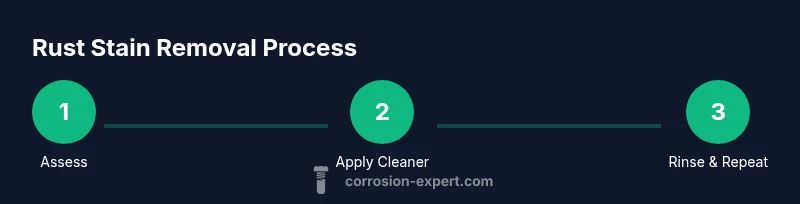
Begin by inspecting the stain to estimate age and depth. Fresh stains respond best to milder cleaners, while older stains may need stronger rust removers and multiple passes. Perform a patch test in a discreet area to gauge surface reaction and avoid etching.
Tip: If the stain doesn’t change after a single pass, don’t rush to harsher chemicals—wait and re-test after a short drying period. - 2
Protect and prep
Cover surrounding vegetation and surfaces with plastic sheeting. Put on gloves and goggles, and ensure good ventilation. Dampen the concrete surface lightly to prepare for cleaner application and reduce dust.
Tip: Keep a basin of clean water handy for immediate rinsing if cleaner contacts skin. - 3
Apply cleaner
Apply your chosen cleaner directly to the stain, using a spray bottle or brush. For mild cleaners, let sit 5-15 minutes to penetrate; for stronger removers, follow label timings exactly. Refrain from letting cleaner pool around edges.
Tip: Avoid mixing cleaners with bleach or ammonia—dangerous fumes can form. - 4
Scrub and rinse
Scrub with a stiff-bristled brush in a circular motion to lift iron oxide particles. Rinse thoroughly with water, ideally using a spray nozzle or a gentle stream to avoid splashing. Repeat as needed until water runs clear.
Tip: Work from the stain outward to prevent spreading iron oxides to clean areas. - 5
Re-treat if needed
If stubborn stains persist, reapply the cleaner and scrub again. For old stains, switch to a rust remover and follow the product’s directions. Allow adequate drying between passes to assess progress accurately.
Tip: Don’t over-treat; repeated applications can cause surface discoloration. - 6
Dry and seal
Let the concrete dry completely (24-48 hours). Once dry, apply a breathable concrete sealer to reduce moisture penetration and slow future staining. Inspect the area periodically and address new rust sources promptly.
Tip: Sealing after cleaning improves long-term stain resistance and makes future cleanups easier.
Quick Answers
Is it safe to use vinegar to remove rust stains from concrete?
Vinegar can work on light stains, but test first and avoid using it on polished or sealed surfaces where acidity could dull the finish. For tougher stains, mild cleaners or rust removers may be more effective.
Vinegar can help lightly, but test first and consider stronger cleaners for tough stains.
Can rust stains be prevented after cleaning?
Yes. Rinse well, dry completely, and seal the concrete to reduce moisture ingress. Inspect nearby metal fixtures and address corrosion at the source to minimize future staining.
Yes. Rinse, dry, and seal to prevent future rust stains, and fix any rusty fixtures nearby.
Will bleach help remove rust stains?
Bleach is not effective for rust stains and can disrupt surfaces. Use rust-specific removers or mild acids, following safety guidelines and product instructions.
Bleach isn’t the right tool for rust stains; use rust-specific products instead.
How long does it take to see results?
Results vary with stain age and concrete porosity. Fresh stains may respond within minutes to an hour; older stains may require multiple passes over a day or two.
Results depend on the stain; some vanish quickly, others need a few treatments.
Should I seal the concrete after cleaning?
Sealing is recommended to slow future staining and simplify maintenance. Use a breathable sealer appropriate for outdoor or indoor use depending on location.
Yes, sealing helps prevent future rust stains and makes maintenance easier.
What if the stain is very old or widespread?
Older or extensive rust stains may need stronger rust removers and more patience. If results plateau, consult a professional or repeat treatments with proper drying times.
Old stains may take more time or repeated treatments; consider professional help if needed.
Watch Video
Quick Summary
- Test first, then choose a gentle method.
- Act promptly for best results on fresh stains.
- Rinse thoroughly and allow full dry time between passes.
- Seal after cleaning to prevent future rust staining.
- Safety comes first: PPE and proper ventilation are essential.