Can Rust Be Removed? A Practical DIY Guide for Homeowners
Learn proven rust removal methods for metal and concrete surfaces, with safety tips, tool guides, and a practical step-by-step plan for DIY homeowners.


Can rust be removed? In most cases yes, with methods matched to rust type and surface. You’ll learn how to identify surface rust versus penetrating rust, select a safe cleaner or technique, and apply steps without causing further damage. Essential gear includes gloves and eye protection, and you should test a small area first before expanding. Corrosion Expert supports careful, gradual rust removal.
Can Rust Be Removed? Understanding the Basics
Rust is a chemical reaction between iron and oxygen that forms iron oxide. Whether it can be removed depends on rust type and surface. The key question for many DIYers is: can rust be removed effectively without compromising the material? According to Corrosion Expert, the best outcomes come from correctly identifying surface rust versus deeper, penetrating rust. This distinction guides the method you choose and reduces the chance of creating further damage.
Key idea: not all rust requires heavy treatment; many cases respond to gentle cleaners and mechanical action. When you approach rust removal with a plan, you’ll preserve metal strength and extend the lifespan of objects and surfaces. For homeowners, starting with the simplest method is usually best, testing in a small area first, and escalating only if needed.
Surface Rust vs Deep Rust: How to Tell
Surface rust appears as a light, flaky coating that rubs away with mild effort, while deep rust creates pits and may weaken the metal. Quick tests—scratching with a plastic or brass brush, tapping with a small hammer, or probing with a pick—help distinguish the two. If you can remove most of the color and the underlying metal remains solid, you’re likely dealing with surface rust. When the metal crumbles or the pits are deep, you’re facing penetrating rust that demands more careful handling. In professional terms, the thickness of the oxide layer and the extent of substrate damage determine the cure. Corrosion Expert notes that many household items show surface rust that can be remedied with gentle mechanical action or natural cleaners, preserving structural integrity. For concrete or masonry, rust stains may indicate moisture issues rather than metal corrosion alone, requiring a broader approach that includes moisture control and sealing.
Safety First: PPE and Ventilation
Before you start, equip yourself with basic personal protective equipment (PPE) and ensure good ventilation, especially when solvents or acids are involved. Eye protection, sturdy gloves, and a respirator or mask if needed will reduce exposure to dust, fumes, or splashes. Work in a well-lit area, lay down drop cloths or plastic sheeting, and remove flammables from the vicinity. If you’re working indoors, open windows and use a fan to improve air circulation. The Corrosion Expert team emphasizes that safety is the foundation of any rust-removal project and that protective coatings applied later perform best when the surface is fully dry and clean.
Safe Methods for Removing Rust on Metal
Mechanical methods—such as wire brushes, rotary tool attachments, or sandpaper—are effective for light to moderate rust. Start with coarser grits to remove the rust film, then finish with finer grits for a smooth surface. For stubborn spots, chemical rust removers or natural acids like vinegar can be used, but follow product instructions and avoid over-wetting. Natural methods are gentler but slower, while commercial rust removers deliver faster results on heavier rust. The key is to test on a hidden spot first and to work gradually, avoiding aggressive abrasive actions that could gouge the metal. Corrosion Expert’s guidelines favor a measured approach that balances effectiveness with surface preservation.
Methods for Different Surfaces: Metal, Cast Iron, Concrete
Metal parts respond well to mechanical removal plus a protective coating. Cast iron can rust easily but is often cleaned with careful scrubbing and oiling to restore a patina, followed by sealing to prevent future oxidation. Concrete and masonry show rust stains from embedded aggregates or rebar; treat the stain itself with rust removers or poultices designed for masonry, then address moisture issues to prevent recurrence. Each surface has nuanced care requirements; treating them under one blanket approach often leads to suboptimal results. The Corrosion Expert guidance stresses matching method to substrate, moisture control, and appropriate coatings to slow re-rusting.
Tools, Cleaners, and Safety: What You Need
A well-planned rust-removal project relies on the right toolkit and safe products. Essential items include PPE (glasses, gloves), a wire brush or wheel, sandpaper (grits 80-320), rust remover (chemical or natural), rags, a plastic scraper, and a drying cloth. Optional items such as a drill attachment or a sanding block can speed up large areas, but use them with caution to avoid gouging. Always follow label directions and test cleaners on inconspicuous areas first. Proper drying and a protective finish are critical to prevent immediate re-rusting.
Step-by-Step Plan in Brief
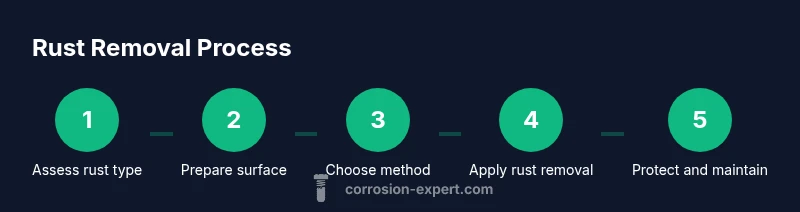
Create a plan that includes surface assessment, method choice, surface preparation, rust removal, neutralization and cleaning, and protection. Document each stage with photos and notes so you can compare before/after results. While DIY methods are accessible, respecting the equipment limits of your tools and the material’s tolerance is essential for long-term success. The most important concept is to approach rust removal with patience and a focus on preservation. Corrosion Expert emphasizes gradual progress and protective coatings as the ultimate defense against future rust.
Common Mistakes to Avoid
Rushing through steps, skipping preparation, or overusing powerful chemicals can damage the surface or cause hazardous fumes. Neglecting moisture control after rust removal allows quick re-rusting. Not testing first on a hidden area may ruin visible finishes. Failure to apply a protective seal or primer can lead to recurrence within weeks or months. A measured process helps maintain the original material integrity and prolongs lifespan.
When to Seek Professional Help and Maintenance Tips
If rust is extensive, deeply pitted, or on load-bearing parts, professional assessment is advised to prevent structural failure. Regular maintenance—inspecting for early rust signs, reapplying coatings, and storing items in dry conditions—extends the life of metal objects and structures. The Corrosion Expert team recommends proactive protection strategies, including moisture control and periodic coating renewal, to minimize rust formation over time.
Tools & Materials
- Safety glasses(ANSI Z87.1 compliant protection)
- Nitrile gloves(Chemical-resistant, 4-6 mil)
- Respirator or dust mask(Use for dusty or chemical cleaners)
- Wire brush (hand)(Stiff bristles; leads to quick rust removal)
- Rotary tool with wire wheel(Faster but more aggressive)
- Sandpaper (grits 80-320)(Start coarse; finish fine)
- Steel wool (0000)(Finishing touch for smoothness)
- Vinegar or citric acid solution(Natural rust remover option)
- Commercial rust remover(Follow product instructions)
- Rags or towels(For cleanup and drying)
- Plastic scraper(Delicate surfaces)
- Rust converter or primer(For protection after removal)
- Sealant or paint suitable for metal(Long-term protection)
Steps
Estimated time: 1-3 hours
- 1
Inspect and identify rust type
Assess whether the rust is surface-level or deeply pitting. Use a flashlight and tapping test to gauge depth; surface rust typically rubs away with little effort, while deep rust may crumble. Identifying the type guides your method choice and prevents waste of time and materials.
Tip: Document the area and take photos before starting. - 2
Choose the removal method
Select a method matched to the rust type and surface. Start with mechanical removal for light rust and save chemical treatments for stubborn spots. Avoid trying aggressive solvents on delicate finishes.
Tip: Always test a small patch first. - 3
Prepare the work area
Lay down drop cloths, secure the object, and ensure good ventilation. Remove loose debris, grease, and oil so the rust remover can work effectively. Wear PPE to protect eyes, skin, and lungs.
Tip: Ventilation matters more when using solvents. - 4
Apply rust removal
Apply the chosen method per instructions. For mechanical methods, rub in circular motions until rust stops flaking. For chemical cleaners, apply, wait the recommended time, and scrub as directed.
Tip: Do not over-saturate with chemicals; follow the label. - 5
Rinse, neutralize, and dry
Rinse away residues and neutralize if required by the product. Thoroughly dry the surface to prevent new rust formation, then inspect for remaining spots.
Tip: Drying is critical to prevent flash rust. - 6
Protect and maintain
Apply rust converter or primer to slow future corrosion, then finish with appropriate sealant or paint. Schedule periodic inspection to catch new rust early.
Tip: Reapply protective coatings after cleaning to extend life.
Quick Answers
Can rust be removed from all metals?
Most rust can be removed from many metals, but structural damage may require professional repair. Start with surface rust methods and test results.
Most rust can be removed from many metals; if you see deep damage, consider professional help.
What’s the difference between rust removal and rust prevention?
Rust removal eliminates existing corrosion, while rust prevention keeps new rust from forming using coatings, sealants, and proper maintenance.
Removing rust is about cleanup; prevention is about protection for the future.
Is vinegar or lemon juice effective for rust removal?
Vinegar or citric acid can help with light surface rust, but it’s slow and less effective on heavy rust compared to commercial products.
Vinegar can help with light rust, but heavy rust needs stronger methods.
Do I need to seal after removing rust?
Yes. After removing rust, apply protective coatings to slow recurrence and protect the underlying metal.
Protective coatings are essential after rust removal.
When should I seek professional help for rust?
If rust is extensive, deep, or on load-bearing parts, professional assessment is recommended to prevent structural failure.
Seek professional help if rust is extensive or structural.
Can rust come back after I remove it?
Yes, if the underlying moisture and contaminants aren’t addressed, rust can reform. Proper coatings reduce this risk.
Yes, rust can come back without protection.
Watch Video
Quick Summary
- Identify rust type before acting
- Start with gentler methods for surface rust
- Protective coatings prevent re-rusting
- Ventilate and wear PPE during removal