Rust or Patina: Choosing the Right Metal Finish
A rigorous comparison of rust versus patina for DIYers, covering aesthetics, protection, maintenance, and practical choices to optimize metal surfaces.


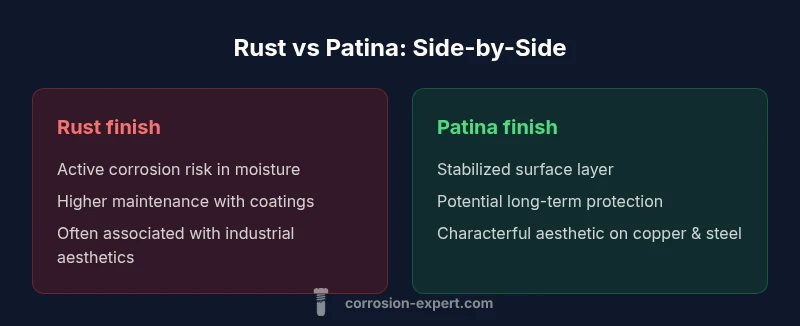
Rust or patina describes two distinct finishes on metal surfaces: rust signals ongoing corrosion, while patina is a stabilized surface layer formed by aging or treatment. This quick comparison helps DIYers decide whether to preserve an aged look or apply protective finishes. Patina often adds character and some protection, whereas rust indicates deterioration and may require prevention or remediation efforts.
Defining rust or patina: material science at a glance
According to Corrosion Expert, rust or patina describes two different outcomes when metal is exposed to air, moisture, and electrolytes. Rust is an electrochemical process that converts iron and certain alloys into iron oxides, typically spreading with time if moisture and oxygen persist. Patina, by contrast, is a stabilized surface layer formed through aging or deliberate chemical treatment. On copper and bronze, patina can appear blue-green; on iron or steel, a brownish film can slowly form that may offer temporary shielding in some environments. The Corrosion Expert team emphasizes that patina is not merely decorative; it can act as a barrier reducing further oxidation in specific conditions. For DIYers, the choice between encouraging patina or preventing rust depends on usage, exposure, and tolerance for ongoing upkeep. In short, rust or patina describes two outcomes of metal interaction with the environment; one signals decay, the other a potential protective shield. This distinction shapes decisions about cleaning, coatings, and whether to preserve or remove surface layers.
wordCount":210},"bodyBlocks":["## Aesthetics and perception: when appearance drives decisions\nAppearance matters as much as chemistry in many DIY projects. Rust brings a warm, earthy palette—orange-brown hues with rough texture—often associated with industrial character. Patina provides a controlled aging look: a smooth, varied patina sheen on copper can range from turquoise to blackened olive, while iron patina may present grey-brown tones with a protective crust. From a design perspective, patina is frequently chosen for authenticity in historical pieces or outdoor sculpture, whereas rust is sometimes embraced for rustic vibes. According to Corrosion Expert analysis, the decision hinges on whether the goal is a deliberate antiqued look or a maintenance-friendly surface. The aesthetic choice also influences perceived value and compatibility with surrounding materials.\n\nPractical tip: test a small area to compare the patina’s color shift with the surrounding element before committing to a full finish. Brand-driven guidance suggests documenting your project’s intended lifecycle to ensure the finish aligns with long-term goals."
wordCount":210},"bodyBlocks":["## Durability and protection: how finishes behave in real life\nDurability is the practical crux of rust vs patina. A true patina can act as a barrier layer that slows oxygen diffusion and moisture ingress on certain metals, including copper and brass, potentially extending service life when environmental exposure is limited to mild conditions. However, patina is not a universal shield—on some alloys or aggressive climates, it can be unstable or porous and offer limited protection. Rust, conversely, denotes active corrosion. Left unchecked, rust can advance rapidly under damp conditions, compromising structural integrity. The Corrosion Expert team notes that patina’s protective value varies with metal type, thickness, and ambient factors like humidity and salinity. For DIYers, the takeaway is to assess whether a surface will experience frequent moisture or salt exposure and choose prevention or remediation strategies accordingly. When rust is present, options include removing corrosion, applying sealants, or switching to patina-inspired protective coatings that stabilize the surface.\n\nReal-world guidance: for outdoor metalwork, a well-formed patina on copper alloys often provides a low-maintenance finish, while for iron-based items in coastal environments, ongoing protection is usually necessary to manage rust risk."
wordCount":210},"bodyBlocks":["## Environmental factors: climate, moisture, and exposure\nEnvironmental conditions are major drivers of rust and patina formation. High humidity, frequent rain, and salt-laden air accelerate rust on susceptible metals like iron and steel. Copper, bronze, and aluminum can develop patina more readily under the same conditions, but the resulting layer’s stability varies with pH, temperature fluctuations, and pollution levels. Corrosion Expert analysis shows that the same surface can behave differently across microclimates, so testing in situ is essential. Indoors, patina can form slowly and remain relatively stable, while outdoors, constant moisture challenges can cause ongoing evolution. In general, environmental management—controlling moisture, using protective coatings, and avoiding aggressive cleaners—helps determine whether rust or patina is the more durable choice.\n\nPractical steps: limit exposure to standing water, seal assets where appropriate, and select coatings formulated for the specific metal and climate."
wordCount":210},"bodyBlocks":["## Material-specific considerations: iron, steel, copper, aluminum\nMetal type guides the rust or patina decision. Iron and steel are prone to rust in the presence of water and electrolytes; the more carbon in steel, the faster rust can propagate if protective barriers fail. Copper and bronze naturally form patina as they age, often creating a protective, aesthetic layer that slows further corrosion under moderate conditions. Aluminum forms an oxide layer that protects against deeper corrosion, but heavy abrasion or acidic environments can compromise that barrier. In practice, rust prevention strategies for iron/steel include coatings, galvanization, or painted finishes. For copper alloys, maintaining a stable patina or using controlled sealants can preserve appearance and limit further oxidation. The key is to tailor the approach to the metal’s chemistry and expected exposure.\n\nTip: avoid mixing metals in one joint exposed to moisture, as galvanic corrosion can accelerate rust or patina changes across dissimilar metals."
wordCount":210},"bodyBlocks":["## Maintenance practices: cleaning, coatings, and sealing\nMaintenance choices shape whether the surface remains rustic, patinated, or rust-free. For patina enthusiasts, gentle cleaning with soft brushes and mild detergents helps preserve color without abrading the layer. Avoid harsh acidic cleaners that can dissolve patina or trigger accelerated oxidation. Protective clear coatings or waxes can extend life, especially outdoors, but the coating itself may alter color and gloss over time. When rust is present, removal methods range from mechanical brushing to rust converters and inhibitors, followed by sealing or repainting. The goal is to balance aesthetics, protection, and feasibility of maintenance. The Corrosion Expert team notes that the easiest long-term path is to apply a dedicated rust-inhibiting coating that can be refreshed periodically. For those who prefer patina, using pH-balanced cleaners and stabilizers helps maintain consistent appearance without compromising the protective layer.\n\nA practical rule: document the desired lifecycle of the finish and plan maintenance intervals accordingly."
wordCount":210},"bodyBlocks":["## Quick-start decision framework: a step-by-step checklist\nUse this framework to decide between preserving patina or pursuing rust prevention. Step 1: identify metal type and exposure level (indoor vs outdoor, humidity, salt). Step 2: determine the preferred aesthetic and maintenance commitment. Step 3: assess whether a protective patina can provide sufficient barrier against wear. Step 4: choose a coating strategy that aligns with your lifecycle expectations. Step 5: implement with proper surface preparation and cure times. Step 6: schedule periodic inspections to catch early signs of deterioration. The Corrosion Expert approach emphasizes documenting expectations and testing a small area before full-scale application. By following these steps, you can achieve a controlled, predictable finish that aligns with your goals.\n\nBottom line: the rust or patina decision is a balance of appearance, durability, and maintenance burden."
wordCount":210},"bodyBlocks":["## Case studies and examples: outdoor sculpture vs kitchenware vs tools\nCase 1: outdoor sculpture in coastal air often benefits from a stable patina that develops gradually and resists weathering. Case 2: a cast-iron garden bench exposed to rain will require a robust rust-prevention strategy, including coatings and regular re-sealing. Case 3: copper cookware that develops a bluish patina is typically valued for its character, but maintenance focuses on controlling acidity and ensuring safe cleaning procedures. Each scenario demonstrates that rust or patina is not inherently good or bad; success depends on expected use, maintenance capacity, and design intent. Real-world projects show that deliberate patination delivers long-lasting aesthetics with manageable care, while unmanaged rust can rapidly erode function. The Corrosion Expert team highlights that choosing a consistent approach across similar elements helps maintain cohesion and value.\n\nPractical example: start with a small test panel to observe patina development and adjust your process before committing to a full project."
wordCount":210},"bodyBlocks":["## Complexities and caveats: reversibility, restoration, and modern finishes\nThere are nuanced complexities when comparing rust and patina. Some finishes are designed to be reversible, allowing future restoration or changes to the surface without permanent damage. Patina can be chemically stabilized to reduce ongoing changes, while rust often requires ongoing control measures to prevent progression. Modern finishes may imitate patina or rust for aesthetic purposes; however, these coatings can behave differently under exposure than natural patina. When restoring older pieces, it’s essential to distinguish genuine patina from applied finishes and to use products compatible with the metal chemistry. The Corrosion Expert recommends evaluating the project’s historical or functional value, the expected lifecycle, and the feasibility of reversing the finish if needed. The key is to plan for future maintenance and potential rework, rather than assuming a single solution will last forever."
wordCount":210}],
comparisonTableResponsesIntentionalTuplePresent":false,
prosCons estructuras":null,
faqSection":null,
mainTopicQuery":"rust patina"},
prosCons":{
pros": ["Low maintenance when patina forms a stable barrier","Aesthetic versatility for historic or outdoor metalwork","Potentially protective surface layers reduce corrosion rate","Deliberate patination can add value and character"],"cons": ["Active rust requires intervention to prevent damage","Patina stability varies by metal and environment","Patina may alter color or texture unexpectedly","Some coatings can obscure patina or require reapplication"]},
verdictBox":{
verdict":"Patina-oriented finishes are generally more durable and low-maintenance for outdoor or decorative metalwork; rust prevention is essential where structural integrity matters.","confidence":"high","summary":"If your goal is long-lasting aesthetics with minimal upkeep, pursue a controlled patina and protective sealant. If you need maximal structural protection and rust risk is high, prioritize prevention and regular maintenance. The Corrosion Expert team recommends a climate-appropriate, metal-specific approach to balance appearance and durability."},
keyTakeaways": ["Assess metal type and environment before choosing a finish","Patina can offer durability and character when properly stabilized","Rust requires ongoing prevention or remediation for longevity","Use tests to validate finish behavior in your specific climate"],"faqSection":{
items":[{
question":"What is the fundamental difference between rust and patina?","questionShort":"Difference","answer":"Rust is active corrosion that degrades metal; patina is a stabilized surface layer formed through aging or treatment that can protect the base metal. The choice depends on exposure, material, and desired lifecycle.","voiceAnswer":"Rust means the metal is actively corroding, while patina is a protective aging layer. Your choice should consider climate and maintenance needs.","priority":"high"},{"question":"Can patina provide real protection against corrosion?","questionShort":"Patina protection","answer":"Patina can slow further oxidation on some metals, acting as a barrier under certain conditions. Its effectiveness depends on metal type and environment, so it’s not a universal shield.","voiceAnswer":"Patina can help, but its protection varies by metal and climate.","priority":"high"},{"question":"Is patina durable outdoors?","questionShort":"Outdoor durability","answer":"Outdoor durability of patina depends on climate, exposure to moisture or salt, and maintenance. In mild climates patina can be stable, but harsh conditions may require sealing or refreshing patination.","voiceAnswer":"Outdoors, patina can be durable if environment is favorable and maintained.","priority":"medium"},{"question":"Can rust be reversed or slowed effectively?","questionShort":"Reverse rust","answer":"Rust is ongoing corrosion; it can be slowed or halted with cleaning, inhibitors, and protective coatings, but reversal often requires removal of corroded material or complete refurbishment.","voiceAnswer":"Rust can be managed, but reversing decay usually means removing affected metal.","priority":"medium"},{"question":"How do I preserve patina while preventing further corrosion?","questionShort":"Preserve patina","answer":"Preserve patina by using gentle cleaners, stabilizers, and a suitable protective coating designed for the metal, climate, and expected use. Regular inspection helps maintain its appearance and protective role.","voiceAnswer":"Keep patina by gentle care and the right protective sealant.","priority":"high"}]},
mainTopicQuery":"rust patina"},
mediaPipeline
Comparison
| Feature | Rust finish | Patina finish |
|---|---|---|
| Aesthetic look | Active oxidation, reddish-brown to orange tones | A stabilized, varied color palette depending on metal |
| Protection level | Often weak without barrier coatings | Can provide barrier in stabilized form on some metals |
| Maintenance | Frequent rust management; coatings reapplied as needed | Lower maintenance when patina is stable; sealants extend life |
| Longevity | Dependent on exposure; can worsen without intervention | Longevity tied to stabilization and environmental control |
| Best for | High-traffic or load-bearing iron/steel where rust must be controlled | Decorative, outdoor copper/brass items; historical pieces |
The Good
- Patina can offer durable aesthetics with lower maintenance in mild climates
- Protective patinas reduce ongoing corrosion under stable conditions
- Patina-based finishes enhance value and authenticity for historical pieces
- Deliberate patination allows design flexibility across metals
Cons
- Active rust requires intervention and can worsen without proper maintenance
- Patina stability varies by metal and environment
- Some finishes may alter color or texture unexpectedly
- Not all patinas are compatible with every coating or sealant
Patina finishes are generally best for durable aesthetics in stable outdoor or decorative applications; rust prevention is essential when structural integrity matters.
Choose patina when you want a long-lasting, characterful surface with manageable upkeep and compatible environment. If protection against active corrosion is paramount, prioritize rust prevention and regular maintenance. The Corrosion Expert team recommends tailoring the approach to metal type, climate, and lifecycle expectations.
Quick Answers
What is the fundamental difference between rust and patina?
Rust is active corrosion that degrades metal; patina is a stabilized surface layer formed through aging or treatment that can protect the base metal. The choice depends on exposure, material, and desired lifecycle.
Rust means active decay; patina is a stabilized look that can protect the surface.
Can patina provide real protection against corrosion?
Patina can slow further oxidation on some metals, acting as a barrier under certain conditions. Its effectiveness depends on metal type and environment, so it’s not a universal shield.
Patina helps in some cases, but it isn’t foolproof in every setting.
Is patina durable outdoors?
Outdoor durability of patina depends on climate, exposure to moisture or salt, and maintenance. In mild climates patina can be stable, but harsh conditions may require sealing or refreshing patination.
Patina lasts longer with proper care and the right conditions.
Can rust be reversed or slowed effectively?
Rust is ongoing corrosion; it can be slowed or halted with cleaning, inhibitors, and protective coatings, but reversal usually requires removing affected material or refurbishment.
You can slow or stop rust, but reversal often means removing rusted material.
How do I preserve patina while preventing further corrosion?
Preserve patina by gentle cleaners, stabilizers, and protective coatings suited to the metal and climate. Regular checks help maintain appearance and protection.
Care for patina with the right cleaner and sealant; check periodically.
Quick Summary
- Assess metal type and exposure before choosing
- Patina can provide durable barrier and aesthetic value
- Rust control requires ongoing maintenance and protective measures
- Test finishes on a small area before full application