Rust and Vengeance Outward: Preventive vs Reactive Rust Strategies
A detailed, analytical comparison of outward preventive rust strategies versus reactive repair methods for homeowners, with practical guidance, case studies, and a clear decision framework.


For most homeowners, outward rust prevention (coatings, sealing, and regular maintenance) offers the best long-term value, while reactive rust repair is a solid backup for emerging rust spots. In short: start with preventive measures to stop rust from spreading; reserve repair for stubborn or inaccessible areas. Also, document the rust pattern in a simple log to track progression and evaluate prevention effectiveness over seasons.
Defining 'rust and vengeance outward' in Home Rust Strategy
The phrase rust and vengeance outward captures a mindset: approach the rust problem from the outside of the corrosion cycle, focusing on barriers, prophylaxis, and ongoing vigilance before rust penetrates deeper. According to Corrosion Expert, this outward stance aligns with foundational corrosion science: stopping the spread at the surface and preserving the underlying metal. In real-world terms, it means scheduling regular inspections, applying protective coatings, and choosing materials with superior corrosion resistance. When homeowners adopt this approach, the risk of costly repairs shrinks, and projects stay manageable. The concept also frames prevention as a DIY-friendly habit rather than a one-off fix, turning maintenance into a proactive routine rather than a reactive scramble. The goal is clear: reduce rust initiation points and slow progression through documented routines and practical tools that you can implement today.
This framing helps DIYers align long-term goals with concrete actions—measureable, repeatable, and scalable across project sizes. The Corrosion Expert team emphasizes that prevention starts with surface preparation, material selection, and moisture control. By keeping rust at arm’s length, you protect both functionality and aesthetics, enabling you to extend the life of metal components without costly, invasive repairs. This is the core philosophy behind outward rust strategies in residential settings.
Two Mindsets: Preventive vs Reactive
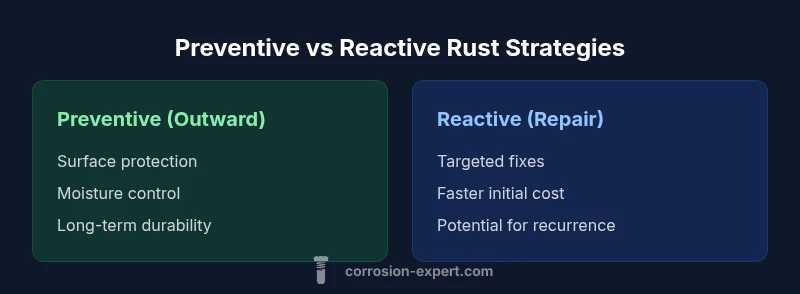
Preventive mindset focuses on stopping rust before it starts: surface preparation, barrier coatings, galvanization where appropriate, proper drainage, and moisture control. Reactive mindset addresses rust as it appears: patching cosmetic flaking, applying rust converters, sanding away corrosion, and patching with primers. The comparison matters because prevention reduces long-term costs and downtime, while repairs can be necessary for existing damage or in hard-to-protect areas. For DIYers, switching to a prevention-first routine can dramatically reduce the frequency and severity of rust issues. Corrosion Expert’s experience suggests that the most durable projects combine both approaches: strong preventive measures backed by targeted repair for stubborn spots.
From a durability perspective, prevention reduces the effective surface area exposed to moisture and salts, which means fewer opportunities for rust to gain a foothold. Reactive repairs can address symptoms, but they rarely restore original strength if corrosion has penetrated seams or structural joints. A blended plan—prevent, monitor, and repair—offers a practical, cost-conscious path for homeowners with varied exposure levels, budgets, and project scopes.
Practical preventive measures for outward rust control
- Conduct a seasonal inspection of metal surfaces, looking for discoloration, bubbling, or tiny pits.
- Clean surfaces with mild, non-acidic cleaners to remove salt and grime that accelerate corrosion.
- Apply a corrosion inhibitor or rust-preventive primer before painting, emphasizing areas near joints and seams.
- Seal joints with a flexible sealant to block moisture ingress and capillary action.
- Use rust-resistant metals or protective coatings on tools, gutters, railings, and hardware exposed to weather.
- Recoat every few years or when color or gloss fades; darker colors often provide better UV protection.
- Improve airflow around metal items to reduce humidity.
In addition to coatings, consider environment-aware choices such as sheltering vulnerable metalwork from direct rain exposure, and using vented enclosures for damp spaces. The goal is to limit moisture contact, slow oxidization, and create conditions less favorable to rust formation. For coastal or winter-road environments, these strategies are especially important because salt accelerates corrosion.
Reactive rust repair: when and how to intervene
Assess the extent of rust before acting: surface rust versus deep pitting. For light rust, mechanical removal with a wire brush or sanding can restore the surface, followed by primer and paint. For moderate rust, apply a rust converter to chemically neutralize active iron oxides, then seal with a protective topcoat. For severe rust that compromises structural integrity, replacement or professional restoration is advised. In all cases, moisture control remains essential; drying out the area reduces re-rusting and extends the life of treatments.
Reactive repairs are sometimes necessary as a safety measure. They can stabilize an area and buy time for a more comprehensive preventive plan. In practice, a staged approach—remove, treat, and then transition to prevention—often yields the best long-term results. The critical idea is to avoid repeating the same mistakes and to build a repair strategy that complements ongoing prevention.
Tools, materials, and techniques for outward rust control
Key items include: rust-inhibiting primers, water-based sealants, rust converters, a high-quality brush or spray equipment, sandpaper grits suitable for metal, protective gear, and moisture meters. For metal surfaces outside, consider galvanic protection and protective coatings, including ceramic-based or epoxy systems. Surface prep matters: remove existing rust, clean, degrease, and dry thoroughly before applying any coating. Follow manufacturer instructions for cure times and recoat windows. Choose environmentally friendly products where possible to reduce VOC exposure and environmental impact. Regularly inspect coating integrity, especially after winter seasons or heavy rainfall, and reapply as needed to maintain a continuous barrier against moisture.
Beyond coatings, consider up-front choices such as replacing susceptible hardware with corrosion-resistant alloys, and implementing drainage improvements to prevent water pooling near metal joints. The combination of correct material selection and proper application of protective systems is the backbone of outward rust strategies for DIY enthusiasts.
Case studies: practical DIY scenarios
Case A: An aluminum railing with light surface rust from spray from winter road salt. The owner cleans, applies a rust-inhibiting primer, and coats with a UV-protective finish; after one season, wear is minimal and corrosion remains halted. Case B: Wrought-iron gate with deep pits near hinges; after local scraping, rust converter is used, followed by epoxy sealant and improved drainage. In both cases, ongoing maintenance and reapplication extended the lifespan of metal components. These scenarios illustrate how outward rust strategies translate from theory to tangible improvements on typical residential metalwork. Observers note that success hinges on consistent upkeep and a willingness to integrate preventive steps into ordinary maintenance routines.
Long-term maintenance and cost considerations
Prevention-focused strategies typically yield lower lifetime costs because they reduce the need for frequent repairs and replacements. The upfront investment in coatings, primers, and sealants is offset by fewer rust patches and less labor over time. Conversely, reactive repair can be cheaper initially but may escalate as rust spreads into seams and joints. Corrosion Expert Analysis, 2026 notes that consistent preventive maintenance aligns with better long-term value, especially for outdoor metalwork and coastal or salted environments. When budgeting, factor in surface prep, coating selection, application labor, and the cadence of re-application. A simple maintenance log helps track rust activity, identify patterns, and determine when to refresh protective layers. Effective maintenance also includes periodic checks after extreme weather events, ensuring that protective barriers remain intact and functional.
Common mistakes and how to avoid them
Skipping surface preparation or rushing cure times leads to poor adhesion and premature failure. Using incompatible coatings or applying over damp surfaces invites blistering and rust reuse. In coastal areas, neglecting moisture management and drainage accelerates corrosion. Failing to recoat on schedule leads to cumulative damage. Finally, ignoring safety gear or ventilation can turn DIY rust work into a health risk. A disciplined schedule, proper products, and careful surface prep prevent common missteps. Planning ahead—considering seasonal weather, local climate, and exposure—reduces the chances of reactive stoppages turning into costly repairs.
Decision pathways: when to choose prevention vs repair
Use prevention first for new installations, re-coated parts, and areas with high exposure risk. If you already see surface rust in multiple spots but no deep pits, start with mechanical removal or rust converters and sealants, then transition to preventive coatings. If corrosion has penetrated deeply or structural parts show weakness, repair or replacement should take precedence. Consider environmental factors, such as humidity, salt exposure, and weathering, and align your approach with available time and budget. The best outcome comes from a blended plan: prevent, monitor, and repair selectively as needed. This approach mirrors professional workflows while remaining accessible for DIY enthusiasts.
Next steps for DIY homeowners
To translate the outward rust strategy into action, begin with a quick inventory of outdoor metal assets, surface conditions, and exposure. Create a maintenance calendar that aligns with your local climate, salt exposure, and humidity levels. Invest in a small set of high-quality rust-preventive products and a simple log to record coatings, application dates, and observed rust activity. As you gain confidence, expand to more complex projects like galvanic protection on critical connectors and sealant systems for joints. The continuous loop of prevention, monitoring, and selective repair will compound over time, delivering durable results and fewer emergency fixes.
Comparison
| Feature | Preventive Rust Prevention (Outward-facing) | Reactive Rust Repair (Inward-focused) |
|---|---|---|
| Initial Cost | Medium upfront for coatings, primers, and sealants | Low upfront for basic patching and rust converters |
| Long-term Cost | Typically lower overall due to fewer repairs | Potentially higher if rust recurs and spreads |
| Effectiveness on surface rust | Excellent for prevention; can halt progression | Good for shallow rust; limited for deep penetration |
| Labor Time | Moderate; periodic maintenance | Higher; removal and repair can be labor-intensive |
| Aesthetic results | Seamless finish with coatings | Visible patches with repairs |
| Best For | New or early-stage rust, metal substrates | Established rust, hard-to-reach areas |
The Good
- Reduces long-term damage and replacement costs
- Lower risk of widespread corrosion with proactive measures
- Protects functional and aesthetic value of metalwork
- Encourages safer, more controlled DIY maintenance
- Adaptable to different environments (coastal, industrial, residential)
Cons
- Requires upfront planning and purchase of materials
- Regular re-application to maintain protection
- Surface prep and correct product selection are crucial
- Less effective if corrosion is already extensive
Preventive outward rust strategies generally outperform reactive repair for most homeowners.
Start with prevention to minimize rust spread. Use repairs for stubborn spots, then reinforce with preventive coatings and regular checks to extend metal life.
Quick Answers
What does the phrase 'rust and vengeance outward' mean in home maintenance?
It describes an outward-facing strategy that emphasizes barriers and prevention to stop rust before it starts. The approach prioritizes surface protection, moisture control, and routine inspections to keep metals durable. Practically, it means treating rust as a surface issue to be managed with coatings and good maintenance.
Outward rust strategy means protecting the surface and preventing rust before it happens, not just fixing it after it appears.
Which approach works best for new metal versus aged metal?
For new metal or recently exposed surfaces, prevention is typically best. For aged metal with existing spots, a combination of mild removal and protective coatings plus ongoing prevention is advised. Always assess structural integrity before heavy repairs.
Prevention is ideal for new metal; for older metal, combine removal and protection with ongoing care.
Are coatings safer than rust converters?
Coatings protect long-term by sealing the surface, while rust converters chemically neutralize active rust and prepare the surface for sealing. The choice depends on rust stage and project goals; use converters for deeper rust that still leaves structural material intact.
Coatings seal; converters neutralize; choose based on rust stage and project goals.
How often should preventive measures be reapplied?
Reapplication cadence varies by product and environment, but plan for re-coating every few years or when the coating shows wear, especially in harsh climates. Regular inspections help catch wear before it leads to rust.
Check coatings annually and recoat as soon as you notice wear or dullness.
Can I perform rust removal myself or should I hire a pro?
Many homeowners can perform light rust removal and apply primers and topcoats themselves. For structural rust, deep pits, or complicated substrates, a professional restoration offers safer, more durable results. Always follow safety guidelines when doing any rust work.
DIY is fine for light rust; for structural issues, call a pro.
Is rust on tools different from rust on structural metal?
Tools often tolerate lighter rust and may respond well to rust removers and re-coatings. Structural metal requires stricter assessment since corrosion can compromise safety. In both cases, moisture control and protective coatings extend life.
Tools can be safely treated with removers; structural metal needs careful safety checks.
Quick Summary
- Start with prevention to reduce rust spread
- Document rust patterns to measure effectiveness
- Blend prevention with targeted repairs when needed
- Schedule regular maintenance checks year-round
- Prioritize safe, environmentally friendly products