Rust and Cinder: A Practical DIY Comparison Guide
A detailed, evidence-based comparison of rust and cinder for DIY rust care. Learn removal, prevention, and maintenance strategies to protect metal surfaces around the home.


Rust and cinder describe two common corrosion phenomena affecting metal surfaces in homes and workshops. This quick comparison helps homeowners decide whether to remove existing oxidation, prevent future damage, or adopt a maintenance routine. For most DIY projects, prevention plus periodic inspection yields the best long-term results. This page outlines practical steps, typical tools, and when to escalate to professional help.
What rust and cinder mean in everyday metal care
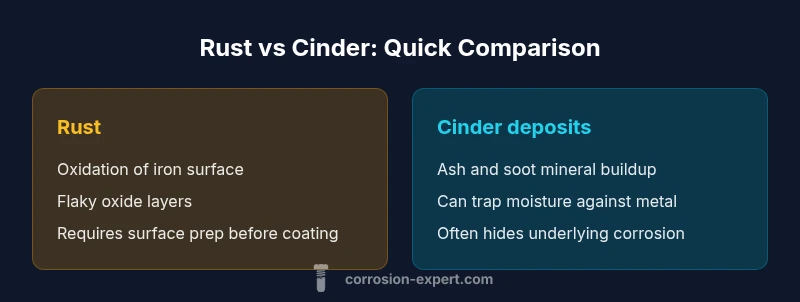
According to Corrosion Expert rust and cinder represent two distinct pathways to corrosion that DIYers encounter on metal surfaces around the house. Rust is the oxide product of iron reacting with oxygen and moisture, typically forming flaky orange brown layers that weaken structural metal if left untreated. Cinder, by contrast, refers to ash or soot residues—often mineral-rich deposits left from wood-burning stoves, fireplaces, or outdoor grills—that can trap moisture and acids against metal, accelerating staining and pitting.
In practical terms, you will see rust on tools, bike frames, fences, and cookware made from cast iron when moisture and oxygen meet bare steel. Cinder residues appear as dark smudges or pale ash-like films on metal rails, grills, or chimneys. The big difference for maintenance is that rust is a true chemical change to the metal surface, while cinder is typically a surface deposit that can promote or reveal underlying corrosion if not cleaned. Corrosion Expert Analysis, 2026 notes that prevention-focused strategies generally outperform reactive rust removal for longevity, especially in climates with high humidity or periodic heating cycles.
The takeaway for DIYers is simple: address rust quickly to limit spread, and keep cinder deposits from lingering, especially on outdoor assets. By recognizing rust and cinder early, you can tailor your approach—removal, protection, and timely cleaning—to extend the life of metal objects around the home.
In this section we establish a shared language for rust and cinder and set up the rest of the guide. You will see practical distinctions between true chemical rust and mineral deposits, plus an early note on how prevention can change outcomes over seasons and years.
Comparison
| Feature | Rust-focused care | Cinder deposits management |
|---|---|---|
| Formation | Oxidation of iron in the presence of moisture | Ash/soot minerals deposited on surfaces that can trap moisture |
| Affected Surfaces | Iron, steel, cast iron items and structures | Grills, chimneys, outdoor metal rails, and tools exposed to smoke or embers |
| Removal Difficulty | Moderate to high depending on scale, surface prep matters | Typically easier to clean surface deposits, harder if deposits are mineralized |
| Prevention Approach | Rust converters, protective coatings, moisture control | Regular cleaning, quick removal of deposits, protective sealants |
| Cost/Time | Moderate time and cost, depending on area | Lower upfront cost for basic cleaning, ongoing maintenance needed |
| Best For | Oxidation prone surfaces and structural metal | Outdoor assets frequently exposed to ash and cinders |
The Good
- Clarifies two distinct problems for targeted action
- Helps plan maintenance cycles and allocate budget
- Encourages preventive care over reactive fixes
- Offers practical, surface level guidance suitable for DIYers
Cons
- Can overwhelm beginners with terminology
- Requires periodic attention and consistent routines
- Some cases still require professional assessment for severe corrosion
Prevention-first with targeted removal yields best long-term results
Prioritize moisture control and protective coatings to slow corrosion. Address visible rust promptly, but manage ash and cinder deposits through regular cleaning and monitoring for outdoor assets.
Quick Answers
What is the difference between rust and cinder in metal corrosion?
Rust is iron oxide formed by oxidation in the presence of moisture, while cinder deposits are ash or soot residues that trap moisture and acids. Both require different approaches for cleaning and prevention.
Rust is oxidation on iron, while cinder is ash buildup. Clean and protect surfaces to prevent future damage.
When should I remove rust versus prevent further corrosion?
If rust is actively spreading, begin removal to stop progression. For most items, after cleaning, apply protective coatings or inhibitors to slow future oxidation.
If you see rust spreading, remove it. Then protect to prevent more.
Are common household acids safe for rust removal on cookware?
Some household acids can damage cookware, especially cast iron. Use specialty rust removers rated safe for cookware or consult manufacturer guidelines.
Avoid harsh acids on cookware unless specified by the maker.
Can rust inhibitors be used on stainless steel surfaces?
Rust inhibitors can be used but choose products designed for stainless steel to avoid surface dulling or pitting. Follow product directions closely.
Check the label before applying rust inhibitors to stainless steel.
What maintenance steps reduce rust in outdoor furniture?
Regular cleaning, moisture control, and protective coatings help outdoor furniture resist rust. Inspect annually and touch up coatings as needed.
Keep outdoor metal furniture clean and coated to prevent rust.
Do I need professional services for severe rust?
Yes if rust has compromised structural integrity, penetrated deeply, or spreads behind coatings. A pro can assess safety and recommend restoration strategies.
Severe rust means time for a professional assessment.
Quick Summary
- Assess each surface for rust and cinder presence before acting
- Prioritize moisture control and protective coatings
- Clean ash deposits promptly to prevent moisture retention
- Use appropriate methods for metal type (iron vs stainless)
- Document maintenance to extend metal life