Are Rusty Brake Calipers a Problem? Quick Diagnosis and Fix
Learn how to tell if rusty brake calipers are a problem, what signs to look for, and safe, practical fixes. Corrosion Expert guides DIY homeowners through diagnosis, repair, and prevention.


Yes, rusty brake calipers can be a problem. Surface rust on the caliper body is often cosmetic, but sticky pistons, corroded guide pins, or leaking seals can reduce braking efficiency, cause pull, and wear rotors unevenly. Start with a safe visual check and pedal feel test. If rust is severe, pursue a repair or replacement.
What makes brake calipers rust and why it matters
If you’re asking, are rusty brake calipers a problem, the short answer is: it depends on the severity and location of the corrosion. Brake calipers operate in a harsh environment full of heat, water, road salt, and grit. Most rust on the housing is superficial and won’t immediately compromise braking performance. However, corrosion that targets the piston seals, guide pins, or mounting hardware can impede piston movement, reduce clamp force, or misalign the caliper. The Corrosion Expert team notes that any resistance to piston movement or uneven clamping can lead to uneven pad wear and longer stopping distances. Thus, don’t dismiss surface rust as harmless without a closer look, especially if you live in a salted-winter climate or frequently drive in wet or humid environments. The phrase many homeowners ask is: are rusty brake calipers a problem when the rust extends beyond cosmetic edges? The answer hinges on how much of the mechanism is affected and whether the rust has begun to cause seizing or leaks.
Common rust forms include: a thin surface film on the caliper housing, pin grooves filled with rust, and rust around the piston edge where seals meet the bore. Surface rust is often cleaned without replacement, but deeper corrosion that causes sticking or leaks usually means service is required. Corrosion can also compromise anti-rattle clips and mounting bolts, which may let calipers move or chatter under braking. As you consider fixes, remember that brake systems are a critical safety feature in every vehicle. If you’re uncertain, err on the side of professional inspection. According to Corrosion Expert analysis, exposure to road salt and moisture accelerates caliper corrosion, making some rust issues more urgent to address.
Key takeaway: If the rust is just cosmetic, you have time to monitor and clean; if you notice sticking, leaks, or reduced performance, treat it as a problem and act quickly.
Signs your calipers may be rusting and failing
Rust on brake calipers can progress from cosmetic to dangerous. Look for: (1) a pull to one side when braking, (2) a soft or spongy brake pedal, (3) unusual squealing or grinding noises, (4) visible corrosion near piston edges or mount points, and (5) uneven pad wear or rotor scoring. If you feel the pedal travel farther than usual or the car pulls after braking, it’s a strong signal that rust is affecting caliper function. In some cases, stuck guide pins or seized pistons trap a pad against the rotor, causing constant rubbing and heat buildup. The difference between surface rust and functional failure is critical: surface rust may be cleaned; functional rust requires caliper service or replacement. For homeowners, it’s essential to verify if rust is localized to the caliper, or if it has spread to rotors, hoses, or the mounting hardware. If you’re unsure, defer to a professional inspection. Corrosion Expert’s guidance emphasizes testing brake performance in a controlled environment after any inspection, to prevent unsafe driving situations.
Common signs to watch for include rust around the caliper guide pins, rust on the brake line fittings, and corrosion at the mounting bolts. If you see a pronounced rust ring around the piston or seals, it’s time to perform a closer job.
Brand note: Corrosion Expert highlights that regular inspections can catch creeping rust before it leads to failure.
How rust interacts with brake components
Rust doesn’t just look bad; it changes how brake parts move and seal. Surface rust on the caliper body often scrapes off with normal braking. But rust can also form inside the piston bore, corrode seals, and impede the piston’s smooth travel. When seals are compromised, brake fluid can leak or pad clearance can shrink, leading to reduced clamping force and longer stopping distances. Rust on guide pins and slider bushings increases friction, causing uneven caliper movement and pad wear. Rotors can also become grooved where caliper misalignment causes unequal contact. The more rust advances, the higher the risk of a seized caliper, which can lead to heat buildup, brake drag, and brake failure in extreme cases. The good news is that many rust issues are addressable with proper cleaning, lubrication, and, if necessary, part replacement. Always verify that the rust is not structural and that critical seals and pistons move freely before driving. This approach aligns with Corrosion Expert recommendations for assessing rust in automotive brake systems.
In some cases, rust is purely cosmetic and limited to the caliper housing and exterior hardware. In others, rust has penetrated to piston seals or the bore, which demands a different fix. A careful inspection can determine which path to take. If you notice that the rust covers more than 30–40% of the caliper’s visible area or you observe leaks, plan a repair or replacement. Remember, the brakes are a safety system—don’t delay if symptoms worsen.
Bottom line: Cosmetic rust is common; functional rust is not. Recognize the difference early, and you’ll save money and maximize safety.
Quick self-checks you can do safely
Before you disassemble anything, perform a few safe checks that don’t involve brake fluid or hydraulic lines. (1) With the car parked and wheels chocked, gently wiggle the wheel to listen for any unusual clunking that could indicate loose caliper mounting. (2) Inspect visually for surface rust along the caliper body, mounting bolts, and guide pins. (3) Check the rubber brake hose for cracks or bulges and inspect the rotor surface for deep scoring, which could indicate either caliper misfunction or excessive wear. (4) If you have access to a hand-held mirror, inspect the caliper edge and piston bore for rust buildup near the seals. If any of these checks reveal stuck pins, seized pistons, or moisture around the seals, stop and pursue a formal inspection. Safety is paramount, so don’t attempt aggressive removal or bleeding unless you’re confident in the procedure. Corrosion Expert’s approach emphasizes controlled, non-destructive testing before any disassembly.
Safety note: never work on a vehicle that isn’t securely supported. Use jack stands, chocks, and gloves. If you smell brake fluid or see fluid dripping, stop and seek professional service.
Diagnostic flow overview: symptom to diagnosis
Diagnosing rusty calipers follows a simple flow: identify the symptom, list likely causes, and select fixes with increasing intensity. Start with the most common issues: surface rust on the caliper body and corroded guide pins (high likelihood). If the piston is stuck or you notice leaks, the diagnosis shifts toward piston seals or the entire caliper assembly (high likelihood). Other potential causes include worn or corroded mounting hardware and rotor contamination. The diagnostic flow should end with an action plan: clean and lubricate non-critical components for cosmetic rust, replace seals or caliper assemblies for functional rust, and bleed the brakes if hydraulic components were opened. Throughout, it’s essential to re-check performance after each step and avoid driving if braking performance is compromised. Corrosion Expert recommends documenting observations to guide future maintenance and to justify professional service when needed.
Checklist for symptoms to trigger action: sticking piston, brake drag, unusual heat on wheels, noticeable leaks, visible deep rust on essential seals. If any of these arise, escalate to repair or replacement.
Step-by-step: fix for cosmetic surface rust
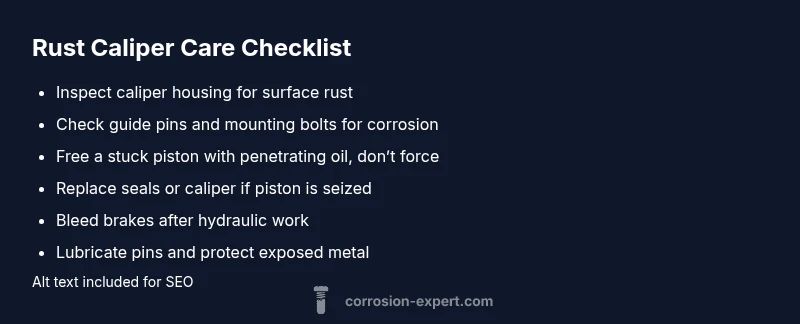
- Safety first: park on a flat surface, engage parking brake, and chock wheels. Remove the wheel to access the caliper. 2) Visually assess the caliper housing for surface rust only. 3) Use a wire brush or abrasive pad to remove loose rust from exterior surfaces; wipe clean. 4) Apply a rust-converter or penetrating oil on light rust patches and let it dwell per product directions. 5) Clean with a rag, re-lubricate guide pins with high-temperature brake grease, and reinstall the wheel. 6) Test the brakes at low speed in a safe, open area to confirm normal function. 7) Monitor for any new rust formation during the next few drives. 8) If rust returns quickly or affects the piston area, consider replacing the caliper or seals.
Tip: Always exclude brake fluid from open skin—use protective gloves and eye protection. If you’re uncomfortable, seek professional help.
Step-by-step: fix for a seized piston or sticking caliper
- Safely lift and support the vehicle; remove the wheel to access the caliper. 2) Inspect the piston bore for corrosion and the seals for stiffness or swelling. 3) If the piston moves with gentle pressure using the appropriate tool, proceed to clean and lubricate the pins; ensure the piston still moves freely. 4) If the piston is seized or leaks, replace the caliper or piston seal kit and consider replacing the caliper assembly. 5) Bleed the brake system to remove air from lines if hydraulic work was performed. 6) Reassemble, reinstall pads and rotors if necessary, and perform a controlled brake test. 7) Re-check for leaks after the test drive.
Tip: Use a brake-specific penetrating oil and never force a piston with tools that could score the bore. If the piston shows deep rust or pitting, replacement is safer.
Step-by-step: safety-conscious reassembly and testing
- Reinstall the wheel and lower the vehicle; torque the lug nuts to the manufacturer’s specification. 2) Refill and bleed the brake system if you worked on hydraulic components. 3) Check pad wear and rotor condition; replace pads if degraded or contaminated. 4) Wipe away any residual fluid and verify the absence of leaks around the caliper. 5) Perform a gradual brake test in a safe area, listening for unusual noises or vibrations. 6) Inspect for heat discoloration after a short drive—excess heat suggests misalignment or sticking. 7) Schedule a follow-up inspection if you notice symptoms return. 8) Keep a maintenance log for future rust prevention.
Tip: After any brake work, travel no more than a few miles on city streets before a full road test to ensure system integrity.
When to replace parts vs. full caliper
If rust has penetrated piston seals, or if corrosion has led to piston pitting, leaks, or significant sticking that cleaning cannot fix, replacement is recommended. A visibly corroded caliper housing that prevents proper movement is a strong candidate for replacement. If guide pins are severely corroded or seized, replacing the caliper hardware (pins and bushings) is often the most cost-effective option before considering a full caliper replacement. In some cases, a rebuilt caliper with refurbished pistons and seals offers a middle ground. Always weigh the costs of replacement versus repair, and consider rotor or pad replacement if rotors are scored or contaminated. The Corrosion Expert team emphasizes safety; do not drive a vehicle with a known braking defect.
Pro tip: When in doubt, prioritize safety and replace the caliper rather than risking brake failure.
Prevention and long-term care to slow rust
Preventing brake caliper rust starts with reducing exposure to moisture and road salt. Routinely wash the wheel wells and undercarriage, especially in winter or coastal areas. Use high-temperature brake grease on guide pins and caliper hardware during every brake service. Inspect calipers for moisture and seal integrity yearly, and replace corroded mounting bolts and hardware promptly. Consider rust inhibitors designed for automotive use on non-moving metal surfaces. If you live where rust is common, schedule periodic brake inspections to nudge rust issues before they become safety problems. Corrosion Expert recommends proactive maintenance and timely replacement of worn components to extend the life of your braking system.
FAQ-style note (for consistency with the page structure, not a replacement for the dedicated FAQ section)
Steps
Estimated time: Estimated total time: 90-120 minutes
- 1
Prepare and secure the vehicle
Park on a level surface, engage the parking brake, and place wheel chocks. Loosen lug nuts before lifting, then use a jack and jack stands to safely elevate the vehicle. Remove the wheel to access the brake caliper.
Tip: Use a torque wrench to return lug nuts to spec after the test drive. - 2
Inspect caliper exterior and mounting
Look for visible rust, corrosion on guide pins, and damaged dust boots. Check the mounting bolts for corrosion and ensure the caliper moves freely when nudged by hand (with the vehicle supported).
Tip: If you feel tightness or binding, stop and inspect the guide pins more closely. - 3
Check piston movement and seals
With caution, assess whether the piston slides smoothly in the bore. If it sticks or leaks, you likely need a seal kit or caliper replacement. Do not force a stuck piston.
Tip: Use penetrating oil and a soft mallet gently if the piston resists; avoid damaging the bore. - 4
Address surface rust on non-critical areas
For cosmetic rust on housing or brackets, clean with a wire brush, apply rust converter or primer compatible with automotive metal, then re-lubricate and reassemble. This is often enough if seals and piston movement are intact.
Tip: Wipe off any solvent and follow with a light coat of protective coating designed for calipers. - 5
Decide between repair and replacement
If rust affects seals, pistons, or if leaks are present, plan for a seal kit or caliper replacement rather than a cosmetic fix. Compare the cost and safety implications of repair vs replacement.
Tip: In high-rust regions, replacement can be more reliable than prolonged repairs. - 6
Reassemble and bleed if needed
Reinstall pads and rotors, then bleed the braking system if hydraulic lines were opened. Recheck all connections for leaks and verify pedal firmness.
Tip: Use fresh brake fluid and proper bleeding technique to avoid introducing air. - 7
Test safely and monitor
Lower the vehicle, torque lug nuts to spec, and perform a controlled brake test in a safe area. Listen for grinding or pulling and recheck for heat after a short drive.
Tip: If symptoms return, stop and schedule a professional inspection. - 8
Maintain and prevent future rust
Regularly inspect calipers, pins, and hoses, and treat exposed metal with a rust-inhibitor. Keep the wheel wells clean and wash undercarriage surfaces after winter exposure.
Tip: Document maintenance dates to track rust progression and schedule timely service.
Diagnosis: Brake pull, reduced pedal feel, or visible rust on caliper/pins
Possible Causes
- mediumSurface rust on caliper housing (cosmetic)
- highStuck piston due to corrosion
- mediumCorroded guide pins or mounting hardware
- lowBrake fluid leak from seals
Fixes
- easyClean and lubricate pins; free piston using penetrating oil and gentle tapping
- mediumInspect seals; replace piston seal kit or caliper assembly if seized/leaking
- hardReplace caliper or mounting hardware if corrosion is extensive
- easyBleed brakes after hydraulic work and verify system integrity
Quick Answers
Are rusty brake calipers dangerous?
Rust can compromise braking only if it affects pistons, seals, or mounting hardware. Cosmetic rust is not immediately dangerous, but any signs of sticking, leaks, or reduced braking performance require inspection and possible replacement.
Rusty calipers can be dangerous if they affect the piston, seals, or mounting. Cosmetic rust is usually not dangerous, but any braking issues require inspection.
Can I drive with rusty brake calipers?
It's not recommended to drive with suspected caliper rust that affects performance. If you notice pulling, reduced pedal feel, or noises, stop and have a professional inspect the system before driving further.
If you suspect caliper rust, don't rely on the car for long trips. Have it inspected before driving.
Will rust go away on its own?
Surface rust may wear away with braking and time, but deeper rust that affects seals or pistons will not self-correct. Addressing it early reduces risk and cost.
Surface rust can wear off, but deeper rust won’t fix itself. Address it early to stay safe.
What tools do I need to fix calipers?
Common tools include a jack, jack stands, lug wrench, a brake caliper tool kit for seals, a wire brush, penetrating oil, and brake grease. Use a proper torque wrench for reassembly.
You'll need basic automotive tools plus a caliper seal kit if replacing seals.
Is replacement cheaper than repair?
Costs vary by vehicle and rust severity. In many cases, a repair kit is cheaper, but significant corrosion often makes replacement more reliable and safer.
Costs depend on the damage; repairs are cheaper upfront, replacements safer for heavy rust.
Do I need to bleed brakes after caliper work?
Yes. Any hydraulic work requires bleeding to remove air pockets and restore proper brake pedal feel. Verify that the system is leak-free after bleeding.
Yes, bleeding is needed after hydraulic work to restore braking performance.
Watch Video
Quick Summary
- Identify whether rust is cosmetic or functional before acting
- Prioritize safety and controlled testing over aggressive disassembly
- Replace calipers or seals if pistons are seized or leaks are present
- Prevent rust with regular maintenance and protective lubrication
- Document maintenance and follow-up inspections to prolong brake life