How to Remove Rust from Stainless Steel Sink: A DIY Guide
Learn proven, safe methods to remove rust from stainless steel sinks using natural remedies and gentle cleaners. Corrosion Expert shares a step-by-step approach, prevention tips, and maintenance.


Quick Answer: You can remove rust from a stainless steel sink using safe household cleaners or gentle rust removers, followed by thorough rinsing and drying. The Corrosion Expert team notes that most rust on stainless steel is surface-level and responds to non-abrasive methods. Start by identifying the rust type, then choose a method and test on a hidden area.
Understanding rust on stainless steel sinks
Stainless steel is highly resistant to corrosion, but it isn’t invulnerable. In kitchens, rust on a sink often appears as reddish-brown spots or fine halos around the basin edges. This is typically surface rust caused by mineral-rich water, mineral buildup, or residues that interact with cleaners. For many homeowners, the query becomes how to remove rust from stainless steel sink effectively without harming the finish. The Corrosion Expert team notes that most rust issues are surface-level and respond to gentle cleaning rather than aggressive acids. The critical distinction is between surface rust and deeper pitting, because pitting may require professional refinishing. With the right approach, most rust can be removed while preserving the protective oxide layer on the steel. This guide lays out practical steps, tested techniques, and prevention tips that help you keep your sink looking like new for years to come.
Safety first: assess and protect the surface
Before you tackle rust, prioritize safety and surface preservation. Wear gloves and eye protection, ensure good ventilation if you are using cleaners, and never mix household chemicals. Test any cleaner on a small, inconspicuous area to confirm it won’t etch or dull the finish. Use a clean microfiber cloth to blot the area gently and avoid rubbing too hard on delicate edges and seams. By starting with a cautious approach, you minimize the risk of creating new scratches that can trap moisture and promote more rust. According to Corrosion Expert insights, drying the sink after each use dramatically reduces recurring rust spots from mineral buildup and humidity.
Natural remedies vs. commercial rust removers
For many rust challenges, natural remedies are effective and inexpensive. White vinegar, lemon juice, and baking soda are common first-line options that are gentle on stainless steel. Create a paste with baking soda and water for stubborn spots, apply it to the rust, and let it sit for a few minutes before scrubbing with a non-abrasive pad. Vinegar can help dissolve mineral deposits when sprayed and left for 5–10 minutes. If natural remedies fail, consider a commercial rust remover labeled safe for stainless steel, and follow all safety instructions closely. The Corrosion Expert guidance emphasizes starting with milder options to preserve passivation and avoid micro-scratches that invite new rust.
Tools, pads, and cleaners: choosing the right combo
Your toolkit should include non-abrasive sponges, soft microfiber cloths, a spray bottle, and a mild dish soap. For paste-based remedies, you’ll need baking soda and water. Avoid steel wool or harsh abrasive pads, which can scratch the stainless surface and create niches for rust to return. Keep a dedicated brush or cotton swabs for hard-to-reach areas. After cleaning, rinse thoroughly with warm water and dry with a clean cloth to remove any residual acids or minerals. The right combination of tools and cleaners ensures you remove rust without damaging the sink’s finish.
Step-by-step approach for a rust spot (illustrative methods)
In practice, you’ll combine natural remedies with careful scrubbing to address rust spots efficiently. Start by choosing a method based on rust type and spot size. For mild surface rust, a baking soda paste with gentle rubbing often suffices. For more stubborn spots, apply white vinegar to the area for several minutes before scrubbing. If needed, finish with a stainless steel polish to restore shine. Always rinse and dry completely after each stage to prevent reoxidation. Corrosion Expert’s recommended practice is to test on a hidden area first and proceed gradually, monitoring the surface for any signs of wear or discoloration.
Note: If rust reappears or the finish appears compromised, you may need to consult a professional for refinishing options, as deeper pitting cannot be resolved by household remedies alone.
Maintenance and prevention to keep rust away
Prevention is the best defense against rust on stainless steel sinks. After each use, dry the surface completely with a microfiber cloth, especially around the drain and behind fixtures where moisture tends to linger. Minimize mineral buildup by using filtered or softened water if your area has hard water. Periodically clean with a mild cleaner and wipe dry. Seal potential problem areas—like seams or joints—with a stainless steel conditioner designed for household use. Regular maintenance reduces the chance of rust returning and preserves the integrity of the protective oxide layer on stainless steel.
Authority sources and further reading
To support DIY decisions, consult authoritative sources on corrosion and stainless steel care. For foundational chemistry, see NIST’s corrosion resources. For safety and best practices, OSHA guidance on safe cleaning practices is relevant. For lay explanations of rust formation, Britannica offers accessible science background. These sources provide context for why certain rust removal steps work and how to avoid damaging stainless steel over time.
Tools & Materials
- Latex or nitrile gloves(Protect hands from cleaners and rust particles.)
- Soft microfiber cloths(For drying, polishing, and gentle cleaning.)
- Non-abrasive sponge or nylon pad(Avoid steel wool; can scratch surface.)
- White vinegar (5% acidity)(Natural cleaner for mineral deposits.)
- Baking soda(Make a paste with water for rust spots.)
- Water(Rinse after each cleaning step.)
- Spray bottle(Apply vinegar or cleaner evenly.)
- Dish soap(Mild cleaner to prep the surface.)
- Lemon juice (optional)(Alternative natural cleaner with acidity.)
- Commercial stainless steel cleaner (optional)(Follow label directions for safety.)
- Cotton swabs or old toothbrush(For hard-to-reach areas around drains and seams.)
Steps
Estimated time: 40-60 minutes
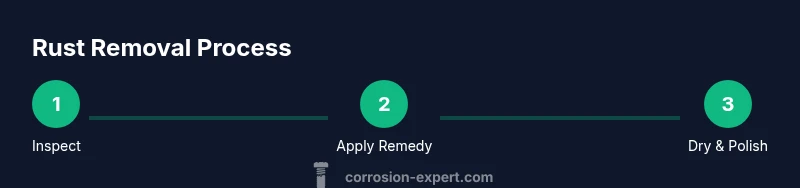
- 1
Identify and assess rust spot
Inspect the area to determine if the rust is surface staining or deeper pitting. Note size, location, and whether edges or seams are compromised. This helps choose the most effective method and prevents over-aggressive cleaning that could damage the finish.
Tip: Take a close-up photo to track progress and verify improvement after each step. - 2
Protect surfaces and set up
Put on gloves, remove nearby items, and prepare cleaning agents within reach. Use a spray bottle for even application and keep a dedicated cloth to avoid cross-contamination with other metals.
Tip: Work in a well-ventilated area and avoid mixing cleaners. - 3
Apply natural rust remover (paste)
Mix baking soda with a small amount of water to form a paste. Apply directly onto the rust spot and let sit for 3–5 minutes, then gently rub with a non-abrasive pad.
Tip: Avoid aggressive scrubbing that can scratch the finish. - 4
Rinse and repeat with vinegar if needed
Rinse the area with warm water, then spray with white vinegar. Let sit for 5–10 minutes before re-scrubbing with a non-abrasive pad.
Tip: Vinegar helps dissolve mineral deposits that contribute to rust. - 5
Rinse again and dry thoroughly
Rinse off all cleaner residues and dry the area completely with a microfiber cloth to prevent new oxidation.
Tip: Ensure seams and edges are dry; moisture here encourages rust. - 6
Use a mild rust remover if stubborn
If rust persists after natural remedies, apply a rust remover labeled safe for stainless steel, following the product directions.
Tip: Test on a hidden area first and limit use to affected spots. - 7
Polish and protect the surface
Buff the area with a clean cloth using a stainless steel polish or conditioner to restore shine and form a protective layer.
Tip: Polish helps reduce future staining and makes cleaning easier. - 8
Establish a maintenance routine
Incorporate quick dry-downs after each use and periodic gentle cleanings to keep rust from returning.
Tip: Consistency is key to long-term rust prevention.
Quick Answers
What causes rust on stainless steel sinks?
Most rust on stainless steel is surface rust caused by mineral buildup, moisture, or residues reacting with cleaners. Deeper rust or pitting is less common but requires different treatment. Regular drying and mild cleaners prevent recurrence.
Most rust on stainless steel is surface rust caused by moisture and minerals; deeper rust is rarer and may need refinishing.
Can I remove rust permanently from stainless steel?
Permanently preventing rust depends on addressing the underlying moisture and mineral exposure. Surface rust can be removed with gentler methods, but persistent or spreading rust could indicate pitting that requires professional refinishing.
Surface rust can usually be removed, but persistent rust may mean the metal has pits that need professional refinishing.
Are commercial rust removers safe for stainless steel sinks?
Many commercial rust removers are formulated for stainless steel, but always check the label and test first. Follow dilution and application times precisely to avoid damaging the finish.
Check the product label and test in a small area before applying widely.
How can I prevent rust from returning?
Dry the sink after use, clean regularly with mild cleaners, and consider a stainless steel conditioner to protect the surface. Keep mineral buildup in check with filtered water if possible.
Keep it dry and clean; use a conditioner to protect the surface.
Is rust harmful to health or safety?
Rust on a kitchen sink is generally cosmetic and not a direct health hazard. However, avoid ingesting rust particles and ensure cleaners are used safely around food prep areas.
Rust isn’t usually dangerous, but avoid ingesting particles and follow safe cleaning practices.
Watch Video
Quick Summary
- Test a hidden area before full treatment
- Choose non-abrasive methods first to preserve passivation
- Dry thoroughly after cleaning to prevent recurrence
- Maintain a regular cleaning routine to deter rust