How to Clean Stainless Steel Rust: A DIY Guide
Learn safe, proven methods to remove rust from stainless steel and prevent future corrosion. This comprehensive guide from Corrosion Expert covers household options, professional cleaners, and long-term care for appliances, sinks, and fixtures.


Goal: Clean stainless steel rust safely and restore a showroom shine on appliances, sinks, and fixtures. This guide covers proven methods with non-abrasive cleaners, common household options, and a basic prevention routine to minimize future rust. With the right tools and steps, you can remove spots without scratching the surface and keep metal looking new.
What causes rust on stainless steel and how to spot it
Stainless steel isn’t completely rust-proof. Real rust on stainless steel appears as reddish-brown spots, threads of corrosion, or dull patches, often starting at scratches, bends, or joints. The protective chromium oxide layer can be damaged by salt, chlorine, acidic cleaners, or heavy abrasion, allowing iron to corrode. You might confuse rust with mineral staining from hard water; true rust typically penetrates the surface and becomes more noticeable over time. In many household scenarios—kitchens, bathrooms, outdoor fixtures—the corrosion begins where moisture can linger and airflow is limited. To identify early rust, look for small spots that expand slowly, a rough texture, or a change in sheen rather than just color. The Corrosion Expert team notes that even a small area of rust can spread if not addressed, so early detection matters. Next, assess the finish: brushed, polished, or satin surfaces react differently to cleaning, and a poor choice of cleaner can worsen pitting. In short, plan a careful approach that respects the surface grade and local conditions.
The science behind passivation and why protection matters
Passivation is a chemical process that enhances chromium oxide on stainless steel, creating a protective barrier against rust. When this layer is intact, water and oxygen struggle to reach iron, slowing corrosion. Everyday use—salt air, chlorine cleaners, acidic foods—can erode the passivation layer, especially where surfaces are scratched or where detergents remain on metal for long. In practice, keeping the surface clean and dry helps sustain passivation. You can support passivation with mild cleaners that do not remove protective chromium, and, for stubborn spots, citric acid or bicarbonate-based pastes can gently lift surface rust without aggressively abrading. Avoid chlorine bleach or strong acids on raw steel, as they can remove protective films and accelerate pitting. For outdoor stainless, ensure proper drainage and removable parts are dried after rain. The aim is to minimize exposure time to corrosive agents while restoring the protective film. In the Corrosion Expert analysis, routine maintenance—wiping dry after use and periodic light polishing—helps preserve the passivation layer and extend the life of stainless steel components.
Non-abrasive cleaning strategies: household options
There are several household options that can remove light rust without scratching stainless steel surfaces. A simple baking soda paste (baking soda mixed with water to a thick consistency) applied with a soft microfiber cloth can lift rust without abrasion. White vinegar or lemon juice provides mild acidity that helps dissolve iron oxide; apply gently, allow a short dwell time, then rinse and dry thoroughly. For brushed or polished finishes, a dedicated stainless steel cleaner is often safer than generic chemicals, because these products are formulated to preserve the protective film while removing spots. Always test any cleaner on an inconspicuous area first. After cleaning, wipe the surface dry with a clean cloth and buff along the grain to restore luster. Avoid abrasive pads, chlorine-based cleaners, and acidic compounds that can strip the chromium layer and worsen rust over time.
Using commercial cleaners and rust removers safely
Commercial rust removers designed for stainless steel can be effective for tougher spots, but they require careful use. Read the label for dilution instructions, contact time, and whether the product is safe for your finish (polished, brushed, or satin). Always perform a patch test in a hidden area before treating a larger surface. Apply the product as directed, then rinse thoroughly with clean water and dry completely. If the rust persists after treatment, consider repeating the patch test in a lower-impact area or consult a professional for deeper patination or pitting. Corrosion Expert recommends avoiding products that rely on harsh acids for routine cleaning; reserve them for severe cases and always ensure proper ventilation and skin protection.
Step-by-step walkthrough: rust removal on a stainless surface
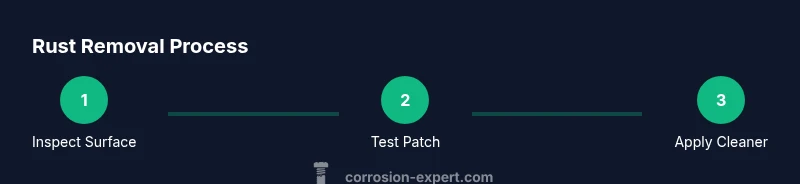
Start with a calm plan: inspect, test, and gather the right tools. Apply a gentle cleaner in a small, inconspicuous patch and wait 1–2 minutes to observe reaction. If there is no adverse effect, proceed with a light, circular buff using a soft cloth. Rinse with warm water, then dry completely. Reassess the area; if rust remains, repeat with a milder paste or cleaner, avoiding aggressive scrubbing. Finish by buffing along the grain to restore uniform sheen and apply a passivation step (as needed) to reinforce the protective layer. Finally, wipe down to remove any residue and store cleaning materials away from heat and moisture. Note any areas that showed deep pitting and consider professional evaluation if rust worsens.
Special cases: rust on appliances, sinks, or outdoor fixtures
Appliances with enamel or painted finishes require extra care; do not scrub aggressively or use metal scrapers. For outdoor fixtures exposed to salt spray or humidity, regular drying and periodic light polishing help; consider a protective coating or sealant compatible with stainless steel. In bathrooms, ensure adequate ventilation to reduce moisture buildup and wipe surfaces after showers. Large stains on sinks can be addressed with a citrus-based cleaner or a paste of baking soda and water; remove residue and dry thoroughly. Outdoor hardware may experience more severe pitting; if rust penetrates beneath the surface, replacement parts may be the most durable solution. The key is to tailor the approach to the specific finish and environment, while avoiding methods that strip protective films.
Prevention strategies to minimize future rust
Prevention is simpler than cure. After cleaning, dry all surfaces completely, including any crevices and joints. Wipe down with a dry microfiber cloth and air-dry if possible. Consider applying a light, silicone-based or wax-based protective film designed for stainless steel to slow moisture exposure. Regular maintenance—monthly or quarterly, depending on use—helps catch spots early. Rinse away salt exposure promptly, especially in coastal homes, and avoid leaving acidic residues (like lemon juice from cut fruit) on surfaces. When storing tools or equipment, ensure air circulation to prevent damp conditions that foster rust. By combining careful cleaning with proactive drying and protective care, you extend the life of stainless steel and keep its finish looking consistent.
Troubleshooting: when rust won't come off or worsens
If rust resists standard cleaners or deep pitting develops, the surface may be beyond simple remediation. In cases of significant corrosion, rust pits can trap moisture and propagate further damage, requiring professional assessment or surface refinishing. Do not grind or sand aggressively; this can damage the chromium layer and create new hotspots for corrosion. For stubborn spots, seek a professional corrosion specialist who can assess passivation, re-polish the surface, or recommend a suitable coating. If you notice rust spreading under fixtures or in hard-to-reach joints, document the affected areas and plan a maintenance schedule to prevent recurrence.
Quick-start checklist and maintenance routine
- Inspect all stainless steel surfaces for rust spots and test a small area first.
- Use the gentlest cleaner first (baking soda paste or mild vinegar solution).
- Buff with a soft cloth along the grain; avoid abrasive pads.
- Rinse thoroughly and dry completely; passivate if needed.
- Schedule monthly quick cleanings to catch early signs of corrosion.
- Protect surfaces with a compatible finish or film if environment is harsh (coastal or humid).
Tools & Materials
- Microfiber cloths(Soft, lint-free; use for buffing)
- Non-abrasive cleaner(pH-neutral or mild cleaner)
- Baking soda(Mix with water to form paste)
- Water and a spray bottle(For rinsing and gentle application)
- White vinegar or lemon juice(Mild acid for spot treatment)
- Soft nylon scrub brush or sponge(Non-scratch cleaning tool)
- Stainless steel cleaner (specialized)(Safe for finishes; optional)
- Passivation spray or cream (optional)(Rebuild protective film)
- Gloves(Protect hands from cleaners)
- Eye protection (goggles)(Wear if using chemical products)
Steps
Estimated time: 60-75 minutes
- 1
Inspect and patch-test
Examine the rust spot and test a hidden area with your chosen method for 1–2 minutes to ensure no surface damage occurs.
Tip: Always start with the gentlest approach. - 2
Prepare cleaning solution
Mix a mild cleaner or a baking soda paste with water to a thick consistency for paste application.
Tip: Avoid concentrated acids on visible finishes. - 3
Apply and scrub gently
Apply the cleaner to a cloth, then rub the rust spot in a circular motion using light pressure; avoid scrubbing hard.
Tip: Let the cleaner work instead of forcing it off. - 4
Rinse and dry thoroughly
Rinse with clean water, then dry completely with a microfiber cloth to prevent residual moisture.
Tip: Moisture is a chief driver of new rust. - 5
Re-passivate and buff
Apply a passivation product if available and buff with the grain to restore protective film and shine.
Tip: Even a light passivation helps long-term protection. - 6
Document and schedule maintenance
Note areas cleaned and set a short maintenance interval to monitor for new spots.
Tip: Regular checks catch rust early.
Quick Answers
Can stainless steel rust completely?
Stainless steel can rust if its protective chromium oxide layer is breached by damage, harsh chemicals, or prolonged exposure to moisture. While rare, spotting rust is a warning sign to address the area quickly.
Stainless steel can rust if its protective layer is damaged, so fix spots early to prevent spread.
What household products safely remove rust?
Mild options like baking soda paste, white vinegar, or lemon juice work for light rust. Always test first and rinse thoroughly to avoid residue that may attract more corrosion.
Try baking soda paste or vinegar on a hidden patch first, then rinse well.
Is it safe to use commercial rust removers on stainless steel?
Yes, but only if the product is labeled safe for stainless steel finishes and you follow the instructions precisely. Perform a patch test before broader use.
Yes, only if it's labeled for stainless steel and you patch-test first.
Will rust come back after cleaning?
If moisture, salts, or chemicals remain in contact with the surface, rust can recur. Dry thoroughly and use protective measures to minimize reoccurrence.
Rust can return if moisture stays; dry and protect the surface.
When should I seek professional help?
If rust is extensive, pits are deep, or corrosion progresses under fixtures, professional assessment or refinishing is recommended to avoid further damage.
Consider a pro if rust is widespread or pits are deep.
How long does rust removal typically take?
For light spots, a short cleaning may suffice. Deeper rust or pitting can take longer and may require multiple sessions or materials.
Light rust may take minutes; deeper issues take longer.
Watch Video
Quick Summary
- Identify rust early and test gentler cleaners first
- Avoid abrasive tools that scratch protective films
- Dry thoroughly and apply protection to slow recurrence
- Use passivation steps after cleaning when appropriate
- Establish a maintenance routine to prevent future rust