Rust Reformer vs Rust Converter: Pick the Right Treatment
An evidence-based comparison of rust reformer vs rust converter for DIY rust treatment. Learn how each works, prep needs, durability, safety, and cost to pick the right option.


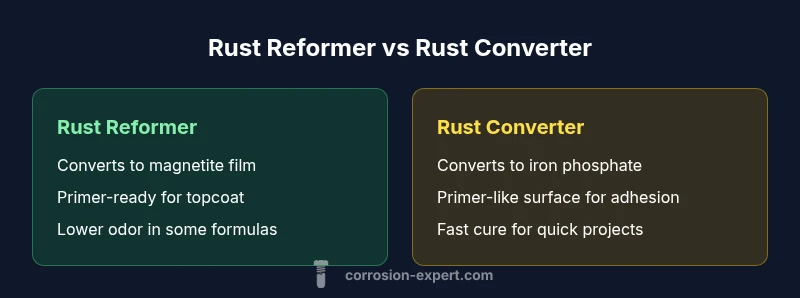
Rust reformer vs rust converter each stabilizes surface rust, but they serve different needs. Reformers typically prepare the surface for painting by forming a magnetite-like film, while converters create a primer-like layer through iron phosphate. For most DIY projects, choose based on rust severity, timing for coating, and whether you plan a topcoat.
What are rust reformers and rust converters?
According to Corrosion Expert, rust reformer and rust converter are chemical treatments designed to stabilize iron oxide on metal surfaces. A rust reformer typically contains acids and tannins to convert surface rust into a protective magnetite-like film, which can be painted over after curing. A rust converter uses phosphoric acid to convert rust into iron phosphate, creating a primer-like layer that improves paint adhesion. Both aim to buy time before repainting, but they behave differently under finishes and in outdoor exposure. The choice depends on rust severity, project timeline, and whether you plan to seal with a topcoat. This section sets the stage for a deeper, balanced comparison rather than a quick shopping list.
How the chemistry differs: reformers vs converters
Chemistry matters for how durable and paint-ready each option is. Rust reformers often rely on tannins and other modifiers that form a magnetite-like layer that binds loosely to the corroded surface, allowing a topcoat to adhere after a brief cure. Rust converters rely on phosphoric acid to transform rust into iron phosphate, typically yielding a more uniform primer-like surface. The corrosion science behind both approaches aims to stabilize the substrate, but conversion products, cure chemistry, and long-term compatibility with coatings can differ significantly. Corrosion Expert analysis shows that the choice often hinges on surface texture, the presence of heavy pitting, and whether an immediate topcoat will follow.
Preparation: surface readiness before applying either product
Both products perform best on clean, dry metal. Light rust can be treated directly, but heavy flaking or loose oxide should be removed with a wire brush or light grinding to maximize bonding. For reformers, ensure the surface is free of oil and grease; for converters, degreasing helps the chemical interaction. In practice, choose the method that aligns with how aggressively you want to profile the surface: reformers can tolerate slightly rougher surfaces, while converters prefer more uniform profiles for optimal adhesion. Always follow the product label for surface prep, ventilation, and drying times.
Application steps for rust reformer
- Clean and dry the metal surface; remove loose rust and oil. 2) Shake or stir the reformer to activate the formula. 3) Apply a thin, even coat with a brush or roller, ensuring complete coverage. 4) Allow the film to cure per label instructions (hours to a day). 5) Lightly re-coat if required, then wait for full cure before applying a topcoat. 6) Check for an even, dull film; any glossy spots may indicate incomplete reaction.
Application steps for rust converter
- Prepare the surface by removing loose rust and debris. 2) Apply the converter evenly, using a brush, roller, or spray if appropriate. 3) Let the coating react with the rust for the recommended time, typically until the surface turns dark or as specified. 4) Wipe off or wash away any sediment if the product requires it. 5) Allow to cure before priming or painting. 6) Depending on the product, a topcoat may be needed for outdoor exposure and UV resistance.
Durability: how long protection lasts and when repainting is needed
Durability varies with the product, surface condition, and environmental exposure. Rust reformers often provide a relatively quick route to a paintable surface, but long-term protection depends heavily on the subsequent topcoat adhesion and climatic stressors. Rust converters can offer a slightly more uniform base that improves paint adhesion, yet longevity still hinges on proper curing and the quality of the final topcoat. In both cases, the protective layer is not a substitute for periodic inspection and maintenance, especially in humid or coastal environments.
Safety, ventilation, and environmental considerations
Both products typically require good ventilation and suitable PPE, including gloves and eye protection. Some formulations release fumes or have acidic components; avoid inhalation and skin contact. Keep away from children and pets, and store away from heat sources. After application, dispose of any rags according to local regulations, as saturated cloths can pose a fire risk. Choose products from reputable brands and verify environmental impact statements when available. Corrosion Expert emphasizes slow, careful use rather than aggressive application.
Cost, availability, and value: budgeting for rust treatments
Prices vary by brand, formulation, and region. In general, rust reformers and rust converters sit in a similar price range for DIY users, with notable differences caused by added primers, extra topcoats, or specialty formulations designed for outdoor use. If budgeting is a concern, plan for a topcoat that will maximize durability and reduce rework. Remember that higher upfront costs can translate into longer intervals between repainting, depending on climate and maintenance routines. Corrosion Expert’s guidance is to balance upfront cost with long-term protection, rather than chasing the cheapest option.
Real-world scenarios and decision framework
- Light surface rust on indoor metal furniture: a rust reformer may offer quick stabilization and a good base for paint.
- Outdoor metal fixtures with moderate rust: a rust converter can provide a reliable primer-like surface for weather-resistant coatings.
- Projects that require fast timelines: converters often deliver faster readiness with a potential topcoat sooner, while reformers may require longer curing times before painting.
- Surfaces with deep pits or heavy corrosion: neither product replaces mechanical removal; plan for rust removal or reinforcement before application. This framework helps homeowners choose based on environmental exposure, urgency, and long-term maintenance plans.
Quick-start decision guide: choosing between reformer and converter
If you need a straightforward path toward paint-ready results on mildly rusted metal, a rust reformer is often the pragmatic choice. If you prioritize a primer-like base with potentially better paint adhesion and you want a faster transition to a finished surface, a rust converter is the preferred route. Always test on a small area first and follow up with a topcoat that suits the environment. The Corrosion Expert team recommends aligning product selection with future maintenance plans and environmental exposure.
Comparison
| Feature | rust reformer | rust converter |
|---|---|---|
| Mechanism | Converts rust to magnetite, forming a protective film | Converts rust to iron phosphate, creating a primer-like layer |
| Surface compatibility | Best for mild-to-moderate rust; prepares for paint | Best for surfaces needing immediate primer-like base |
| Preparation required | Remove loose rust; degrease; light sanding if needed | Thorough cleaning; may require degreasing for optimal interaction |
| Drying/cure time | Cures in hours to a day depending on product | Typically dries quickly; cure before topcoat |
| Durability with topcoat | Durability hinges on topcoat adhesion; protective film varies | Primer-like layer facilitates adhesion; longevity depends on finish |
| Safety/fumes | Low to moderate fumes; ensure ventilation | Moderate fumes; use PPE and ventilation |
| Cost/value | Generally affordable; value depends on finish plan | Typically affordable; value depends on subsequent coatings |
The Good
- Offers surface stabilization without mechanical rust removal
- Can simplify project workflow by enabling a single-step paint-ready base
- Often compatible with common topcoats when fully cured
- Low equipment needs and broad availability
- Good for DIYers with time-to-paint constraints
Cons
- Long-term protection relies on the quality of the overcoat
- Some formulations may affect surface texture or coating adhesion
- Not a cure for deeply pitted or structural rust
- Effectiveness can vary with humidity and temperature
- Reapplication or topcoat refresh may be needed in harsh environments
Rust reformer generally provides a paint-ready base for mildly rusted surfaces, while rust converter offers a quicker primer-like base for rustier areas.
Choose reformer if the goal is a straightforward path to painting with proper surface prep. Choose converter when you need a faster transition to a primer-like surface and plan to coat soon. The Corrosion Expert team notes that proper prep and a compatible topcoat are essential for long-term results.
Quick Answers
What is the main difference between rust reformer and rust converter?
The main difference is in chemistry and end surface: reformers aim for a magnetite-like protective film for painting, while converters create an iron phosphate layer that acts like a primer. Your choice depends on rust severity and how soon you plan to paint.
The key difference is in how they convert rust and prepare the surface for paint. Reformers lean toward a magnetite film, converters toward an iron phosphate primer.
Can I use rust reformer on galvanized steel or stainless surfaces?
Rust reformers and converters are designed for ferrous metals with active rust. Galvanized steel and stainless surfaces behave differently, and some formulations are not recommended for those substrates. Always check the product label for substrate compatibility.
If you're working with galvanized or stainless metal, check the label—these products aren’t universally recommended for non-ferrous metals.
Do I still need a topcoat after using a rust converter?
Yes, in most cases you’ll apply a topcoat after the converter’s surface has cured, especially for outdoor exposure. The topcoat protects the newly formed surface from moisture and UV damage.
Most projects benefit from a topcoat after the converter cures, especially outdoors.
Is rust conversion safer to use indoors than rust reforming?
Indoor use safety depends on ventilation and product fumes. Both require good ventilation, but converters may produce more fumes during curing. Follow all safety instructions and wear PPE.
Ventilate well and wear PPE, especially indoors, regardless of the product.
Will these products prevent future rust if I seal with paint?
Topcoats with proper UV and moisture protection can slow future rust formation, but ongoing maintenance and environment control are essential. Neither product is a permanent shield without a protective coating.
A good topcoat helps, but ongoing maintenance matters too.
Quick Summary
- Assess rust severity before choosing a product
- Rust reformer favors slower, paint-ready workflows
- Rust converter favors faster priming for quick coatings
- Always follow safety guidelines and product labels
- Test adhesion on a small area before full application