Rusty Metal Primer vs Rust Reformer: An Analytical Comparison
A detailed, analytical comparison of rusty metal primer vs rust reformer, covering how each treatment works, prep steps, durability, and ideal use cases for DIY rust projects.


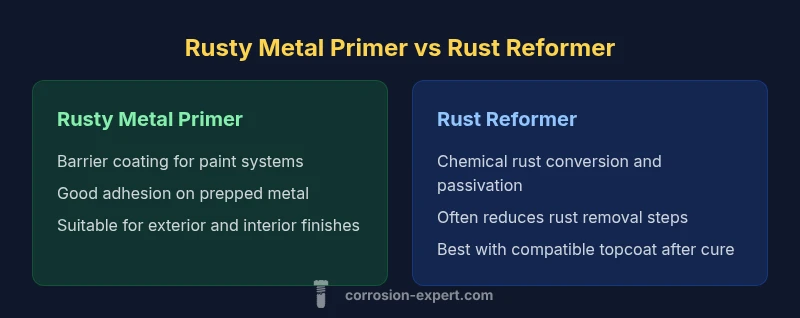
When facing rusty metal surfaces, rusty metal primer vs rust reformer each serves a different purpose. A rust reformer chemically converts mild rust and creates a passivated surface, making it a strong choice for light to moderate rust and longer-term corrosion control. A rusty metal primer, by contrast, provides an immediate barrier so you can apply paint quickly after surface prep. The best option depends on rust severity, project timeline, and desired durability. In many DIY projects, starting with a reformer on light rust and following with a compatible primer yields excellent results, while heavier rust or when speed is the priority, primer alone with a topcoat can be more practical. This comparison helps you decide which approach fits your goals and budget.
Introduction: rusty metal primer vs rust reformer
Choosing between rusty metal primer and rust reformer is a common crossroads in DIY rust projects. Both products target corrosion, but they operate through different mechanisms and suit different scenarios. In this guide, we unpack the science behind each option, outline practical prep steps, and present a decision framework you can apply to your project. The topic is especially relevant for homeowners tackling fence rails, garden furniture, or automotive components where rust can spread if untreated. Throughout, we reference practical tests and field observations from Corrosion Expert to help you interpret results and plan a durable solution. The comparison is anchored in real-world outcomes, not marketing hype, and follows best practices for safe handling and long-term protection.
How rust reformers work: chemical conversion and passivation
Rust reformers, often labeled as rust converters, use phosphoric or similar acids to convert ferric oxide into a stable iron phosphate layer. This chemical transformation reduces rust’s aggressiveness and creates a surface that behaves more like bare metal or a stable coating. The result is a passivated layer that slows further oxidation and can be sealed with a paint system. The advantages are notable when you’re dealing with light surface rust or small patches where full rust removal is impractical. However, reformers must be applied according to the product’s directions to achieve the intended chemistry and durability. For many DIY projects, reformers are a convenient first step before priming and topcoating.
How rusty metal primers work: barrier coating and adhesion
Primers designed for rusty metal focus on establishing a robust barrier between the metal surface and the environment. They improve paint adhesion, minimize moisture ingress, and help even out minor surface imperfections. Primers come in several chemistries, including zinc-rich, etching, and epoxy-based options, each with its own prep and cure profile. A key strength of primers is predictability: once cured, they provide a uniform surface for the finish coat and can tolerate light surface rust if properly prepared. The downsides are that, without adequate rust removal, some rust may continue underneath the coating and compromise long-term protection. The right primer, applied to a prepped surface, is a reliable workhorse for many DIY projects.
Surface prep: the deciding step before primer or reformer
Preparation is where most rust projects succeed or fail. For a rust reformer, you typically remove loose rust and clean the area, then apply the product to form the conversion layer. You should avoid applying reformers over thick, flaking rust without addressing the substrate; the coating may fail or not cure properly. For rusty metal primer, you’ll generally need more thorough rust removal and surface cleaning to maximize adhesion and reduce the risk of underfilm corrosion. In both cases, degreasing the surface and ensuring it’s dry before application are essential. Remember to follow PPE guidelines and product-specific safety notes. The level of prep you perform directly influences long-term durability and paint performance.
When to choose rust reformer: ideal use cases and limits
Rust reformers are ideal when rust is present but not structural, and you want to minimize mechanical rust removal while gaining a paintable surface. They work well on light to moderate rust, repair patches, and projects where you’re aiming for corrosion control with fewer steps. Reformers shine when you need a fast turnaround and plan to topcoat with standard paints. However, they may be less effective on heavy, penetrating rust or where deep crevices harbor corrosion. In such cases, a primer with proper rust removal, or a more aggressive rust treatment, may yield better long-term results.
Variants: what to know about primers and reformers
Rusty metal primers come in several chemistries: zinc-rich primers for sacrificial protection, etching primers to improve adhesion on rusty surfaces, and epoxy or polyurethane-based primers for chemical resistance. Rust reformers vary too, with formulations focused on chemical conversion, passivation, or a combination of conversion followed by barrier properties. The choice depends on substrate (steel, iron, galvanized surfaces), climate exposure (exterior vs. interior), and the finish system you plan to apply. In DIY settings, matching the primer or reformer to the topcoat and following the manufacturer’s prep and cure instructions is critical for durable results.
Application tips: sequencing and techniques for best results
A typical workflow starts with thorough cleaning, then selecting a product based on rust severity and desired finish. For reformer-first approaches, apply according to label directions, allow adequate cure time, then proceed with a primer layer if needed. For primers, ensure the surface is dry and free of loose rust, apply in thin, even coats, and allow proper curing before adding a topcoat. Weather and humidity can influence cure times, so plan applications during favorable conditions and monitor for any surface changes. In all cases, pat attention to ventilation and personal safety when working with chemicals.
Durability and long-term performance: what you can expect over time
Durability hinges on proper prep, product quality, and the continuity of the topcoat. Rust reformers can offer good corrosion resistance for surfaces with light rust, especially when followed by a compatible finish. Primers can deliver strong barrier protection and paint adhesion, helping to resist moisture and sunlight when paired with a durable topcoat. Neither solution is a magic fix; longevity depends on substrate condition, environment, and maintenance. Periodic inspection and re-coating as needed will extend the effectiveness of either approach.
Cost, time, and practical considerations for DIY projects
Cost and time depend on the product line, surface size, and climate. Reformers may reduce labor by limiting rust removal steps, but they require patience to ensure proper conversion and cure. Primers often involve more upfront prep work but can yield quick cosmetic improvement when topcoats are applied promptly. Consider your project timeline, exposure to moisture or salt (which accelerates corrosion), and whether you plan to repaint in the near future. A balanced assessment helps you pick a solution that aligns with your budget and goals.
Common mistakes and troubleshooting: avoid typical pitfalls
Common errors include applying products over damp or oily surfaces, neglecting complete rust removal where needed, and skipping cure times before topcoating. Another pitfall is mixing products not designed for the same paint system, which can compromise adhesion or chemical compatibility. If you see peeling, bubbling, or continued rust under a primer or reformer, reassess surface prep and product compatibility. When in doubt, run a small test area to validate the procedure before tackling a larger section.
Decision framework: a quick-start guide to choosing your path
To decide between rusty metal primer vs rust reformer, assess rust severity, surface condition, and your finish goals. For light rust with a plan to topcoat soon, a reformer plus primer can deliver durable protection with fewer steps. For heavier rust or where speed is key, a high-quality primer with a suitable topcoat offers predictable results. If you expect long-term outdoor exposure, choose products designed for exterior use and verify compatibility with your chosen topcoat. The framework helps you pick the approach that best fits your project and budget.
Comparison
| Feature | Rusty Metal Primer | Rust Reformer |
|---|---|---|
| Mechanism of action | Barrier formation; coats surface to accept paint | Chemical conversion and surface passivation |
| Best use case | Repaint-ready surface after rust removal | Light rust with emphasis on rust control and prep economy |
| Surface prep required | Thorough rust removal and cleaning; scuffing as needed | Light cleaning; remove loose rust; avoid deep scraping if possible |
| Drying / recoat time | 1-4 hours to handle for topcoat | 1-2 hours touch-dry; full cure often 24 hours (environment dependent) |
| Topcoat compatibility | Generally compatible with common paints after cure | Best when paired with compatible finish systems; follow product directions |
| Durability target | Strong barrier with good long-term performance when topcoated | Durable rust control with proper application and ongoing maintenance |
| Cost / value | Moderate cost; versatile for many DIY projects | Moderate to higher cost; saves steps on light rust and quick turnaround |
| Best for | Projects needing paint-ready surfaces quickly | Projects focused on rust control with minimal rust removal |
The Good
- Provides a clear barrier for paint systems when used correctly
- Rust reformers simplify handling of light surface rust
- Offers flexibility for DIY projects with various finish goals
- Can reduce labor time in certain scenarios
Cons
- Performance depends heavily on surface prep and product compatibility
- Rust reformer may be less effective on heavy corrosion
- Primers alone may not stop rust beneath if prep is inadequate
- Results vary by brand and environmental conditions
Both options are viable when chosen for the right rust condition and topcoat system
Use rust reformer for light rust and quick conversions, followed by a compatible primer and topcoat. Choose rusty metal primer when you need a robust barrier and a reliable paint-ready finish, especially after thorough rust removal. Corrosion Expert recommends aligning product choice with rust severity and project timing to maximize durability.
Quick Answers
Is rust reformer always better than a rust primer?
No. Rust reformers excel on light surface rust by converting rust to a stable layer, but primers provide reliable barrier protection and easier long-term maintenance, especially when you plan to repaint. The choice depends on rust depth, project timeline, and climate exposure.
Rust reformers work well for light rust, but primers offer a reliable barrier for repainting. Choose based on rust depth and your project schedule.
Do I need to remove all rust before applying a primer?
At minimum, remove loose rust and clean the surface. For heavy rust, more removal improves adhesion and long-term durability. Always follow the product’s prep instructions to ensure the best result.
You should remove loose rust and clean the area; for heavy rust, more removal helps adhesion and durability.
Can I paint over rust reformer directly?
Yes, typically you can topcoat after the reformer has cured per the product directions. Ensure the surface is dry and compatible with the chosen paint system to avoid adhesion issues.
Yes, you usually can topcoat after it cures, but check the product directions and ensure surface dryness.
How long does rust reformer take to cure before painting?
Cure times vary by product and environmental conditions. Expect a recoat window within a few hours and a full cure by 24 hours under typical indoor conditions; exterior use may require longer.
Cure times depend on the product and conditions; plan for a 24-hour full cure when painting outdoors.
Are rust primers waterproof or weatherproof on their own?
Primers are not typically standalone waterproof barriers. They are a preparatory layer that requires a suitable topcoat for weather resistance. Exterior projects should use primers designed for outdoor use and pair with a durable finish.
Primers aren’t usually waterproof alone; you need a proper topcoat for weather resistance.
What’s the best approach for heavily corroded metal?
For heavy corrosion, prioritize rust removal or mechanical prep before any coating. In some cases, replacing severely corroded components or using a specialized rust removal system may be more cost-effective long-term than coatings alone.
Heavy rust often needs more aggressive prep or replacement; coatings alone may not suffice.
Quick Summary
- Assess rust severity before picking a product
- Prep matters more than the product itself
- Pair reformers with proper topcoats for best results
- Primers excel as durable barriers for painted finishes
- Follow label directions for cure times and safety