Rust Dining Chairs: DIY Restoration and Prevention Guide
Learn how to identify, restore, and protect rust dining chairs with practical, safe methods. This guide covers assessment, techniques, coatings, and ongoing care for durable, rust-free seating.


By the end you'll know how to restore rusty dining chairs and prevent further corrosion. This quick answer outlines identifying rust severity, choosing safe removal methods, applying primer and sealant, and establishing a long-term maintenance routine. Gather basic tools, protect your workspace, and follow safety guidelines for a durable, rust-free finish.
What rust dining chairs are and why they fail
Rust dining chairs are typically metal seating frames—steel, iron, or aluminum alloys—susceptible to oxidation when the protective finish is compromised. Exposure to moisture, salty air, or acidic cleaners accelerates corrosion. In kitchens or dining rooms, rust can appear as orange-brown specks on legs or supports, progress to flaky scales, and ultimately weaken joints. Recognizing early signs helps you decide between DIY restoration or professional refinishing. Regular maintenance is essential to keep them safe and visually appealing for years. When evaluating a set, consider how often the chairs come into contact with liquids (wine, citrus cleaners) and whether cushions shield metal from moisture. The goal is to stop active corrosion and preserve structural integrity while keeping the chairs visually appealing.
How rust forms on metal dining chairs and what it means for longevity
Rust begins with a thin oxide layer that forms when iron or steel is exposed to moisture and oxygen. If the protective coating (paint, powder coat, or clear sealant) is compromised, water penetrates and accelerates corrosion. Over time, rust can extend under paint, creating pinholes, weakening joints, and increasing chatter or wobble in the chair frame. For dining chairs that see regular use, early intervention prevents costly repairs and helps maintain load-bearing safety. Understanding the chemistry helps you choose compatible coatings and cleaners that won’t react badly with existing finishes.
Assessing rust severity and safety concerns
Begin with a tactile inspection: run a gloved hand over rails and joints to feel for rough patches or flaky rust. Use a magnet on non-magnetic alloys to gauge steel content. If rust has scaffolded under the finish but metal remains solid and joints feel tight, restoration is usually feasible. If you notice deep pits, thinning metal, or compromised welds, replacement may be safer. Document areas of concern with notes or photos to guide your procedure and to determine if pro refinishing is required for critical loads like armrests or base frames.
DIY restoration vs professional refinishing: pros, cons, and costs
DIY restoration suits budget-conscious homeowners who enjoy hands-on projects and have basic safety gear. It offers control over materials, timing, and aesthetics, but requires proper ventilation and patience during curing stages. Professional refinishing provides consistent results, advanced coatings, and longer-lasting protection but at a higher cost and longer turnaround. When calculating, consider the chair material, rust depth, finish quality desired, and whether you plan to repaint or reupholster the seating surface. In many cases, a well-executed DIY job with durable primers and topcoats yields excellent results for dining chairs used in home kitchens.
Safety, workspace setup, and preparation
Set up a well-ventilated workspace with a drop cloth to catch rust dust and drips. Wear eye protection, a dust mask or respirator, and work gloves. Move cushions and fabric to a safe area and use painter's tape to shield adjacent wood or upholstery. Gather all tools before starting to minimize trips back to the toolbox. If you’re refinishing indoors, ensure there’s good airflow and consider temporary containment to prevent dust from spreading. Adequate safety measures protect you and preserve surrounding finishes in the room.
Common methods to remove rust and refinishing dining chairs
Start with mechanical rust removal: light sanding with 120- to 180-grit paper, followed by a wire brush for stubborn flakes. For more stubborn areas, apply a rust remover or rust converter as directed by product labels. After removing rust, wipe surfaces clean and allow drying before applying a metal primer designed for the chair’s finish. Finish with a topcoat of enamel, epoxy, or powder-coat compatible with metal seating and the intended environment. If the chair features wood or fabric components, treat those separately to avoid moisture transfer.
Finishes, protection, and maintenance
Choose finishes that resist chipping and offer UV protection if chairs sit near windows. Epoxy or polyurethane enamel provides a durable, easy-to-clean surface, while powder coating offers excellent corrosion resistance for frequent-use environments. After painting, seal edges and welds with a clear protective layer to prevent moisture ingress. Maintain the chairs by wiping down after meals, addressing scratches promptly to prevent moisture from seeping in, and reapplying coatings every few years based on wear and environmental exposure.
Tools & Materials
- Wire brush or brass brush(Essential for loose rust and texture smoothing)
- Sandpaper (80-120 grit)(Initial rust removal; begin with rough grit and progress to finer grit)
- Rust converter or rust remover solution(Use if heavy rust remains after mechanical removal)
- Metal primer (rust-inhibiting)(Improves adhesion and stops new rust)
- Enamel or epoxy metal paint(Choose a durable topcoat suitable for high-use furniture)
- Clear sealant/topcoat (optional)(Adds extra moisture resistance)
- Painter's tape and masking film(Protects nearby wood, fabric, and chrome parts)
- Protective gloves, safety goggles, and mask(Safety first for dust and chemical exposure)
- Drop cloths or old newspapers(Contain mess and protect floors)
- Isopropyl alcohol or degreaser(Clean surfaces before paint to improve adhesion)
- Ventilated workspace or respirator(Important for indoor projects with solvents)
Steps
Estimated time: 60-120 minutes (active work) plus 12-24 hours for full cure
- 1
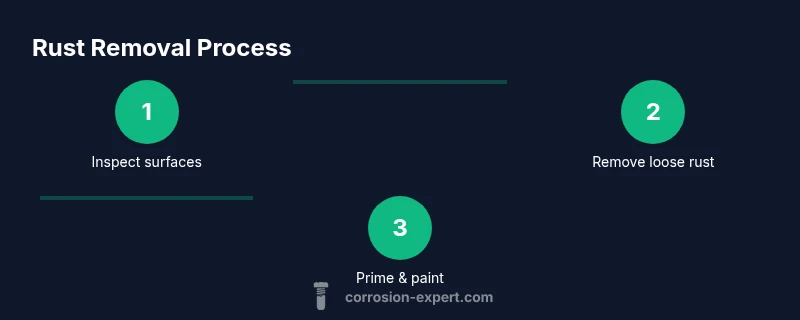
Inspect and document rust extent
Perform a visual and tactile evaluation of all chair frames, legs, and welds. Photograph or annotate areas with visible rust, noting spots where metal thickness may be reduced. This establishes the baseline for restoration scope and helps you track progress.
Tip: Mark problem areas with tape to guide your sanding sequence and avoid rechecking the same spots multiple times. - 2
Protect workspace and items nearby
Lay down drop cloths and masking film to catch dust and drips. Remove cushions, cushions covers, and any fabric parts, storing them away from solvents. Ventilate the area or wear a respirator if indoors.
Tip: Seal off adjacent wood surfaces to prevent solvent over-spray affecting finishes. - 3
Remove loose rust mechanically
Use a wire brush to scrub away loose rust and scale. Progress to 120-180 grit sandpaper to create a smooth, paint-ready surface. Clean the metal with isopropyl alcohol to remove oils and debris.
Tip: Work gradually from edges toward the center to avoid gouging underlying metal. - 4
Apply rust converter or remover (if needed)
If dark rust surrounds deeper pits, apply rust converter per label directions to stabilize the metal. Allow it to cure completely before proceeding to priming. Do not rush this step, as improper curing can affect adhesion.
Tip: Test a small inconspicuous area first to confirm compatibility with your primer. - 5
Prime the metal surface
Apply a thin, even coat of rust-inhibiting primer. Allow the primer to dry completely as per product instructions, and light-sand with 320-400 grit if needed for a smoother surface. Prime both visible surfaces and inner frames, including weld lines.
Tip: Dust-free conditions yield a more uniform finish; avoid painting in high humidity. - 6
Apply topcoat or enamel finish
Choose a durable topcoat suitable for metal furniture and your environment (matte, satin, or gloss). Apply in thin, even layers, allowing proper curing between coats. Avoid heavy layers that can trap moisture beneath the surface.
Tip: Use multiple thin coats rather than a single thick coat for better durability. - 7
Seal edges and welds with protective layer
Optionally apply a clear sealant or protective coat to exposed edges and welds to increase moisture resistance. This helps slow future corrosion and eases cleaning.
Tip: A topcoat alone may not protect deeply pitted edges; consider a protective sealant in those areas. - 8
Cure, reassemble, and inspect
Let the final coat cure fully in a dust-free area. Reassemble any removed parts and check for wobble or misalignment. Perform a final wipe-down and test by applying light pressure on joints.
Tip: If wobble remains, address joint tension or re-tighten hardware before use.
Quick Answers
How can I tell if rust is only surface level or structural?
Conduct a thorough inspection: surface rust is often removable with light sanding, while structural rust weakens metal and may require professional assessment or replacement if thickness is compromised. Use a magnet to gauge iron content and look for deep pits near welds.
Check for structural integrity by inspecting pits near joints and welds; surface rust can be removed with sanding and refinishing.
Can I repaint rust dining chairs myself, and what should I use?
Yes, with a rust-inhibiting primer and a durable enamel or epoxy paint. Prepare the surface properly, apply multiple thin coats, and allow complete curing between steps to maximize adhesion and longevity.
You can repaint them yourself with the right primer and durable enamel, plus proper curing time.
Is it safe to use chemical rust removers near food-contact surfaces?
Choose food-safe or clearly labeled hardware-safe products for any surfaces near the dining area. Follow label directions, ensure thorough rinsing, and allow sufficient ventilation during application.
Select products that are safe for the area and follow the manufacturer’s directions for use and cure.
How long does a rust-restoration finish last on dining chairs?
Durability depends on exposure, maintenance, and the coating used. A high-quality primer and enamel with proper curing can last several years in typical indoor use, while frequent exposure to moisture may shorten the interval.
With proper care, a good finish can last for several years indoors.
When should I replace dining chairs due to rust?
If rust has caused significant metal thinning, structural deformation, or failed welds compromising safety, replacement is recommended instead of restoration. Prioritize chair safety and load-bearing integrity.
If safety is compromised due to serious rust, consider replacement.
Watch Video
Quick Summary
- Assess rust severity before starting.
- Use proper safety gear and ventilation.
- Thin, even coats yield better durability.
- Regular maintenance prevents future rust problems.