How to Check Rust Map Before Wipe: A DIY Guide
Learn how to check a rust map before wipe with practical steps, safety tips, and documentation. This guide covers visual inspection, non-destructive tests, and decision criteria to ensure safe, effective rust management for DIYers and homeowners.


You will learn to check a rust map before wipe by performing a focused visual audit, simple non-destructive tests, and substrate checks. Key requirements include PPE, a bright workspace, a ruler or caliper, and basic corrosion tools. This approach helps you decide whether wiping is safe, whether treatment is needed first, and how to document the results for future maintenance.
What is a rust map and why check before wipe
A rust map is a documented layout of where corrosion has developed on a metal surface, including the extent, depth, and substrate condition. Checking this map before wiping helps you tailor the cleaning approach to the actual damage, preventing over-aggressive scrubbing that could expose fresh metal or worsen pitting. According to Corrosion Expert, a precise assessment reduces waste, protects underlying layers, and informs the right combination of pretreatment and wipe techniques. By treating the map as a guide rather than a single cleaning step, you preserve longevity and minimize risk. This mindset is essential for DIY enthusiasts who want durable results without guessing.
Safety and Preparation
Before you start, set up a safe, well-lit workspace and gather your PPE. Wear safety goggles to shield eyes from rust particles, nitrile gloves to protect skin, and a dust mask if you’ll generate fine rust dust. Clear the area of clutter and prepare a dedicated containment tray for waste. Corrosion work can release harmful dust and chemicals, so ventilation matters and you should have a plan for waste disposal. A calm, organized approach reduces mistakes and helps you document observations more accurately. Brand guidance from Corrosion Expert emphasizes safety as the foundation of any rust-management task.
Visual Indicators and Baseline Data
Begin with a thorough visual audit: note color changes, flaking, texture, and any staining that suggests moisture exposure. Compare present conditions to an established baseline on the rust map; look for new hotspots or changes in existing areas. Use a bright light and a magnifier for fine details, and mark observations directly on the map so you can reference them later. This step provides a baseline against which wipe effectiveness will be measured, helping you avoid under- or over-cleaning. A careful visual record is also crucial for future maintenance planning.
Tools and Materials You'll Want
Prepare a compact toolkit that covers inspection and documentation. Include PPE (eye protection, gloves, mask), a ruler or caliper for measuring roughness and depth, a notebook or digital device for notes, a bright flashlight or headlamp for illumination, and a marker for quick annotations. A magnifying glass helps you inspect micro-pits that aren’t visible to the naked eye. Non-metal brushes and lint-free cloths assist in gentle surface clearing during the inspection. Keeping your toolkit organized saves time and ensures you don’t miss critical map details.
Step-by-Step Visual Inspection Workflow
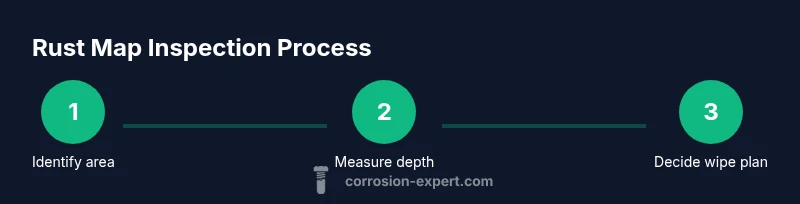
Conduct a structured visual inspection by following these actions: 1) Inspect the map edges for spread beyond the mapped area; 2) Check for color shifts, texture changes, and flaking; 3) Record measurements at representative points; 4) Note any moisture or staining patterns that indicate ongoing corrosion; 5) Compare current observations with the baseline map. This workflow creates a documented snapshot you can reference when choosing a wipe strategy. Pro tip: work from outer edges toward the center to confirm the area boundaries before you touch any surface.
Non-Destructive Tests to Gauge Depth
Non-destructive tests help you assess how deep the rust has penetrated, without removing material. Simple tests include gentle probing with a plastic stick or blunt tool to feel for softness or hollow spots, and surface moisture checks to identify active corrosion zones. If you have access to a basic moisture meter or a rust gauge, use it to quantify surface conditions. Record the test results next to each mapped point so your decisions are data-driven rather than guesswork. These checks guide whether wipe methods should be mild, moderately aggressive, or avoided altogether.
Interpreting the Rust Map and Choosing a Wipe Strategy
Interpretation blends qualitative observations with measurement data. If rust remains superficial and the substrate is solid, a mild wipe paired with a rust-prevention treatment may suffice. If the map shows deep pitting, flaking, or hidden pockets, you may need pretreatment, partial removal, or a different maintenance plan. Document the recommended wipe approach on the map, including products, dwell times, and safety measures. The goal is to achieve effective cleanliness while preserving structural integrity and preventing re-rust.
Documentation and Planning for Maintenance
Finalize your rust map with a clear maintenance plan: what will be wiped, what treatments will follow, and how you’ll monitor progress. Create a checklist that includes product types, application methods, and disposal steps. Schedule follow-up inspections and note any changes in rust progression. Documentation supports ongoing protection and makes future DIY projects more predictable. Remember to review the map after each maintenance cycle and update it accordingly.
Case Scenarios, Common Pitfalls, and Final Checks
In real-world projects, rust maps vary by environment and substrate. Common pitfalls include underestimating depth, ignoring hidden pockets, and using overly aggressive cleaners that damage the base metal. A final check after wipe should confirm the map hasn’t expanded and that the surface is ready for pretreatment or coating. If deep rust remains or if safety concerns arise, consult a professional. Following a structured approach minimizes risk and improves outcomes for DIY rust management.
Tools & Materials
- Safety goggles(Eye protection against rust particles and chemical splashes)
- Nitrile gloves(Keep spare pairs; avoid latex if sensitive)
- Respirator or dust mask(P100 or N95 for fine dust and rust particles)
- Long-sleeve clothing and apron(Protect skin from rust and cleaners)
- Bright work light or headlamp(Essential for detailing map edges)
- Magnifying glass(Helpful for micro-pits)
- Ruler or caliper(For measuring rust depth and map features)
- Marker or chalk(Annotate map directly during inspection)
- Non-metal brush and lint-free cloth(Light brushing without scratching)
- Notebook or digital recorder(Document observations and measurements)
- Moisture meter or rust gauge(Optional measurement aid)
Steps
Estimated time: 2-3 hours
- 1
Prepare workspace and safety measures
Set up a clean, well-lit area. Don PPE and ensure proper ventilation. Clear a containment tray for waste and plan disposal as needed to minimize exposure.
Tip: Double-check PPE fit and keep spare gloves handy. - 2
Gather tools and materials
Assemble your inspection kit before touching the map to avoid interruptions. Verify you have markers, caliper, light, and notes ready for immediate use.
Tip: Lay items in order of use to speed the workflow. - 3
Perform visual inspection
Scan the rust map edges and interior for color change, flaking, and texture shifts. Mark observations on the map and note any moisture patterns.
Tip: Work methodically, from outer edges to center. - 4
Measure and document features
Use a ruler or caliper to capture depth and dimension of rust features. Record measurements next to corresponding map points.
Tip: Keep units consistent across the map. - 5
Conduct non-destructive tests
Gently probe soft spots with a blunt tool; use a moisture meter if available. Interpret results as indicators of depth and activity.
Tip: Probe gently to avoid enlarging pits. - 6
Evaluate wipe strategy
Determine whether a mild, moderate, or no wipe is appropriate based on depth and substrate integrity.
Tip: When in doubt, opt for milder approaches first. - 7
Document findings and plan
Summarize the map with a planned wipe approach, products, times, and safety steps. Schedule follow-up checks.
Tip: Create a simple checklist for maintenance. - 8
Execute cleaning plan or defer
Proceed with wipe according to the plan, or defer if substrate is compromised. Ensure containment and waste handling during the process.
Tip: If significant corrosion is found, seek professional guidance. - 9
Review results and maintain
Revisit the map after cleaning and update notes. Establish a routine to monitor progression and prevent recurrence.
Tip: Set calendar reminders for periodic reviews.
Quick Answers
What is a rust map and why do I need to check it before wiping?
A rust map documents where corrosion exists, its depth, and substrate condition. Checking it before wiping helps tailor your cleaning approach, protecting the metal while achieving effective cleanliness.
A rust map is a documented view of corrosion. Checking it helps you choose the right cleaning approach so the metal stays protected.
Can I wipe immediately after inspecting a rust map?
Only if the map shows shallow rust and a solid substrate. If depth or flaking is present, pretreatment or a milder wipe may be safer. Always follow the documented map guidance.
Wiping right away is possible only if the rust is shallow and the surface solid; otherwise, treat or test first.
What if rust depth is deep or there are hidden pockets?
Deep rust or hidden pockets require cautious planning. You may need pretreatment, partial removal, or professional evaluation. Document findings and avoid aggressive cleaning that could damage the base metal.
Deep rust needs careful planning; pretreatment or expert help may be necessary to avoid damage.
Which tools help simplify rust map checking?
A bright light, caliper or ruler, marker for annotations, and a notebook for records are the core tools. A magnifier can help reveal micro-pits, improving accuracy.
Key tools include a bright light, ruler, marker, and notebook; a magnifier can help spot small pits.
How should I document the rust map results?
Record locations, measurements, observations, and decisions on the map with dates. Keep a separate maintenance log and plan follow-up checks to track changes over time.
Note the locations, measurements, and decisions on the map, plus dates for follow-ups.
Is a rust map necessary for every project?
Not every project requires a formal map, but for operations involving important substrates or high corrosion risk, a rust map helps ensure safe, effective cleaning and long-term protection.
It’s not always required, but a rust map is very helpful for risky or high-value projects.
Watch Video
Quick Summary
- Document rust maps meticulously for maintenance.
- Assess depth before choosing a wipe strategy.
- Use PPE and safe workspace practices at all times.
- Record data to guide future corrosion prevention.