Clean Rust from a Gas Tank: Safe, Step-by-Step Guide
Learn how to safely clean rust from a gas tank with practical steps, safety checks, and prevention tips. The Corrosion Expert team shares a clear, DIY-friendly guide to extend fuel-system life while avoiding ignition risks.


Goal: safely clean rust from a gas tank without compromising fuel integrity. This quick answer outlines how to assess rust severity, select an appropriate cleaning approach (mechanical, chemical, or a combination), and perform a careful interior treatment. It also highlights sealing considerations and long-term prevention to minimize future rust and potential fuel-system problems.
Understanding the Challenge of Cleaning Rust from a Gas Tank
Rust inside a fuel tank can start as small flakes that detach and circulate through fuel lines, potentially clogging filters and reducing engine performance. When you embark on a project to clean rust gas tank, you must balance rust removal with preserving metal integrity and avoiding ignition hazards. In this guide, the Corrosion Expert team emphasizes methodical steps, appropriate PPE, and proper testing before any sealing or direct fuel contact. DIY rust removal inside a gas tank is not risk-free, but with careful planning you can extend the life of the fuel system and reduce repair costs. Key factors include rust extent, tank material (steel vs. aluminum), seal compatibility, and whether you’ll reuse the tank or replace it. Always drain residual fuel and work in a ventilated area, because fumes can accumulate quickly in enclosed spaces. The goal is to restore a clean internal surface while preventing future corrosion.
Safety Considerations and Ventilation
Gasoline vapors are highly flammable and can travel to ignition sources even when you think the area is safe. Work in a well-ventilated outdoor space or a completely ventilated garage with doors open and no flames nearby. Wear eye protection, nitrile gloves, and a respirator rated for organic vapors. Keep a class B extinguisher handy, and never use propane torches or spark-producing tools around a tank that could still contain fumes. Corrosion Expert emphasizes that safety is not optional; it is the first and most critical step in any rust-removal project. After venting and draining, verify there is no fuel odor before proceeding and store any removed parts away from ignition sources.
Assessing Rust Severity and Your Repair Plan
Not all rust is equal. Light surface rust on a steel tank may respond to mechanical cleaning and sealants, while deep pits or corrosion through wall thickness often requires replacement or professional treatment. Start with a careful interior inspection using a flashlight and magnetic pick tools to map rust patches. Document thickness loss with measurements if you have calipers handy. If you see scale that flakes off with gentle tapping, that indicates loose corrosion that can be scrubbed away; if you hear a hollow sound or see significant pitting, plan for more intensive methods or tank replacement. The Corrosion Expert recommends validating the rust level early to avoid wasting effort on a treatment that won’t last.
Cleaning Approaches: Mechanical Cleaning, Chemical Treatments, and Sealing Options
There are three common paths for rust inside gas tanks: mechanical cleaning to remove loose rust, chemical rust removers or rust converters to stabilize remaining rust, and sealing options to prevent future corrosion. Mechanical cleaning includes brushing and sanding the interior surface to remove loose rust without compromising the metal. Chemical options vary from neutral rust converters to stronger rust removers; always follow the product label and ensure compatibility with gasoline systems. Sealing options range from tank sealants designed for fuel tanks to epoxy liners, but only use those components that are rated for fuel exposure and compatible with your tank material. If you choose chemical treatment, ensure complete removal of residue and verify vented curing times. The goal is a clean, coated surface that resists re-oxidation while maintaining fuel compatibility.
Choosing the Right Path for Your Gas Tank
Your choice depends on rust severity, tank material, and whether you plan to reuse the tank. Light surface rust with good metal thickness may respond to mechanical cleaning plus a fuel-rated sealant. Moderate rust with early signs of pitting may benefit from a rust converter and internal coating, followed by sealing. Severe rust or corrosion through the walls typically means tank replacement or professional restoration. Always factor in the age of the vehicle, fuel system compatibility, and potential impact on warranty. The Corrosion Expert team notes that choosing the correct path saves time and money and reduces risk of fuel leaks or system failure.
Step-by-Step Overview of the Core Process
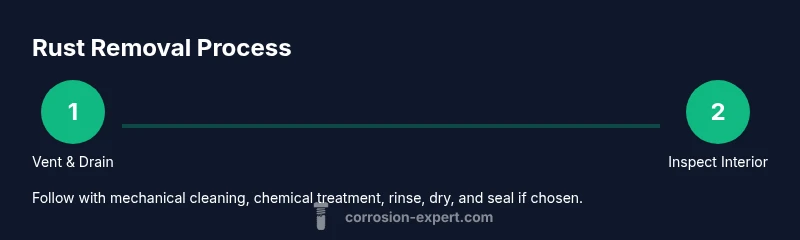
This overview summarizes the practical workflow without duplicating the detailed steps found in the dedicated STEP-BY-STEP section. Begin with safety and drainage, then assess the interior, choose a cleaning path, execute mechanical and/or chemical treatments, rinse and dry thoroughly, and finally seal and cure if required. Plan for a curing window and mapping out replacement parts if the rust is extensive. The key is to follow product directions precisely and to verify that all residues are removed before reassembly.iv
Prevention and Long-Term Rust Control
Even after cleaning, rust can return if moisture, salts, and oxygen are present, or if the fuel system is exposed to water ingress. Implement preventive measures such as using a fuel-stabilizing additive, avoiding prolonged exposure to humidity, and inspecting fuel lines and filters regularly. When possible, store the vehicle in a dry, sheltered area and perform periodic tank venting checks to prevent moisture buildup. A proactive maintenance routine reduces the likelihood of recurring rust and costly repairs. The Corrosion Expert emphasizes that prevention is often simpler and cheaper than repair, preserving the tank’s integrity and your vehicle’s performance.
Authoritative Sources and References
For further reading and safety guidance, consult established sources such as the Environmental Protection Agency (EPA), National Highway Traffic Safety Administration (NHTSA), and National Institute for Occupational Safety and Health (NIOSH). These references provide general safety practices and fuel-system considerations that complement hands-on rust-cleaning instructions. Always cross-check product labels and manufacturer guidelines before applying any cleaners or sealants inside a gas tank. References: https://www.epa.gov, https://www.nhtsa.gov, https://www.cdc.gov/niosh
Tools & Materials
- Safety goggles(ANSI Z87.1 compliant)
- Nitrile gloves(chemical-resistant)
- Ventilated workspace(outdoors or well-ventilated area)
- Drain pan or approved container(to capture fuel and residues)
- Tank cleaning kit (brushes, sealant/liner)(fuel-rated kit appropriate for metal tanks)
- Rust remover or converter(select for fuel compatibility)
- Metal brushes and/or steel wool(for mechanical rust removal)
- Sandpaper assortment (80-320 grit)(to smooth surfaces)
- Isopropyl alcohol or acetone(degrease and flush surfaces)
- Rags or lint-free towels(for cleaning and drying)
- Gas-safe sealant or epoxy liner(if choosing interior sealing)
Steps
Estimated time: 6-10 hours
- 1
Vent and drain fuel
Begin by ensuring the tank is isolated and vented. Remove any leftover fuel carefully into an approved container. Allow fumes to dissipate in a well-ventilated area before proceeding.
Tip: Do not skip ventilation; fumes can accumulate rapidly. - 2
Inspect interior for rust extent
Use a flashlight to inspect the interior and gauge rust depth and distribution. Note any deep pits or flaking, which influence your cleaning approach and sealing decisions.
Tip: Document rust spots with a simple sketch or photos for future reference. - 3
Protect surrounding components
Cover openings and nearby components to prevent debris from entering the fuel system. Prepare your workspace with drop cloths and containment to avoid spills.
Tip: Seal off the filler neck and fuel lines if accessible during cleaning. - 4
Mechanical rust removal
Gently scrub loose rust from interior surfaces using wire brushes or scouring pads. Avoid aggressive scraping that could thin tank walls. Keep tension light and work evenly.
Tip: Use multiple softened passes rather than one aggressive pass. - 5
Apply rust converter or cleaner
Follow label instructions to apply rust converter or chemical rust remover. Allow the product to dwell for the recommended time to stabilize rust and prevent further corrosion.
Tip: Rinse and wipe clean after dwell time to remove any chemical residues. - 6
Rinse and dry interior thoroughly
Rinse with an appropriate solvent, then dry completely. Use compressed air or warm air to ensure all moisture is expelled before sealing.
Tip: Avoid trapping moisture; moisture is the enemy of corrosion prevention. - 7
Seal interior or install liner (optional)
If you plan to reuse the tank, apply a fuel-rated sealant or liner as directed by the kit. Allow full cure time per manufacturer guidelines before reassembly.
Tip: Ensure complete cure before introducing fuel to the system. - 8
Reinstall and test for leaks
Reattach fuel lines and fittings, reinstall the tank, and check for leaks in a safe environment before returning to service.
Tip: Perform a slow, controlled pressure test in a safe area.
Quick Answers
Is it safe to clean rust inside a gas tank at home?
Cleaning a gas tank at home carries fire and inhalation risks. Use proper PPE, ventilate adequately, and follow product directions. For severe rust, consult a professional.
Cleaning a gas tank at home is risky; use safety gear and good ventilation, and get professional help if rust is extensive.
How do I know if the rust is too extensive to repair?
If rust covers a large area, deep pits are present, or metal thinning is evident, replacement or professional restoration is usually needed.
If rust is deep or widespread, replacement is often the safer option.
Should I seal the tank after cleaning?
Sealing is advised if you plan to reuse the tank and the sealant is compatible with your fuel system. Ensure full cure before refueling.
Yes, sealing helps prevent future rust when done correctly and cured properly.
Can I use household rust removers on a gas tank?
Most household products aren’t designed for fuel environments. Use products rated for fuel systems and follow safety guidelines.
Avoid household products inside a gas tank; use fuel-rated cleaners and sealants.
What are warning signs rust is returning after cleaning?
New rust spots, flaky discoloration, or fuel-filter debris indicate rust is returning. Inspect and address promptly.
Watch for new rust or debris in the fuel system after cleaning.
Is professional rust removal worth the cost?
For severely rusted tanks or complex liners, professional assessment can prevent leaks and ensure safety.
If in doubt, a pro can save time and reduce risk of failure.
Watch Video
Quick Summary
- Assess rust severity before starting.
- Choose the cleaning path (mechanical, chemical, or both) wisely.
- Ventilate, PPE up, and follow product instructions.
- Seal and cure if reusing the tank, and prevent future rust.