Best Way to Get Charcoal Rust: Prevention & Repair
Learn the best approach to prevent and repair charcoal rust on grills. This expert guide covers rust identification, safe removal, and protection to extend life.


Goal: stop charcoal rust in its tracks and restore metal surfaces. In this guide you’ll learn how to identify common rust indicators on grill grates and accessories, choose the safest removal methods, and apply durable protective finishes. The best approach combines careful cleaning, rust inhibitors, and proper seasoning for cast iron parts. By following these steps, you’ll extend equipment life and maintain safe cooking surfaces.
Why Charcoal Rust Happens
According to Corrosion Expert, charcoal-related rust forms when iron or steel surfaces are repeatedly exposed to moisture, oxygen, and heat cycles. Charcoal creates a humid micro-environment, and metal surfaces near the coals can trap steam and condensed moisture. Salt from seasoning or de-icing agents can accelerate corrosion, especially where joints and imperfect seals exist. In addition, repeated heating and cooling cause micro-cracks that let water ingress in, speeding rust formation. Understanding these mechanisms helps you identify vulnerable areas like grill grates, firebox edges, and damp storage compartments. The practical takeaway is simple: minimize moisture exposure, maximize drying, and apply protective coatings to make metal surfaces less susceptible to oxygen attack. Consistent post-use cleaning routines, prompt rust spot treatment, and proper storage when not in use form the foundation of rust prevention for charcoal-driven grills and accessories.
Tools & Materials
- Safety goggles(Keeps eyes safe from splashes and dust)
- Nitrile gloves(Protects hands from cleaners and rust exposure)
- Wire brush( removes loose rust and debris)
- Steel wool pads(For fine rust removal on tight spots)
- Sandpaper (120-220 grit)(Smooths pitting and prepares surface for resealing)
- Citric acid rust remover or safe rust remover(Choose a non-bleach, non-chlorine option suitable for metal)
- Dish soap(Degreases surfaces before rust work)
- Mineral oil or high-heat cooking oil(For initial protection and seasoning layer)
- Cloth towels or lint-free rags(Drying and wiping after cleaning)
- Container for soaking solution(Use for small parts if needed)
Steps
Estimated time: 60-90 minutes
- 1
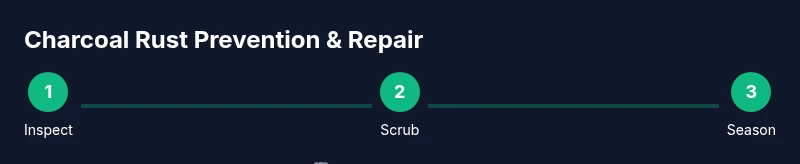
Inspect rusted areas
Begin with a visual check of all metal surfaces, paying close attention to grates, firebox edges, hinges, and lower legs. Identify whether rust is superficial surface rust or deep pitting. This distinction will determine your removal method and whether resealing is enough or parts need replacement.
Tip: Document problem areas with a note or photo to guide repair and future maintenance. - 2
Remove loose rust and debris
Use a stiff wire brush to scrub away loose rust and flaking paint. For tight corners, switch to steel wool pads. Don’t rush this step—removing loose rust reduces the risk of creating pits during subsequent cleaning.
Tip: Wear gloves and goggles to protect eyes from flying particles. - 3
Apply rust removal method
Choose a safe rust remover or a citric acid solution for a mild soaking. Follow product directions or mix citric acid with warm water (about an 8:1 water-to-acid ratio) for a gentle soak on small parts. Rinse thoroughly after treatment to remove residues.
Tip: Test any solution on a small hidden area first to ensure compatibility. - 4
Rinse and dry completely
Rinse all parts with clean water and dry them thoroughly. Moisture left in seams promotes flash rusting. Use a heat source or warm air to ensure complete drying before proceeding to coating.
Tip: Pat dry with a clean towel, then air-dry in a warm, dry spot. - 5
Season and protect cast iron parts
Apply a thin layer of high-heat oil or mineral oil to cast iron surfaces. Bake or heat the parts per your grill’s manual instructions to polymerize the oil into a protective coating. This creates a barrier against moisture in future use.
Tip: Avoid excessive oil; a thin coat is enough to form a durable layer. - 6
Reassemble and test
Reassemble the grill and run a short cooking test at low heat to ensure the coating cures evenly. Monitor for any spots that reappear rust-wise over the next few uses and address promptly.
Tip: Keep monitoring for the first few cooking sessions to confirm the repair’s effectiveness.
Quick Answers
What causes rust on charcoal grills and accessories?
Rust forms when iron or steel surfaces are exposed to moisture and oxygen, especially in humid environments. Charcoal residues and salt exposure can accelerate corrosion, particularly around joints and storage areas.
Rust happens when metal meets water and air, especially in humid environments near charcoal.
Can rust on grill grates be safely removed?
Yes, most surface rust on grates can be removed with mechanical cleaning and safe rust removers. For cast iron, reseason after cleaning to restore protective coating.
Yes, you can usually remove rust safely with proper cleaning and reseason afterward.
What is the best way to prevent rust after cleaning?
Dry surfaces completely, apply a thin oil coat and re-season cast iron parts, and store the grill in a dry place. Regular maintenance is key.
Dry, oil, and reseason to prevent rust from returning.
Are there rust-removal methods I should avoid?
Avoid harsh acids or bleach on sensitive finishes, and never rely on abrasive tools that could scratch protective coatings. Follow manufacturer guidelines for any removers.
Avoid strong acids and harsh abrasives that can damage coatings.
How long does reseasoning take?
Typically 1-2 hours including drying time, depending on material thickness and oven/heating method used.
Re-seasoning usually takes an hour or two, depending on the method you choose.
When should I replace rusted parts?
If rust has penetrated deeply, caused structural weakness, or created holes, replace those parts for safety and performance.
If rust compromises strength or safety, replace the affected parts.
Watch Video
Quick Summary
- Prevent rust by drying and storing in a dry area
- Clean promptly after use to reduce moisture exposure
- Reseason cast iron parts after rust removal
- Use a light oil coating to form a protective barrier
- Inspect regularly and address rust early to extend grill life