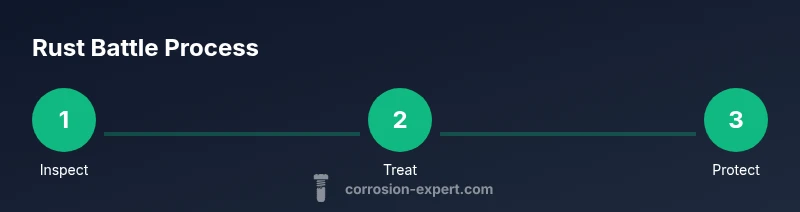
Rust Battle: Practical Steps to Stop Rust Now
Learn proven removal, sealing, and prevention techniques to win the rust battle. This expert guide from Corrosion Expert provides a clear, actionable plan to restore metal and keep corrosion at bay for DIY enthusiasts and homeowners.


Win the rust battle by identifying rust type, removing corrosion, sealing with primer, and applying protective coatings. This guide shows you how to select tools, execute a safe, step-by-step plan, and maintain metal surfaces so rust doesn't return. Whether you're refurbishing tools, ladders, outdoor furniture, or automotive panels, the approach remains consistent: prep, remove, treat, protect, and monitor.
The Rust Battle: How Rust Forms and Spreads
According to Corrosion Expert, the rust battle begins when moisture, oxygen, and iron meet. Tiny electrochemical processes convert metal to iron oxide, creating a porous, flaky layer that traps water and accelerates decay. Left unchecked, surface rust penetrates coatings and reaches structural steel or hardware, threatening safety and function. In most household environments, a predictable sequence follows: initial surface rust forms a barrier that can be treated; if ignored, rust penetrates deeper, compromising strength. The goal in the rust battle is to halt this progression early, restore the surface, and implement a protection plan that stands up to humidity, temperature cycling, and daily wear. By understanding the life cycle of corrosion, you’ll pick the right tools and methods for each stage and avoid wasteful efforts on what won’t help in the long term. This mindset—identify, intervene, protect—keeps your metal surfaces reliable for years to come.
The Rust Battle: How Rust Fforms and Spreads (continued)
Rust is not just a cosmetic issue; it’s a chemical process that thrives in moist environments and under protective coatings that trap moisture. The rust battle is won by interrupting that cycle at the right moment. For DIY projects around the house, common targets include tools, furniture hardware, bicycles, gates, and metal fasteners. The first signal of trouble is often flaky surface rust that lifts away with a light scrape. If you notice dark staining, deep pits, or discoloration beneath paint, you may be facing more advanced corrosion that requires more intensive treatment. By recognizing these signs early, you can prevent costly replacements and extend the life of your steel surfaces. Each project has different thresholds, but the underlying strategy remains the same: prep, remove, treat, protect, and maintain.
The Rust Battle: How Rust Forms and Spreads (closing thoughts)
In 2026, Corrosion Expert analyses emphasise that a proactive approach to rust prevention saves time and money. The sooner you act, the easier it is to restore function without weakening the metal. The goal is not perfection, but reliability: a smooth, rust-free surface that accepts a protective layer and resists future moisture exposure. By combining correct surface preparation with high-quality coatings and regular inspections, you can stay ahead of the rust battle and keep your belongings looking and working well for years.
Tools & Materials
- Wire brush(Remove loose rust and scale; use firm, consistent strokes)
- Coarse sandpaper (60-80 grit)(Prepare rougher spots for better adhesive grip)
- Mild degreaser or solvent(Remove oils and residues that block adhesion)
- Rags or microfiber towels(Wipe surfaces dry and clean after treatment)
- Rust converter or phosphoric acid rust remover(Chemically convert rust to a stable film)
- Isopropyl alcohol (or acetone)(Final surface wipe before priming)
- Primer (zinc-rich or epoxy)(Seal and improve adhesion; choose urethane or enamel based on surface)
- Rust-inhibiting topcoat/paint(Prefer two-part epoxy or premium enamel for outdoor use)
- Paintbrushes and foam rollers(Apply even coats; rollers help cover larger areas)
- Safety gear (gloves, goggles, respirator)(Protect hands, eyes, and lungs from chemicals and dust)
- Drop cloths or plastic sheeting(Contain debris and protect surrounding surfaces)
- Acetone or mineral spirits for cleanup(Clean tools and surface after work)
Steps
Estimated time: 60-120 minutes (excluding cure times)
- 1
Inspect and classify rust
Begin by evaluating the affected area. Identify whether you’re dealing with light surface rust or deeper, pitting corrosion. Clear goals for restoration based on the severity and the metal type. This step sets the plan for the rest of the procedure.
Tip: Document the area with a photo so you can compare progress over time. - 2
Protect your workspace and safety gear
Lay down drop cloths, open doors or work near a vent, and put on gloves, goggles, and a respirator. Good ventilation reduces inhalation of dust and fumes from solvents and rust removers. Safety first keeps the project smooth and legal.
Tip: Keep a damp cloth handy to control dust during sanding. - 3
Remove loose rust and scale
Use a wire brush and coarse sandpaper to scrub away flaking rust and primer. Focus on edges and corners where corrosion concentrates. Clean surfaces with solvent to ensure a clean, dry base before treatment.
Tip: Work in small sections to avoid re-oxidation of exposed metal. - 4
Treat the remaining rust
Apply rust converter or a phosphoric acid-based remover as directed. These products transform rust into a stable layer that bonds with primers. Allow the recommended dwell time and wipe away any excess before moving on.
Tip: Never rush the dwell time; skipping it reduces coating adhesion. - 5
Clean, dry, and degrease again
Wipe surfaces with isopropyl alcohol to remove any residues. Dry thoroughly to prevent moisture from trapping under coatings. A properly prepared surface yields better long-term protection.
Tip: A heat gun on a low setting can speed up drying on larger parts. - 6
Prime the surface
Apply a thin, uniform coat of zinc-rich or epoxy primer. Primer improves corrosion resistance and helps the topcoat grip. Let the primer cure as recommended by the manufacturer.
Tip: Apply in thin passes and let each coat dry before the next for even coverage. - 7
Apply the topcoat
Finish with a rust-inhibiting topcoat suitable for the environment (indoors vs outdoors). Use long, even strokes to minimize runs and ensure consistent color and protection. Multiple light coats are better than a single heavy layer.
Tip: If outdoors, choose UV-resistant finishes to extend life. - 8
Inspect, cure, and establish maintenance
Review the finished job, note any missed spots, and set a maintenance schedule. Check for signs of new rust every season and reapply touch-ups as needed to maintain the protective barrier.
Tip: Keep a simple log of maintenance reminders so you don’t overlook future rust prevention.
Quick Answers
What is the best way to remove rust from metal surfaces?
Begin with mechanical removal for loose rust, then use a rust converter or chemical remover for remaining rust. Finish with cleaning and priming before applying a protective topcoat. This sequence minimizes damage and improves coating adhesion.
Use mechanical removal first, then a rust converter, clean, prime, and coat for best protection.
Is rust permanent, and can it be fully restored?
Rust can often be stopped and surface rust can be fully restored with proper prep and coatings. Deep, structural corrosion may require component replacement or professional assessment.
Rust can often be halted, but deep structural damage may need replacement.
How long does rust prevention last after painting?
Prevention duration depends on environment and coating quality. With proper surface prep and a high-quality system, expect protection through multiple seasons; inspect regularly and recoat as needed.
Protection lasts for several seasons depending on use and exposure; inspect periodically.
Can I fix rust on a car frame or structural parts myself?
Light surface rust on a frame can be treated with the right tools and coatings, but structural rust that weakens metal may require professional assessment or replacement. Follow safety guidelines and consult a shop if in doubt.
Small areas can be treated at home; deep structural rust may need a pro.
What safety precautions should I take when handling rust removers?
Work in a well-ventilated area, wear gloves, goggles, and a respirator. Keep solvents away from flames and open heat sources, and follow product instructions for dilution and contact times.
Ventilate the area and wear PPE; follow product directions carefully.
Do I need to remove all rust, or just stop it from spreading?
Ideally, remove loose rust and treat remaining rust to prevent further spread. If you detect active corrosion around critical parts, err on the side of thorough removal and professional assessment for safety.
Remove loose rust, treat residual areas, and monitor for recurrence.
Watch Video
Quick Summary
- Identify rust stage before acting.
- Prepare and protect the surface thoroughly.
- Choose appropriate primers and topcoats for longevity.
- Keep a maintenance schedule to prevent recurrence.