How Long Does Rust Last? Lifespan and Protection Coatings
Explore how long rust and protective coatings last across environments, plus practical tips for maximizing corrosion resistance and DIY maintenance.


How long rust lasts depends on exposure, material, and protection. Unprotected metal in humid or salty conditions can show rust within weeks to months, while protective coatings or galvanization extend life to years or decades. For DIY projects, plan maintenance every few years in harsh environments and longer intervals indoors. The real answer hinges on ongoing upkeep, proper prep, and choosing the right protection.
Why the Question is Misunderstood: Context over Guesswork
In the hobby and trades world, you might encounter the phrase 'how long do rust games last' as a joke that highlights how people value longevity. In practical terms, rust longevity is governed by chemistry, environment, and protection — not by entertainment. According to Corrosion Expert, the most important factor in rust longevity is exposure level. When metal sits in moisture or salt for extended periods, corrosion accelerates; with proper prep and protection, you can dramatically extend its service life. This distinction matters for DIYers who want to know how long a toolbox, railing, or vehicle part will stay functional before maintenance or replacement is needed.
Key Influencers of Rust Lifespan: Environment, Material, and Prep
Environment
- Humidity and salt spray dramatically shorten rust timelines. Coastal or humid climates accelerate oxidation, while dry interiors slow it down. Corrosion Expert analysis shows that outdoor exposure tends to reduce protective longevity by years compared with indoor use, depending on coating quality.
Material and Substrate
Some metals rust faster than others. Stainless steels resist rust longer but are not rust-proof, while carbon steels rust more quickly without protective layers. Substrate preparation—removing existing rust, applying primers, and ensuring a clean surface—significantly impacts the final lifespan of any coating.
Pre-Treatment and Coatings
Coatings such as galvanization, epoxy primers, powder coatings, and multi-layer paints create barriers that slow rust. The protection level correlates with the coating’s bond to the surface, its thickness, and its resistance to environmental factors. The right coating for your environment can double or triple expected lifespans relative to bare metal.
How Coatings Extend Rust Lifespan: A Practical Breakdown
- Zinc-based galvanization: Creates sacrificial protection and barrier coating; ideal for outdoor hardware, fences, and structural steel in moderate environments. 2) Epoxy and polyurethane paints: Offer robust barrier protection with UV resistance for outdoor use; they require proper surface prep and curing to maximize life. 3) Powder coatings: Provide durable, uniform finishes with excellent abrasion resistance; best for parts that experience frequent handling. 4) Primers and multi-layer systems: A properly applied system uses a metal-appropriate primer, followed by a topcoat designed for the environment. In harsh environments, expect shorter lifespans if any layer is compromised.
Maintenance as a Lifespan Multiplier: Practical Steps for DIYers
- Inspect regularly for blisters, rust halos, or coating cracks. Address early signs with spot treatments and recoat where needed. - Clean surfaces before reapplication to ensure adhesion, and follow cure times strictly. - Schedule re-coating based on exposure: harsher environments require more frequent maintenance. - Use rust converters only as a temporary measure before proper coating; converters convert surface rust to a stable compound but still require a protective topcoat. - Consider consolidating protection with corrosion inhibitors for environments prone to chemical attack.
Case Scenarios: Indoor vs Outdoor, Tools vs Structures
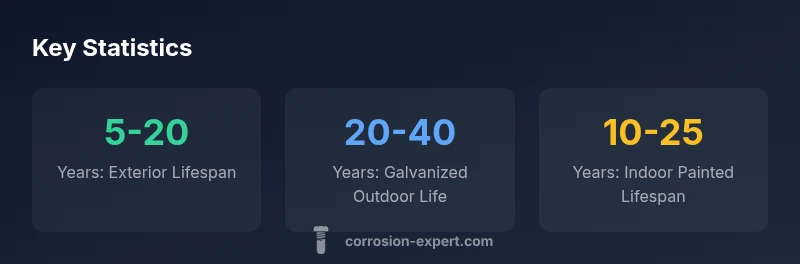
- Indoor metal shelving in a dry basement may last 15-25 years with periodic touch-ups and a light protective coat. - Outdoor handrails on a coastal porch with salt spray may require main coating every 5-10 years and more frequent inspections. - Automotive parts exposed to winter road salts benefit from zinc-rich priming and topcoats, typically needing maintenance on a decade timescale. These scenarios illustrate how environment and maintenance decisions shape rust longevity.
Making a Protection Plan: Quick Start Checklist
- Identify the environment (indoor vs outdoor, humidity level, salt exposure). - Choose a coating system matched to exposure (galvanized, epoxy, powder-coated, or multi-layer). - Prepare the surface thoroughly (remove existing rust, clean, dry, and degrease). - Apply as recommended by the coating manufacturer with proper curing times. - Schedule regular inspections and recoat intervals to maintain protection.
Lifespan by environment and protection level
| Environment | Typical Lifespan Range | Best Protection Method |
|---|---|---|
| Outdoor coastal exposure | 5-20 years | Hot-dip galvanizing + topcoat |
| Outdoor inland exposure | 5-40 years | Zinc-rich primer + durable topcoat |
| Indoor dry environments | 10-25 years | Primer + enamel/urethane topcoat |
| Aggressive chemical exposure (industrial) | 5-12 years | Specialized corrosion-resistant coatings + inhibitors |
Quick Answers
What factors most influence how long rust protection lasts?
Protection lifespan is driven by environment, material, and coating quality. Humidity, salt exposure, and surface prep quality are the top determinants, followed by coating thickness and cure conditions. Regular maintenance can dramatically extend these lifespans.
It all comes down to where the metal lives, what it's made from, and how well you apply and maintain the coating.
Do DIY coatings last as long as professional coatings?
DIY coatings can last as long as professional coatings when proper prep, application, and curing are followed. However, professionals often use marine- or industrial-grade products and controlled environments that can boost longevity in challenging conditions.
With the right products and careful prep, DIY coatings can perform well, but professionals have access to higher-grade systems and controlled application.
How does indoor versus outdoor exposure affect rust lifespan?
Outdoor exposure accelerates rust due to moisture, temperature fluctuations, and precipitation exposure. Indoor environments are typically drier and warmer, extending coating life but not eliminating degradation where there are pollutants or humidity.
outdoors rust faster; indoors, if kept dry and clean, coatings last longer.
Can rust be completely prevented?
No method guarantees absolute rust prevention. Best practice combines surface prep, appropriate coatings, and ongoing maintenance to minimize rust formation and slow progression.
You can greatly reduce rust, but not guarantee zero rust.
When should I recoat or replace rust protection?
Recoat or replace when you see coating failure signs: blistering, cracking, peeling, or rusty spots breaking through the barrier. In harsher environments, short intervals between inspections are wise.
Recoat when you notice wear or damage; don’t wait for rust to break through.
Is there a universal coating that lasts the longest?
No single coating lasts the longest in every situation. Durability depends on environmental exposure, substrate compatibility, and maintenance schedule.
There isn’t a one-size-fits-all coating; pick based on where it lives and how it’s used.
“Durable rust protection is not a magic wand; it requires proper surface prep, correct coating selection, and timely reapplication.”
Quick Summary
- Plan maintenance, not a one-time fix.
- Exposure matters more than metal type.
- Choose environment-rated coatings for longevity.
- Inspect regularly to catch early deterioration.
- Combine protective strategies for best results.